


By Emmanuel Ukudolo I Sunday, April 26.26
In an era defined by the cacophony of “maximum pressure” and the brittle edges of hard power, there is a quiet, rhythmic pulse returning to the heart of international relations: the art of the sit-down.
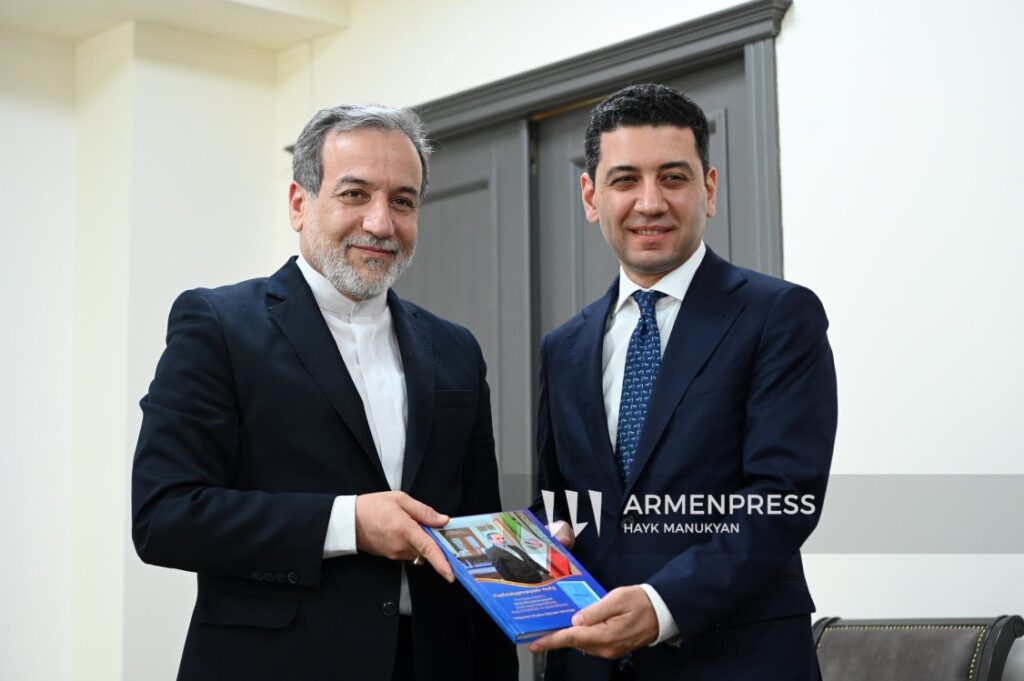
With the Spanish publication of “The Power of Negotiation: Principles and Rules of Political and Diplomatic Negotiations,” Seyed Abbas Araghchi—Iran’s current Foreign Minister and a veteran of the high-stakes nuclear corridors—offers more than a textbook.
He offers a manifesto for the “civilized resolution of conflicts.”
From the Classroom to the Situation Room
Araghchi occupies a unique space in the geopolitical landscape. He is a “professor-practitioner,” a man who has spent as much time grading papers as he has parsing the granular syntax of international treaties.
Published by Editorial Diwan, this work serves as a distillation of a career spent navigating the friction between Tehran and the West.
The book is structured with a rigor that betrays Araghchi’s academic roots, yet it is infused with the hard-won pragmatism of a man who has seen how a single mistranslated word can derail a decade of progress.
The Pillars of “Diplomatic Citizenship”
Perhaps the most provocative element of Araghchi’s thesis is his move toward what he calls “diplomatic citizenship.” He argues that negotiation is not merely a professional skill reserved for those in pinstriped suits in Geneva; it is a vital human faculty.
His framework for successful mediation rests on four intellectual and emotional pillars:
Intelligence: The ability to map the opponent’s internal constraints.
Patience: Viewing time as a resource rather than an enemy.
Culture: Understanding that every demand is filtered through a historical lens.
Knowledge of the Other: The radical act of seeing the world through the adversary’s eyes without conceding one’s own ground.
Why It Matters Now
At its core, The Power of Negotiation is a rebuttal to the “zero-sum” mentality that has paralyzed modern diplomacy. Araghchi posits that material resources—money, weapons, geography—are secondary to the intellectual and cultural resources brought to the table.
”Negotiation is an essential tool not just for solving international conflicts, but for managing the tensions present in all spaces shared by human beings.”
For the American reader, seeing the world through the lens of Iran’s top diplomat provides a rare, non-Western systematic exposition of international cooperation. Whether one agrees with the author’s politics or not, the work is a reminder that in the absence of dialogue, there is only the abyss.
A Manual for the Modern Age
While aimed at students and professionals, the book’s “didactic value” makes it surprisingly accessible. It strips away the mystique of the “backroom deal” and replaces it with a method: a systematic, step-by-step guide to finding the “middle path.”
In a world increasingly prone to shouting, Araghchi’s work is a sophisticated argument for the power of the whisper, the compromise, and the enduring necessity of the table.
Published April 26, 2026. Review by the International Books Desk.