

By SCM Foreign Correspondent
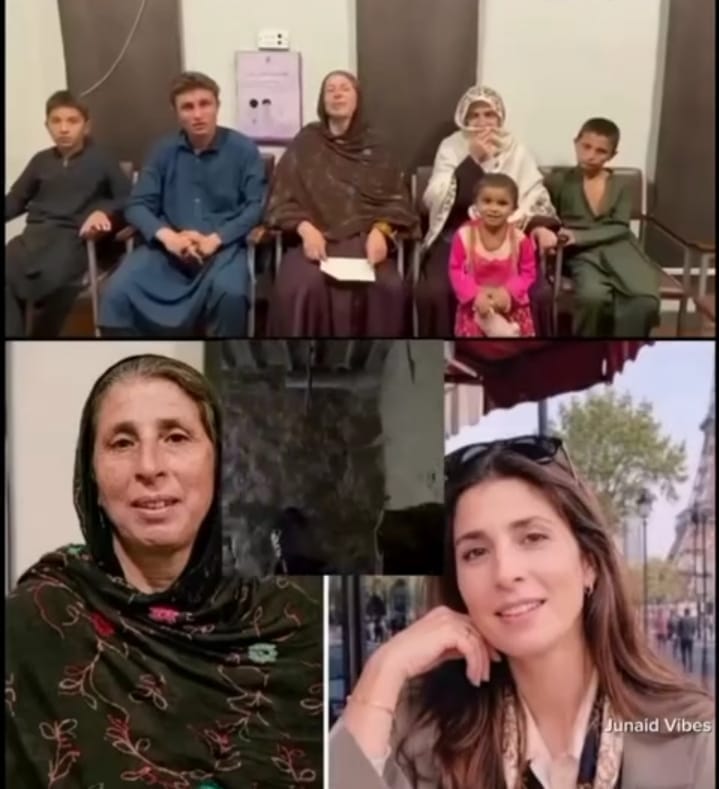
PESHAWAR, Pakistan — For more than a decade, the mud-brick house in Bara, a conservative outpost in Pakistan’s northwestern Khyber Pakhtunkhwa province near the Afghan border, held a grim secret. Behind its walls, a 54-year-old French citizen and her five children were allegedly confined to a single, dilapidated room, systematically cut off from the outside world and subjected to a relentless campaign of physical and psychological abuse.
The family’s 12-year ordeal came to a dramatic end after an 18-year-old son managed to slip past his father, escape the house, and reach a nearby police checkpoint in the Khyber District. His desperate plea for help triggered a swift raid by local law enforcement, resulting in the rescue of his mother and four siblings, and the arrest of his father.
The district police chief, Waqar Ahmad, confirmed that the woman, identified as Sylvie Yasmina, was found with visible injuries on her face. Her children showed physical signs of long-term trauma and neglect.
According to investigators, the three youngest children, who were born during the captivity in Pakistan, had never stepped foot inside a school. The two older children, who arrived in Pakistan as toddlers, were entirely denied an education.
”We were deprived of our freedom,” Ms. Yasmina said in an initial statement to the police, parts of which were later shared with regional media.
“My husband didn’t take care of us the way he should as a husband and the father of my children. He beats us and puts pressure on our lives on a daily basis. I felt that my future was already ruined, and the future of the children would also be ruined.”
The case dates back to 2003, when Ms. Yasmina married her husband, identified by police as Ahmad Khan (also referred to in local reports as Noor Muhammad). The couple initially built a life together in Australia, where their first two children were born.
However, in 2014, the family relocated to Mr. Khan’s ancestral homeland in Pakistan. What was supposed to be a family transition quickly morphed into a hostage situation. Ms. Yasmina told investigators that almost immediately upon arriving in the country, her husband “effectively imprisoned” her and the children, isolating them from neighbors and local communities.
The tribal regions of Khyber Pakhtunkhwa, where the family was kept, are governed by deeply entrenched, conservative social structures. In these areas, the privacy of the home is fiercely guarded, and the internal affairs of a family are rarely questioned by outsiders.

This cultural insularity provided an effective shroud for Mr. Khan, allowing him to keep his French-born wife and children completely hidden for over a decade.
The harrowing rescue has cast a harsh, renewed spotlight on the pervasive crisis of domestic violence in Pakistan. Human rights organizations argue that while Ms. Yasmina’s status as a foreign national has brought international attention to her plight, her suffering mirrors that of thousands of Pakistani women whose abuse remains invisible.
According to data from the Aurat Foundation, a prominent Pakistani women’s rights organization, hundreds of cases of severe physical and psychological domestic abuse are reported across the country every year.
However, advocates emphasize that the official numbers represent only a fraction of the actual crisis, as structural barriers, police reluctance, and immense social stigma prevent the vast majority of victims from seeking help.
”This case should serve as a wake-up call for our authorities and our society,” said Shabina Ayaz, the director of the Aurat Foundation.
“If a foreign national and her entire family can be kept in a single room for twelve years without anyone noticing, it shows how deeply we fail to protect victims of domestic abuse within domestic spaces.”
The psychological toll on the children is expected to be severe. Having grown up in total isolation, stripped of formal socialization or schooling, the path to rehabilitation will be long.
Ms. Yasmina and her five children have been transferred to a women’s crisis shelter in Peshawar under police protection. Local authorities are currently coordinating with the French Embassy to process missing travel documents and arrange for the family’s immediate repatriation to France, where Ms. Yasmina has expressed an urgent desire to rebuild their broken lives.
