

By Emmanuel Thomas l Sunday April 12, 2026
TAMPA, Fla. — The United States military will begin a full-scale maritime blockade of all Iranian ports on Monday morning, a dramatic escalation intended to paralyze Tehran’s economy following the collapse of high-stakes peace negotiations in Pakistan.
U.S. Central Command (CENTCOM) announced Sunday that the blockade will take effect at 10 a.m. Eastern Time on April 13.
The operation, authorized by a proclamation from President Donald Trump, marks one of the most aggressive uses of American naval power in decades, effectively placing a stranglehold on Iran’s ability to import goods or export oil by sea.
“The blockade will be enforced impartially against vessels of all nations entering or departing Iranian ports and coastal areas,” CENTCOM said in a statement.
The order encompasses all Iranian facilities along the Arabian Gulf and the Gulf of Oman, two of the world’s most critical energy corridors.
In an apparent effort to prevent a total shutdown of global energy markets, CENTCOM clarified that the military would not impede the “freedom of navigation” for ships transiting the Strait of Hormuz, provided their destination is a non-Iranian port.
However, the distinction may offer little comfort to global markets. Shipping insurance rates have already skyrocketed in anticipation of the move, and maritime experts warn that “impartial enforcement” against third-party vessels—including those from China or India—could spark a wider international crisis.
The military has advised commercial mariners to monitor emergency broadcasts and maintain contact with U.S. naval forces on bridge-to-bridge radio channels while operating in the region.
The move comes just hours after a U.S. delegation, led by Vice President J.D. Vance, departed Islamabad, Pakistan, after failed talks with Iranian officials.
The negotiations were intended to find a permanent solution to the ongoing regional conflict and address Iran’s nuclear program, but ended in what administration officials described as a “total impasse.”

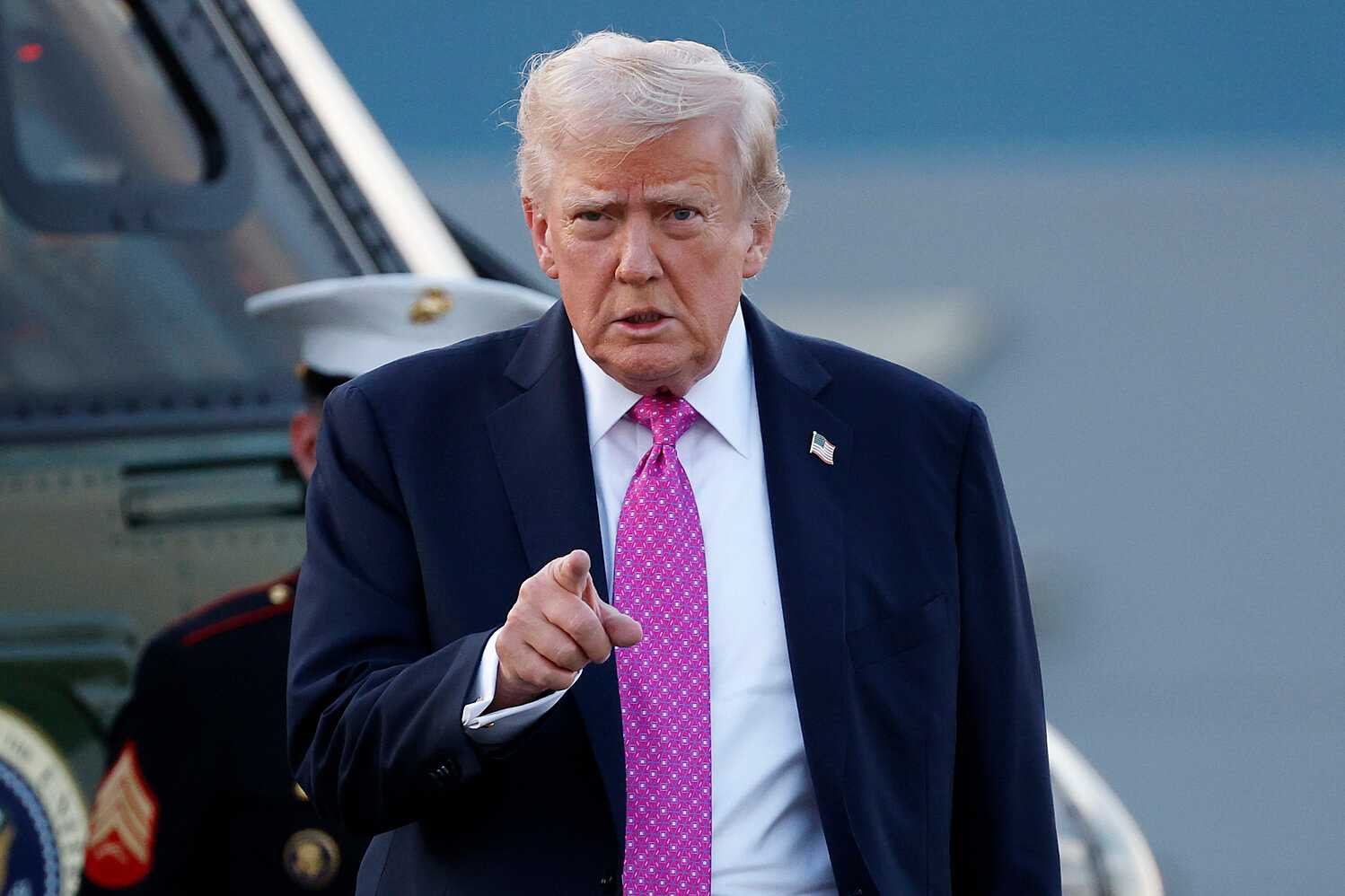
President Trump, speaking to reporters earlier on Sunday, signaled a return to a “maximum pressure” campaign on a scale never before seen.
“They had their chance at the table,” the President said. “Now we are going to ensure that not a single drop of oil or a single crate of supplies moves in or out until they come back with a real deal.”
The blockade is a gamble of historic proportions. Under international law, a blockade is generally considered an act of war.
While the U.S. maintains it is a necessary security measure to prevent Iranian aggression and nuclear proliferation, the move is expected to draw sharp rebukes from the United Nations and traditional allies in Europe.
Tehran has already responded with defiance. Iran’s navy chief, Shahram Irani, dismissed the threat as “ridiculous,” asserting that Iranian forces are monitoring all U.S. movements.
As of Sunday night, two U.S. aircraft carrier strike groups remain positioned in the Middle East, supported by a coalition of approximately 50,000 troops.
With the 10 a.m. deadline looming, the world watches the Persian Gulf, where a single miscalculation by a merchant vessel or a naval commander could ignite a broader global conflagration.
Context & Background for the Story
Timeline of Conflict: The 2026 crisis began earlier this year following a series of escalations between Israel and Iran, leading to direct U.S. military involvement.
A brief two-week ceasefire was established on April 7 to allow for the Islamabad talks.
Economic Impact: Iran relies on maritime trade for over 90% of its exports. A blockade effectively cuts off its primary source of revenue.
Legal Standing: Unlike “sanctions,” which are economic penalties, a “blockade” involves the physical use of force to prevent ships from entering or leaving. This is traditionally viewed as a “Casus Belli” (an act justifying war).
The “Hormuz” Factor: Roughly 20% of the world’s total oil consumption passes through the Strait of Hormuz. While the U.S. says it will allow non-Iranian traffic, the presence of a blockade makes the narrow waterway a de facto combat zone, likely scaring off most commercial shipping.
