


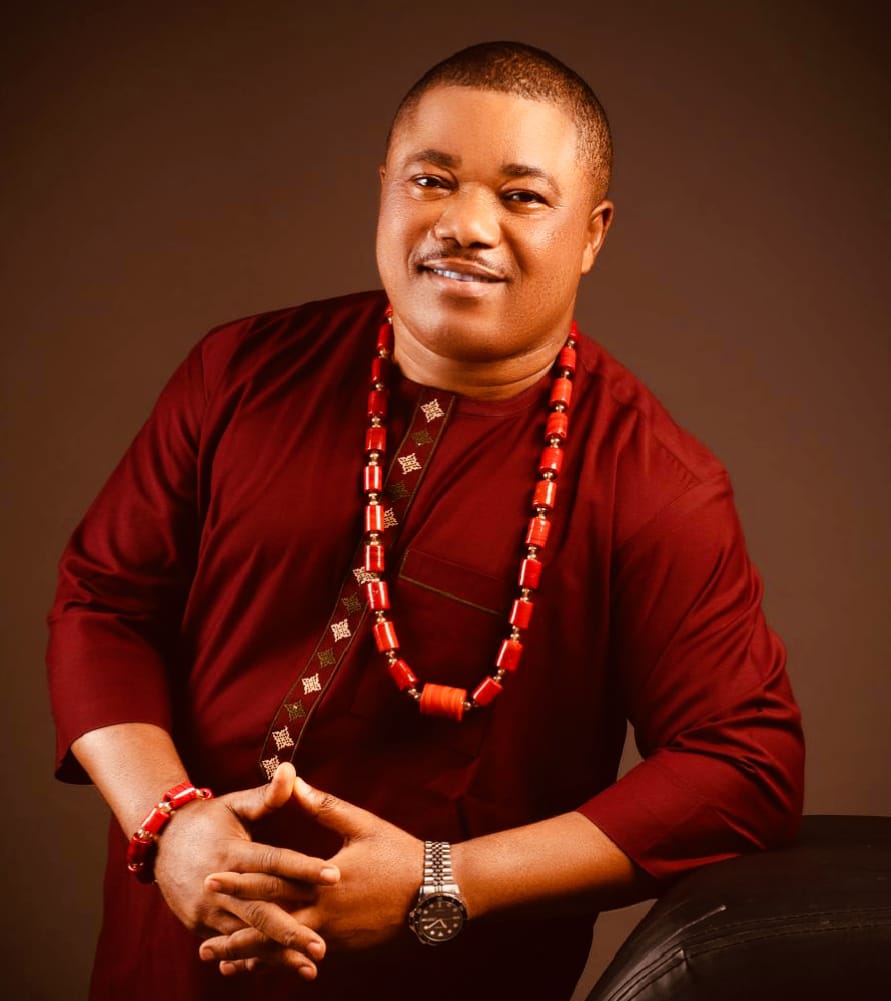
Titus Eleweke, South East Editor
AWKA, Anambra – Renowned Nigerian human rights lawyer and Lead Counsel to the Indigenous People of Biafra (IPOB), Sir Ifeanyi Ejiofor, has expressed deep concern over the killing of more than 400 Nigerians within a single week, lamenting what he described as the political leadership’s alarming indifference to the scale of the tragedy.
Ejiofor decried the fact that, rather than urgently addressing the worsening insecurity responsible for these deaths, Nigeria’s political class appears preoccupied with strategising for victory in the 2027 general elections.
The lawyer made these remarks in a statement released on Saturday, titled “Weekend Musing: When the State Negotiates with Terror and Campaigns on Corpses.”
“Nigeria has lost well over 400 prospective voters in a single week,” “Four hundred citizens who might have queued peacefully in 2027 now lie in shallow graves. As the attacks continue, one is compelled to ask: how many Nigerians will still be alive to exercise their franchise by 2027, if death continues to enjoy such unfettered electoral advantage?”Ejiofor stated.
He recalled that only days earlier, the Governor of Kaduna State, Senator Uba Sani, was broadcast nationally welcoming and celebrating the “release” of 183 abducted worshippers.
According to Ejiofor, the public might be forgiven for mistaking the spectacle for a diplomatic triumph, until it is remembered that the abductors’ initial demand was a relatively modest ₦28 million, reportedly claimed as compensation for damaged motorcycles, before negotiations progressed to what was described as “serious business.”
“Today, we are told—without explanation—that the captives regained their freedom through the ‘efforts’ of the Office of the National Security Adviser and the Department of State Services,” “How many terrorists were neutralised in this operation? None are named. None are paraded. None are prosecuted.”he said.
He added that the captives returned “newly clothed, well presented,” while Nigerians were subtly cautioned against asking what sums may have exchanged hands.
“One suspects,” Ejiofor continued, “that the truth will only surface when these merchants of terror decide to weaponise it.”
The human rights lawyer further argued that there has been no moment in Nigeria’s political history when the sovereignty of the state has been subjected to such a sustained, organised, and unapologetically destructive assault as the one currently unfolding.
“What distinguishes this moment,” he said, “is not merely the scale of the carnage, but the chilling predictability of the state’s response—or, more accurately, its ritualised indifference.”
While insecurity ravages the North-West, North-Central, and North-East, Ejiofor noted that Nigeria’s political elite appears engrossed in an entirely different project.
According to him, the Senate is preoccupied with “brazen and diversionary manoeuvres” designed to undermine the Electoral Act, rehearse the choreography of electoral manipulation ahead of 2027, and facilitate mass defections into what increasingly resembles a one-party state.
The time for euphemisms is over. Nigeria requires an immediate, uncompromising national security emergency declaration, followed by decisive, transparent, and ruthless dismantling of these terror networks. Not tomorrow. Now. Because death has become so routine that it is now reduced to statistics, and statistics, as history teaches us, are the final stage before conscience collapses.
Read parts of the statement:
“The pattern is now tediously familiar. Terror strikes. Lives are extinguished. Communities are erased. The Presidency issues a solemnly worded press statement, condemning the attack, sympathising with the bereaved, mourning the voiceless dead, and, as if by incantation, announces the “deployment of security forces.” The curtain then falls. The cycle ends. Until the next massacre.
While Nigeria bleeds under a coordinated onslaught by bandit–jihadist terror networks, its political leadership appears curiously preoccupied, not with saving lives, but with perfecting defections, rehearsing electoral manipulations, and choreographing a glide into a one-party state. This is not merely a failure of governance; it is a masterclass in state acquiescence to mass death.
One is compelled to ask: if the Nigerian state is not complicit by conduct, omission, or deliberate acquiescence, what becomes of the intelligence warnings routinely issued ahead of these attacks? Why are the monsters not intercepted before they strike? Why do they move with uncanny precision, unchallenged and unhindered, save perhaps by those within the security architecture whose silence is more eloquent than words?
Pause, truly pause, and consider this: how is it that nearly every major terrorist operation succeeds, cleanly and conclusively, without resistance, interception, or consequence? Is this operational genius, or institutional connivance?
Yet, even as jihadist terror sweeps through the North-West, North-Central, and North-East, Nigeria’s political class appears enthralled by a different project altogether. The Senate busies itself with brazen, diversionary manoeuvres aimed at subverting the Electoral Act, rehearsing the choreography for the rigging of the 2027 general elections, and perfecting a mass defection into what increasingly resembles a one-party state.
For context, lest we forget priorities; Nigeria has lost well over 400 prospective voters in a single week. Four hundred citizens who might have queued peacefully in 2027 now lie in shallow graves. And as the attacks continue, one wonders,how many Nigerians will still be alive to exercise their franchise by 2027, if death continues to enjoy such unfettered electoral advantage?
Only days ago, the Governor of Kaduna State, Senator Uba Sani, was broadcast nationally welcoming and celebrating the “release” of 183 abducted worshippers. One might be forgiven for mistaking the spectacle for a diplomatic triumph, until one recalls that the abductors’ initial demand was a modest ₦28 million, ostensibly compensation for damaged motorcycles, before negotiations could proceed to “serious business.”
Today, we are told, without explanation, that the captives have regained freedom through the “efforts” of the Office of the National Security Adviser and the Department of State Services. How many terrorists were neutralised in this operation? None are named. None are paraded. None are prosecuted. The captives return, newly clothed, well-presented, and we are politely advised not to ask what sums may have changed hands. One suspects that the truth will only surface when these terror merchants decide to weaponise it.
Meanwhile, the people of Woro Community in Kwara State announce, publicly and desperately, that they are exhausted from burying their dead. Community figures place the death toll at over 300, a figure far removed from the sanitised arithmetic of officialdom. These were Nigerians. Indigenous people. Christians and Muslims alike. Voters, many, perhaps, loyal affiliates of the ruling party. Their crime was existing.
Almost concurrently, Benue State burns. In Gwer West Local Government, government sources timidly admit to 20 lives lost in a market shooting. Twenty voters whose PVCs will never again be required. While the dead are still being counted in Benue, Katsina erupts, with over twenty more citizens slaughtered, triggering public protests that speak louder than any official condolence.
And through it all, the political elite remain steadfastly focused, receiving defectors, manipulating statutes, and plotting electoral dominance, as though governance were a private inheritance rather than a public trust.
So, one must ask: with this velocity of killing, is the survival of Nigerians now subordinate to the survival of political ambition? Is the primary duty of the state; security of life, now a negotiable afterthought?
Why, for instance, does the Federal Government deploy battalions of soldiers to Woro community after they have been decimated? Why is protection retroactive? If intelligence existed, as we are repeatedly told, would a fraction of those troops not have saved hundreds of lives before the bloodletting?
Are soldiers now assigned to guard graveyards and deserted villages, offering security to silence?
Has the Nigerian state, perhaps subconsciously, accepted the superior firepower of bandit-jihadist networks, now financially fortified by ransoms, often paid, directly or indirectly, by the same government sworn to defeat them?
Today, Nigeria sleeps with one eye closed, not from caution, but from exhaustion.