

By Emmanuel Thomas l Thursday, Oct. 08, 2026
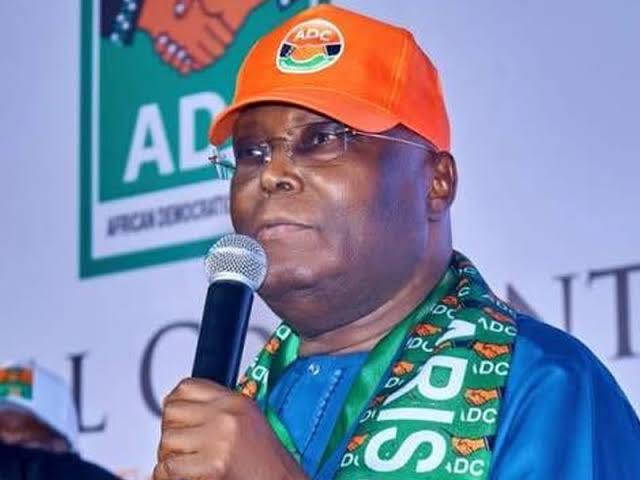
ABUJA — Former Vice President Atiku Abubakar has launched a fierce attack on President Bola Tinubu’s administration over its newly announced 30-day fuel discount at Nigerian National Petroleum Company Limited (NNPCL) retail stations, describing the measure as a “panic-driven publicity stunt” designed to trick Nigerians.
In a statement issued in Abuja on Thursday by Phrank Shaibu, Director of Strategic Communication of the African Democratic Congress (ADC) Presidential Campaign Council, the former Vice President rejected the intervention, characterizing it as a temporary, election-laced gesture that fails to address the root causes of the nation’s severe cost-of-living crisis.
Atiku argued that after subjecting citizens to prolonged economic pain following the removal of the petrol subsidy, offering a short-lived discount at selected outlets is both reckless and disgraceful.
“Atiku totally rejects this calendar-scheduled, election-laced subsidy package,” the statement read. “Nigerians are not fools to be offered a month of discounted fuel after years of punishing prices and then expected to forget the hardship when the discount expires.
This is shameless and heartless”.
Questions Over Long-Term Sustainability
Faulting the long-term viability of the policy, Atiku questioned what becomes of citizens once the temporary 30-day window closes.
“What happens on Day 31? Nigerians wake up to the same brutal prices, the same punishing transport fares, and the same rising cost of food. The government cannot manufacture relief for one month and expect Nigerians to applaud while the hardship remains,” he stated.
He further pointed out structural gaps in the arrangement, noting that the offer is exclusively restricted to NNPCL filling stations.

He observed that the Federal Government has neither specified the exact savings per litre nor provided guarantees that commercial transport operators will pass down any reduced costs to commuters via cheaper fares.
According to Atiku, the sudden reversal on social welfare interventions is a clear admission of guilt regarding the severe socio-economic distress experienced by households nationwide. He noted that the policy turn-around undermines previous claims by government spokespersons that economic relief mechanisms were technically impossible to execute.
“This volte-face proves that the production-support proposal I have advanced is workable, achievable, and not complicated,” Atiku maintained.
“The Tinubu government and its spin doctors have tried to make it sound impossible, yet they are now reaching for a temporary subsidy-style intervention because the pain has become impossible to ignore”.
Reiterating his policy alternative, the former Vice President advocated for a structured, capped, and budgeted production-support framework tied directly to domestically refined fuel.
He emphasized that such a plan, backed by strict regulatory safeguards, would ensure price stability while encouraging local refining capacity.
“Nigerians need lasting relief, not a countdown to the return of hardship. Tinubu’s government cannot spend years telling Nigerians to endure, then offer 30 days of relief and call it a solution. Tinubu made life expensive. I will make life affordable again,” he declared.
The sharp political exchange follows the Federal Government’s announcement of a temporary price modulation mechanism aimed at dampening petrol price volatility. Under the arrangement unveiled by the government, NNPCL retail stations will offer a 30-day discounted rate on Premium Motor Spirit (PMS), prioritizing public transport operators in an effort to curb escalating transportation fares.
The policy comes against the backdrop of sustained inflationary pressures across Nigeria since May 2023, following the immediate removal of the fuel subsidy and the floating of the Naira. Pump prices of petrol have surged from under ₦200 per litre in early 2023 to between ₦1,350 and ₦1,400 per litre across various zones, driving headline and food inflation to record highs.
While government officials maintain the 30-day intervention is a cost-reflective market smoothing tool rather than a return to the direct subsidy regime, opposition figures argue that the timing—amid growing public discontent ahead of upcoming electoral cycles—is designed primarily to win political favor rather than offer permanent economic restructuring.
