

By SCM Political Correspondent
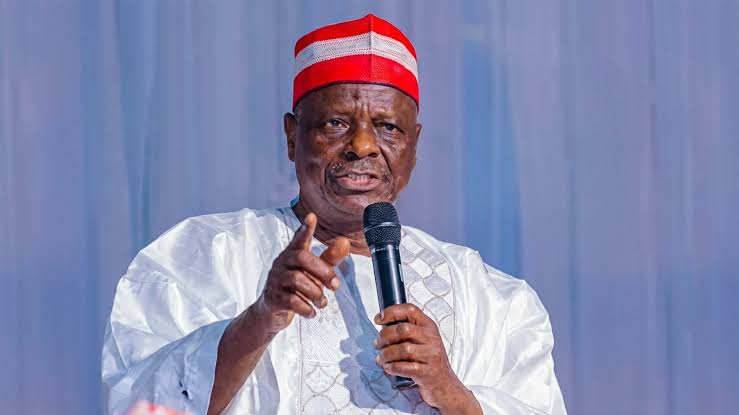
ABUJA, NIGERIA – The political landscape ahead of the 2027 general elections grew more combustible this week as the presidential candidate of the Nigeria Democratic Congress (NDC), Senator Rabiu Musa Kwankwaso, launched a scathing rejoinder against former Borno State Governor, Senator Ali Modu Sheriff.
Kwankwaso’s reaction followed an interview granted by Sheriff on Channels Television on Monday, where the former Borno helmsman asserted that the standard-bearer of the opposition alliance, Mr. Peter Obi, lacks the political capital to secure substantial electoral support across Northern Nigeria.
In a strongly-worded statement released on Tuesday, signed with his traditional initials “RMK”, Kwankwaso expressed deep disappointment over Sheriff’s remarks.
He accused the former Borno State governor of appointing himself an unauthorized spokesperson for the Northern masses and utilizing a major national media platform to peddle divisive rhetoric rather than addressing pressing regional challenges.
Rebuffing Sheriff’s claims with statistical data from the previous electoral cycle, Kwankwaso pointed out that Peter Obi is no stranger to the northern voter consciousness.
He noted that during Obi’s debut outing on the presidential ballot, the former Anambra State governor pulled approximately 2.8 million votes across the northern states—an electoral haul Kwankwaso described as a remarkable milestone that cannot be flippantly dismissed by political actors.
”I watched with disappointment the recent interview granted by Senator Ali Modu Sheriff to Channels Television on Monday. After a prolonged absence from public discourse, one would have expected that time away might have sharpened Senator Sheriff’s judgment. Regrettably, that does not appear to be the case,” Kwankwaso stated.
He further argued that the electoral calculations in the North have fundamentally shifted due to worsening nationwide economic hardships, which many citizens blame on the shortcomings of the ruling All Progressives Congress (APC) administration.
Kwankwaso added that the formalization of the “OK” (Obi/Kwankwaso) joint ticket—complemented by his own grassroots political structure which pulled 1.45 million votes predominantly from the northern region in the previous cycle—makes the opposition platform an absolute powerhouse.
Kwankwaso took specific exception to Sheriff’s baseline claim that the swing-state of Kano would reject Peter Obi. Kano, historically a major decider in Nigerian presidential elections due to its vast voting population, remains the redoubtable fort of the Kwankwasiyya movement led by Kwankwaso.
Defending the political character of the ancient commercial city, Kwankwaso maintained that Kano voters evaluate candidates based on competence and progressive alliances rather than ethnic sentiments.
”Let me state clearly: the good people of Kano are neither bigoted nor xenophobic,” Kwankwaso stated emphatically. “They have consistently demonstrated strong trust in the Kwankwasiyya movement and will support any credible ticket presented under its banner.”

Following the fragmented outcomes of the 2023 general elections, where the ruling APC secured power amidst a fractured opposition split across the Peoples Democratic Party (PDP), Labour Party (LP), and the New Nigeria Peoples Party (NNPP), frantic alignment talks commenced behind closed doors.
Those negotiations culminated earlier in 2026 with the birth of a formal opposition coalition under the umbrella of the Nigeria Democratic Congress (NDC). In a historic concession during the NDC National Convention, Senator Rabiu Musa Kwankwaso formally surrendered the presidential ticket slot to Mr. Peter Obi, stepping into the Vice-Presidential running mate slot to create what insiders call the “OK Ticket” (Obi-Kwankwaso).
This alliance seeks to synthesize the immense youth-driven, urban machinery of Obi’s “Obidient” base with the fiercely loyal, highly structured grassroots mobilization power of Kwankwaso’s “Kwankwasiyya” movement in the North.
Senator Ali Modu Sheriff, on the other hand, is a foundational chieftain of the ruling APC and a former factional National Chairman of the PDP.
His sudden reappearance on national television to devalue the potency of the opposition block is viewed by political analysts as an intentional salvo fired on behalf of the ruling establishment to split the growing northern confidence in the Obi-Kwankwaso alliance.
Rounding off his rebuke, Kwankwaso advised Sheriff to look inward and focus his political energy on solving the existential problems bedeviling his own immediate constituency.
Borno State and the wider North-East have remained the epicenter of a grueling, decade-long humanitarian and security crisis driven by insurgency.
”I respectfully advise Senator Sheriff that, in future national television appearances, he would do better to speak to the serious insecurity and humanitarian challenges facing his home state, rather than making divisive and poorly considered remarks,” Kwankwaso admonished.
He concluded by reiterating that the “OK” ticket remains the most strategic vehicle to salvage Nigeria, promising to run on a platform centered entirely on administrative competence, national cohesion, and accelerated socioeconomic progress.
As the countdown to the 2027 elections begins, observers expect verbal exchanges of this nature to intensify between the entrenched ruling class and a re-engineered opposition.
