
By SCM Staff Writer I Wednesday, October 22, 2025
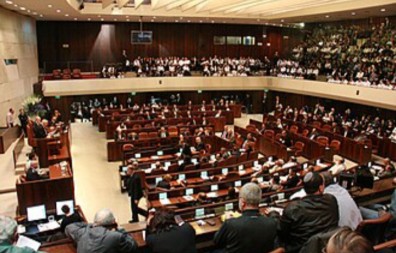
JERUSALEM – Israeli lawmakers delivered a shocking snub to the White House today, passing a preliminary vote on a controversial bill to annex the West Bank – all while US Vice President JD Vance was on an official visit to the country.
The ‘Application of Israeli Sovereignty in ‘Judea and Samaria’ (West Bank)’ bill scraped through the Knesset in its first reading, sparking a major diplomatic headache for the Prime Minister’s government and risking a huge row with President Donald Trump.
The brazen move came despite President Trump’s explicit warning last month that he “will not allow” Israel to annex the territory.
The surprise victory for the far-right bill, which still requires two more votes to become law, has triggered a furious response from the ruling Likud party.
Likud officials slammed the bill as “trolling aimed at damaging relations with the United States,” suggesting the timing of the vote was deliberately provocative during Mr. Vance’s visit, which is focused on maintaining the fragile Gaza ceasefire.
Prime Minister Benjamin Netanyahu’s party had reportedly boycotted the vote, but a rebel Likud lawmaker broke ranks to cast the decisive vote, handing a narrow win to the bill’s far-right sponsors.
Presidential Warning
The timing couldn’t be worse for US-Israel relations.
Just weeks ago, President Trump publicly drew a “red line” over the annexation issue, signalling strong US opposition to any unilateral move that would permanently dash the hopes of a two-state solution with the Palestinians.

The West Bank, referred to by some Israelis by the biblical names Judea and Samaria, has been under Israeli military occupation since the 1967 war.
Annexing the land would mean applying Israeli civilian law to hundreds of thousands of Israeli settlers, in a move condemned by most of the international community as a breach of international law.
Mr. Vance, who is meeting with top Israeli officials, now finds himself in the middle of a major crisis, as Jerusalem’s hardline factions appear determined to test the limits of its ‘Special Relationship’ with the Trump Administration.
The drama will now move to a Knesset committee for deliberation before the bill can proceed to its second and third final votes.
The West Bank (Judea and Samaria): This is land captured by Israel from Jordan in the 1967 war. Israel has maintained a military occupation, while simultaneously building settlements there, which are home to hundreds of thousands of Israeli citizens. Most of the international community considers the settlements illegal and a major obstacle to peace. The area is claimed by the Palestinians for their future state.
Annexation: In this context, annexation means applying Israeli civilian law and full sovereignty over the territory, making it officially part of Israel. Such a move is widely viewed internationally as an end to the possibility of a “two-state solution,” which envisions an independent Palestinian state alongside Israel.
The Knesset Vote: The bill was passed in a preliminary reading. For it to become law, it must pass a second reading and a final third reading in the Knesset plenum, a process that can take a long time and is not guaranteed to succeed. The narrow margin of the vote (reported as 25-24) highlights the internal political division on the issue.
US Position: President Trump’s administration has been generally supportive of Israel but has drawn a firm line against full-scale annexation of the West Bank, citing concerns it could destabilize the region and threaten the normalization agreements (Abraham Accords) with Arab states.
JD Vance’s Visit: The US Vice President is in Israel, reportedly to discuss the status of the ongoing ceasefire in Gaza and broader regional security, making the annexation vote an immediate and unwanted diplomatic challenge for the US delegation.