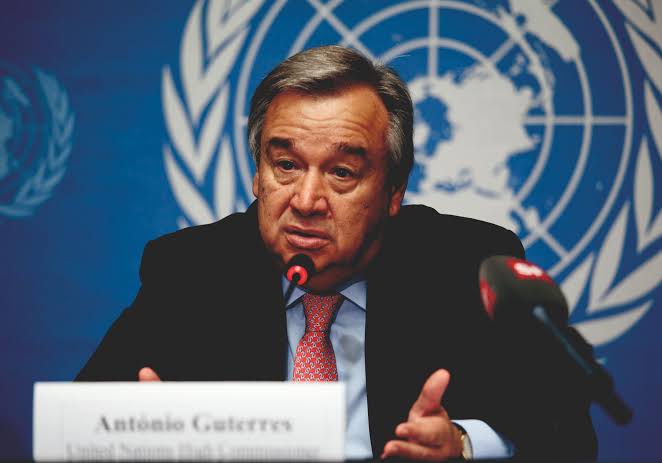

Guterres issues ‘law of the force’ warning to US and Israel while telling Iran: ‘Stop attacking your neighbours’
By SCM REPORTER
UNITED NATIONS chief Antonio Guterres has issued a chilling “last chance” warning to world powers, demanding an immediate end to the conflict threatening to plunge the global economy into a death spiral.
In a high-stakes intervention at the European Council in Brussels, the Secretary-General warned that the war is spiralling “out of control” and is on the verge of triggering a worldwide catastrophe.
Directing his fire at the United States and Israel, Mr. Guterres said it was “high time” to stop the fighting, which he says is inflicting “immense suffering” on innocent civilians.
But he saved his bluntest words for Tehran, ordering the Iranian regime to stop its regional bullying.
”Stop attacking your neighbours,” he told Iranian leaders. “They were never parties to the conflict.”
The UN chief’s intervention comes as the closure of the Strait of Hormuz—the world’s most vital oil chokepoint—sends shockwaves through global markets.
Mr. Guterres warned that the blockade is causing “enormous pain” for millions of ordinary people across the globe who have “nothing to do with this conflict.”
He added: “The Security Council has condemned these attacks, has ordered them to stop, as it has ordered to open the Strait of Hormuz.”

In a direct appeal for a return to the negotiating table, he called for a “triumph of diplomacy” over the “law of the force.”
The UN chief warned that the poorest nations on earth are currently being hit hardest by the economic fallout, but warned that no one is safe if the “dramatic effects” on the global economy continue.
“It’s time for the force of the law to prevail over the law of the force,” he said. “It’s time for diplomacy to prevail over war.”
The Secretary-General’s emergency statement follows months of escalating military tension in the Middle East that has now spilled over into a global economic crisis.
The Strait is the world’s most important oil artery. Roughly one-fifth of the world’s total oil consumption passes through this narrow stretch of water between Oman and Iran.
Iran has historically used the threat of closing the Strait as a “nuclear option” in diplomacy. A prolonged closure effectively chokes global energy supplies, sending petrol prices at the pumps soaring and causing food prices to spike globally.
The UN Security Council has grown increasingly frustrated with Tehran’s use of proxy attacks against neighbouring Gulf states.
While the US and Israel have maintained that their military actions are necessary for regional security, Guterres is now signalling that the “collateral damage”—both human and economic—has reached a breaking point that the international community can no longer ignore.
By specifically mentioning “least developed countries,” Guterres is highlighting a brewing humanitarian disaster.
While wealthy nations face inflation, poorer nations face total economic collapse and famine as shipping costs and energy prices become unmanageable.