


By SCM International Desk I Thursday, Oct. 09, 2026
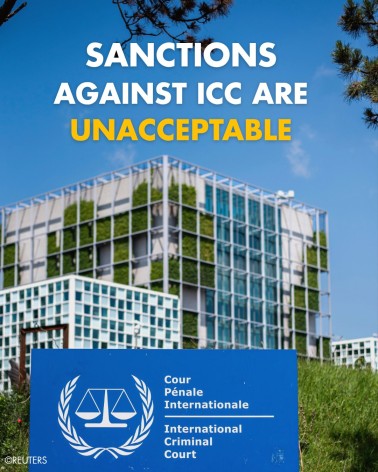
GENEVA — The United Nations High Commissioner for Human Rights, Volker Türk, strongly condemned the United States government on Friday following its decision to impose institutional sanctions against the International Criminal Court (ICC), calling the measures “unacceptable” and warning that they threaten the foundation of global justice.
In an official statement released by the Office of the High Commissioner for Human Rights (OHCHR), Mr. Türk voiced grave concern over the punitive actions, cautioning that coercive financial and operational restrictions risk crippling the tribunal’s mandate to investigate and prosecute the world’s most egregious crimes.
“They must not be allowed to have a chilling effect on those working for or with the Court in pursuit of justice,” Mr. Türk said. “I particularly urge the 125 States Parties to the Rome Statute of the International Criminal Court — a full two-thirds of the international community — to take urgent steps to defend its crucial work and assure its ability to function. They have a particular obligation to protect the institution they have created.”
The sharp rebuke highlights an escalating ideological and legal rift between Washington and the world’s primary court of permanent jurisdiction for war crimes, crimes against humanity, genocide, and the crime of aggression.
The standoff between the United States and the Hague-based tribunal spans multiple presidential administrations. Established in 2002 under the 1998 Rome Statute, the ICC was conceived as an independent court of last resort to ensure that perpetrators of the most horrific atrocities could not escape justice, regardless of official status.
While the United States under President Bill Clinton signed the treaty in 2000, Washington never ratified it. In 2002, President George W. Bush took the unprecedented step of “unsigning” the treaty, citing fears that American soldiers and officials could face politically motivated prosecutions abroad.
That same year, Congress passed the American Service-Members’ Protection Act—informally dubbed the “Hague Invasion Act”—which authorized the president to use “all means necessary” to release any U.S. or allied personnel detained by the court.
Relations experienced brief periods of pragmatic cooperation under President Barack Obama, who assisted the court with specific fugitive surrenders, but deteriorated sharply during the first administration of Donald J. Trump.
In 2020, Washington targeted ICC prosecutor Fatou Bensouda and senior staff with asset freezes and visa restrictions after the court initiated probes into alleged war crimes by U.S. forces in Afghanistan and Israeli personnel in the Palestinian territories.
Though President Joe Biden revoked those executive sanctions in April 2021—describing them as “inappropriate and ineffective”—underlying bipartisan opposition to the court’s jurisdiction over non-member states persisted. The latest wave of sanctions reflects renewed legislative and executive efforts to block ICC investigations involving American citizens and foreign allies who have not signed the Rome Statute.
Global Implications and Legal Shielding
The sanctions against the court typically mandate the blocking of property subject to U.S. jurisdiction, financial transaction bans, and entry bans for targeted officials and their immediate families.
Human rights organizations warn that such measures do not merely impact high-ranking judges and prosecutors; they also endanger researchers, witnesses, non-governmental legal partners, and financial institutions that interact with the court.
Mr. Türk highlighted that the onus now falls squarely on the 125 nations that signed and ratified the Rome Statute to shield the institution from bilateral pressure.
Legal scholars suggest that defending the ICC may require member states to activate domestic blocking statutes—similar to regulations utilized by the European Union—to neutralize the extraterritorial reach of U.S. sanctions. Additionally, diplomats have raised concerns that penalizing an international tribunal establishes a dangerous precedent, offering authoritarian regimes a playbook for undermining multilateral human rights accountability.
In his closing appeal, Mr. Türk emphasized that preserving the judicial independence of the ICC is essential for maintaining order in an increasingly volatile global landscape. Without concerted protection from its state parties, international experts warn, the universal standard that no leader or nation is above the law faces an existential crisis.