


By SCM Correspondent
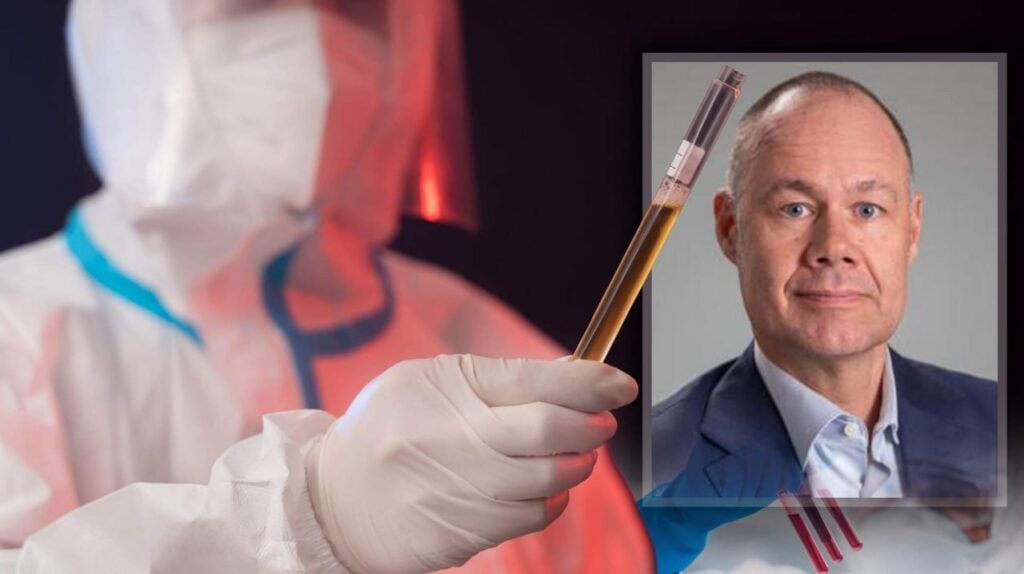
DETROIT — Two prominent federal scientists working at a premier National Institutes of Health laboratory have been arrested and charged in a federal criminal complaint, accused of conspiring to smuggle vials of the mpox virus into the United States on a commercial flight and lying to customs officials.
The researchers, Vincent Munster, 53, the chief of the Virus Ecology Section at the N.I.H.’s Rocky Mountain Laboratories in Montana, and Claude Kwe, 38, a research fellow, were stopped by Customs and Border Protection officers at Detroit Metropolitan Airport.
The two men were returning from a nine-day research trip to Brazzaville, Republic of Congo, a region navigating an active outbreak of mpox.
According to federal court documents unsealed in Detroit, the scientists were traveling with a large black plastic case that they initially told border agents contained only unused diagnostic and testing equipment.
However, a physical search of the luggage by customs officers and FBI agents revealed a hidden cache: 113 vials packed inside Styrofoam coolers. Preliminary testing conducted by the FBI on an initial batch of 20 vials revealed that 17 tested positive for mpox DNA, while others contained the chickenpox virus and human DNA.
”These N.I.H. experts apparently broke our laws by smuggling viral pathogens on a packed commercial airplane from an outbreak in the Republic of Congo,” U.S. Attorney Jerome F. Gorgon Jr. said in a statement.
“Let that sink in. No researchers should believe their positions, credentials, or professional status place them above the law.”
The charges—conspiracy to smuggle goods into the United States and making false statements to federal law enforcement—carry a maximum penalty of five years in prison.
The case has swiftly ignited a fierce debate within the international scientific community over the line between strict biosecurity protocols and the practical realities of fieldwork.
According to investigators, when pressed at the airport about missing permits required by the U.S. Department of Agriculture, Dr. Munster allegedly told officers that the paperwork was on his laptop, adding, “But you don’t need them. I do this all the time.”
Independent virologists speaking on the condition of anonymity noted that the material in question was “inactivated,” meaning the virus had been chemically rendered non-infectious and incapable of replicating or spreading.
In global health research, transporting inactivated material is a routine mechanism used to share reference samples and calibrate diagnostic tools between international hot zones and domestic labs.
Federal prosecutors, however, have dismissed the defense of professional routine, labeling the attempt to bypass international declaration forms and hide the vials as a “conspiracy” to bypass strict post-pandemic containment laws.
”Any deliberate effort to conceal and smuggle biological materials into the United States without proper authorization is a breach of the public’s trust and could have placed the public at risk,” said Marcus L. Sykes, Special Agent in Charge for the Department of Health and Human Services Office of Inspector General.
The National Institutes of Health stated that it is cooperating fully with law enforcement, but declined further comment on what it termed an ongoing “personnel matter.” Dr. Munster and Mr. Kwe are expected to make their first court appearances in Missoula, Montana.