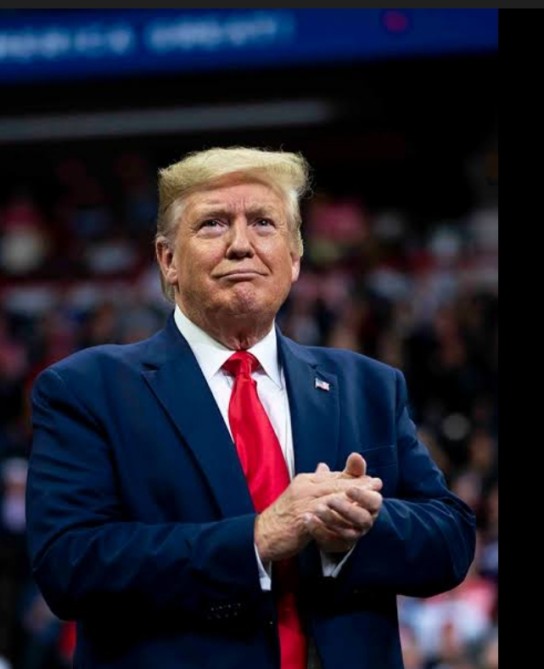

Trump has demonstrated a willingness to use economic leverage and the threat of force to achieve his objectives, which can be seen as both a deterrent to war and a precursor to it. His unpredictability has been both a source of concern for allies and a tool, at times, to keep adversaries off balance
Admin I Tuesday, June 24, 2025
WASHINGTON, United States – President Donald Trump’s approach to foreign policy has consistently defied conventional labels, leaving observers and analysts divided on whether he should be characterized as a war monger or a peacemaker.
His “America First” doctrine, marked by an unapologetic transactionalism and a skepticism towards long-standing international alliances, has produced both de-escalations and moments of heightened tension, creating a complex and often contradictory legacy.
Arguments for “War Monger”:
Critics often point to several aspects of Trump’s foreign policy that suggest a willingness to use or threaten military force, or that created conditions conducive to conflict:
Unilateral Actions and Bellicose Rhetoric: Trump’s presidency has been characterized by a readiness to act unilaterally, often bypassing traditional diplomatic channels and international norms.
His use of strong, often confrontational rhetoric, particularly on social media, has been seen as escalatory in various situations. For instance, his threats of “fire and fury” against North Korea or his demands for “unconditional surrender” from Iran have been cited as examples of a hawkish stance.
Increased Military Strikes in Some Regions: While campaigning on ending “endless wars,” data from his first term showed a significant increase in U.S. air strikes in some regions, such as Somalia, compared to previous administrations. Recent reports indicate this trend may continue in a potential second term.
Withdrawal from International Agreements: His administration’s withdrawal from the Iran nuclear deal (JCPOA) and the Paris Agreement on climate change, along with a general skepticism towards multilateral institutions, have been argued to destabilize global security frameworks and increase the likelihood of future conflicts. The argument here is that by dismantling diplomatic agreements, the path to military confrontation becomes more likely.
Trade Wars: The initiation of trade wars with major economic partners like China, Canada, and Mexico, while not military conflicts, created significant economic friction and raised concerns about broader geopolitical instability.

Pro-Israel Stance and Actions in the Middle East: Trump’s strong pro-Israel stance, including moving the U.S. embassy to Jerusalem and his recent authorization of strikes against Iranian nuclear sites, has been viewed by some as further entrenching regional conflicts and potentially drawing the U.S. deeper into Middle Eastern hostilities.
Arguments for “Peace Maker”:
Conversely, proponents of Trump as a peacemaker highlight his efforts to avoid new major wars and his emphasis on direct negotiations:
Avoidance of New Large-Scale Conflicts: Despite the fiery rhetoric, Trump did not initiate any new large-scale conventional wars during his first term. He often expressed a desire to bring U.S. troops home and to end what he termed “endless wars.”
Direct Diplomacy with Adversaries: Trump engaged in unprecedented direct talks with North Korean leader Kim Jong Un, a departure from decades of U.S. policy. While these talks did not lead to denuclearization, they were seen by some as a genuine attempt to de-escalate tensions and explore peaceful resolutions.
Abraham Accords: The brokering of the Abraham Accords, which normalized relations between Israel and several Arab nations, is widely cited as a significant diplomatic achievement that promoted peace and stability in the Middle East, even if critics argue it bypassed the core Israeli-Palestinian conflict.
Stated Desire for Deals: Trump consistently portrayed himself as a “dealmaker,” suggesting a preference for negotiated settlements over military confrontation, even if his negotiation tactics were often unconventional and aggressive. He has recently claimed to have brokered ceasefires, though these claims have often been disputed or have not materialized.
A Pragmatic (and Unpredictable) Realist?
Ultimately, classifying Donald Trump solely as a war monger or a peacemaker is a simplification of a highly complex and often contradictory foreign policy. His approach often aligns with a “realist” school of thought, prioritizing perceived national interests and strength, often at the expense of human rights considerations or traditional alliances.
He has demonstrated a willingness to use economic leverage and the threat of force to achieve his objectives, which can be seen as both a deterrent to war and a precursor to it. His unpredictability has been both a source of concern for allies and a tool, at times, to keep adversaries off balance.
The ongoing debate reflects the inherent duality of his “America First” vision: a desire to reduce costly foreign entanglements on one hand, and a readiness to assert American power aggressively on the other.
Whether this balance leans more towards peace or conflict remains a subject of intense scrutiny and will undoubtedly continue to be debated as his influence on global affairs persists.