


Admin I Monday, July 06, 2026
CARACAS, Venezuela — Eleven days after a devastating pair of twin earthquakes tore through northern Venezuela, the scale of the tragedy has reached staggering proportions.
Official government tallies released this weekend confirm that the death toll has surged past 3,300, while thousands of survivors, displaced by a relentless string of volatile aftershocks, face a worsening humanitarian crisis in temporary camps and public plazas.
The grim reality of the disaster crystallized over the weekend in the hard-hit coastal state of La Guaira. In a quiet, hastily excavated section of the La Esperanza cemetery, local workers buried more than 150 unidentified victims. Lacking names, the rows of fresh graves were marked with identical white crosses and a single shared date of death: June 24, 2026.
”We are first and foremost overcome with grief,” said Eli Zavala, a local resident who has spent the last week volunteering to dig plots. “We started working the very next day… just so these people could have a dignified burial.”
The disaster began on June 24 when a magnitude 7.2 foreshock violently jolted the north-central region. Just 39 seconds later, an even more powerful magnitude 7.5 mainshock struck along the San Sebastián fault system.
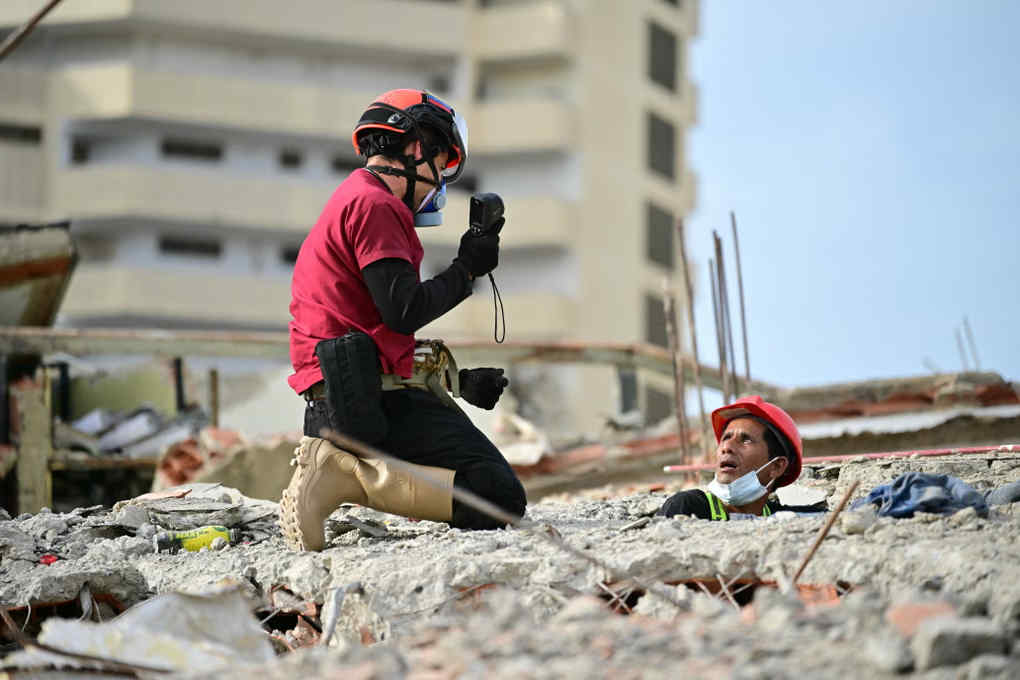
The shallow “doublet” earthquake propagated with violent speed toward the capital city of Caracas and surrounding coastal municipalities, flattening nearly 200 buildings and severely damaging infrastructure.
The Venezuelan Information Ministry reported that at least 16,470 people have been treated for injuries, while more than 17,000 individuals are confirmed homeless.
International experts warn the crisis could be vastly worse than official numbers indicate; United Nations estimates suggest up to 50,000 people may still be unaccounted for under the rubble.
Public Outrage and Aftershocks
The Maduro administration is facing intense, widespread criticism from both survivors and political opposition groups over a response that many describe as sluggish, disorganized, and deeply inadequate.
While interim officials defended the state’s deployment of roughly 9,500 metric tons of food and the establishment of field hospitals, citizens on the ground describe a chaotic reality. Continuous aftershocks have compromised the structural integrity of thousands of remaining homes, forcing fearful residents into the streets. In the city of Catia La Mar, families are sleeping in open plazas with minimal access to clean water or sanitation.
”I’ve lost track of the days,” said Zuly, a mother sleeping in a public square near the collapsed workplace of her missing son. “You lose your mind, but I’m not leaving here. I found his motorcycle, I found his helmet. I am not leaving without my son.”
The independent Pan American Health Organization (PAHO) issued a stark warning that the country is pivoting from a rescue operation to a secondary public health emergency.
Hospitals across eight states are completely overwhelmed. At the Vargas-IVSS hospital in La Guaira, medical personnel are reportedly trying to treat 96 patients in a ward built for eight beds, battling widespread power outages and a near-total collapse of forensic and morgue services.
With damage estimates hovering around $6.7 billion—roughly 6 percent of Venezuela’s gross domestic product—and the main international airport closed to commercial traffic, human rights organizations are urgently calling for an unhindered influx of foreign humanitarian aid to prevent further loss of life from disease outbreaks.
When filing a major international disaster piece, The New York Times relies on strong contextual background to help readers understand the underlying factors that exacerbate a tragedy. If you are developing this story further, keep these three historical and systemic pillars in mind:
Pre-Existing Infrastructure Fragility: Venezuela’s health care, electrical grid, and water systems were already severely deteriorated prior to June 2026 due to nearly a decade of economic hyperinflation, underinvestment, and international sanctions. This explains why standard hospitals collapsed so quickly under the initial strain.
The “Doublet” Seismology Factor: The earthquake was unique and highly destructive because it was a “doublet”—two independent, massive strike-slip events occurring less than a minute apart. The initial 7.2 quake weakened building foundations, making them highly susceptible to total collapse when the 7.5 mainshock hit seconds later.
Geopolitical Aid Hurdle: Historically, the Venezuelan government has maintained a tense relationship with Western humanitarian agencies.
The current friction stems from how aid is being distributed: the government wants direct control over incoming resources, while international bodies prefer to bypass state entities to ensure direct delivery to the displaced populations.