




By Emmanuel Thomas l Friday 17:2026
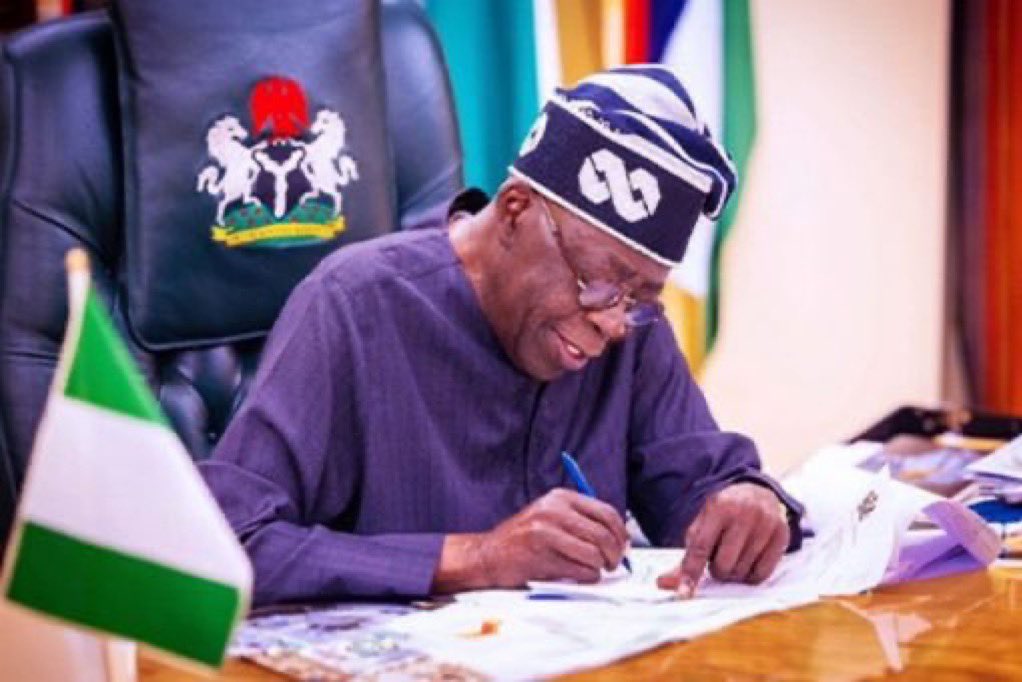
ABUJA – President Bola Ahmed Tinubu on Friday signed the 2026 Appropriation Bill of N68.32 trillion into law, marking a significant milestone in his administration’s efforts to accelerate national infrastructure development and economic stabilization.
The President also performed a dual legislative duty by signing a separate bill to extend the implementation period of the 2025 budget from March 31, 2026, to June 30, 2026.
This extension is intended to allow Ministries, Departments, and Agencies (MDAs) to complete ongoing capital projects captured in the previous fiscal year.
The 2026 Fiscal Breakdown
The N68.32 trillion budget, which reflects the administration’s “Renewed Hope” priorities, shows a heavy tilt toward infrastructure, with capital expenditure accounting for nearly half of the total estimates.
The allocation of N32.2 trillion to Capital Expenditure signals the government’s intent to bridge Nigeria’s massive infrastructure gap. However, the N15.8 trillion earmarked for Debt Service continues to reflect the country’s significant fiscal burden, slightly outpacing the N15.4 trillion set aside for non-debt recurrent expenditure (personnel and overhead costs).
Extending the 2025 Lifecycle
By extending the 2025 budget implementation to June 30, 2026, the President has effectively created a three-month “overlap” period. This move addresses perennial concerns regarding the abandonment of projects due to the strict expiration of fiscal years.
Economic analysts suggest this provides the executive arm with the necessary breathing room to ensure that funds released in the final quarter of 2025 are fully utilized for their intended purposes.
The 2026 budget arrives at a time when Nigeria is navigating a complex economic landscape characterized by inflationary pressures and a volatile exchange rate.
Historically, Nigerian budgets have faced challenges regarding the implementation ratio of capital projects. Under the 2025 fiscal year, the government aggressively pursued social intervention programs and energy transition initiatives (such as the CNG initiative) to cushion the effects of subsidy removals.
The N68.32 trillion figure for 2026 represents a substantial increase in nominal terms compared to previous years, reflecting both the devaluation of the Naira and an ambitious revenue mobilization drive by the Federal Inland Revenue Service (FIRS) and the Nigerian National Petroleum Company Limited (NNPCL).
With Debt Service consuming roughly 23% of the total budget, the administration remains under pressure to diversify revenue streams beyond oil to ensure the sustainability of this record-breaking “Budget of Growth.”