


By SCM Staff
A quietly unveiled bronze statue in a New Zealand suburb has ignited a fierce diplomatic firestorm, with Tokyo warning that the tribute to World War II “sex slaves” could permanently scar relations between the two nations.
The memorial, dedicated to the “comfort women” forced into sexual slavery by the Imperial Japanese Army, has become the center of a high-stakes row. While local activists say it’s a necessary tribute to forgotten victims, Japan has hit back with a blunt message to Wellington: The matter is closed.
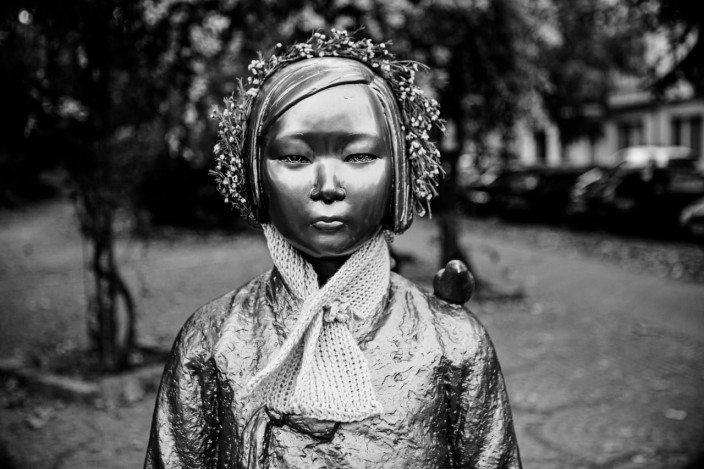
The statue depicts a young, barefoot girl sitting in a chair, a haunting symbol of the estimated 200,000 women—mostly from Korea, China, and the Philippines—who were trafficked into military brothels during the 1930s and 40s.
But for Tokyo, the bronze figure is more than a memorial; it’s a provocation. Japanese officials have reportedly warned New Zealand’s leadership that the statue’s presence could “damage ties” and undermine decades of diplomacy.
”This historical issue is already settled,” a Japanese spokesperson remarked, referring to a series of past apologies and a 2015 “final and irreversible” agreement with South Korea.
Japan argues that modern-day memorials keep old wounds open unnecessarily. They contend that the issue of “comfort women” was legally resolved through post-war treaties and compensation funds.
However, many survivors—affectionately known as “Nanas” or grandmothers—and their supporters argue that Japan has never fully atoned for the systemic brutality of the “comfort station” system.
The New Zealand government now finds itself caught between a rock and a hard place. While the statue was a private community initiative, the diplomatic fallout is very much a state affair.
The Activists: Claim the memorial is about human rights and education, not “Japan-bashing.”
The Diplomats: Fear that a single statue in a park could derail trade talks and security cooperation in the Pacific.
As the sun sets over the bronze girl in New Zealand, the shadows she casts are reaching all the way to the halls of power in Tokyo, proving that even 80 years later, the ghosts of the Pacific War are far from at rest.
The term “Comfort Women” is a translation of the Japanese ianfu, a euphemism for women and girls forced into sexual slavery for the Japanese Imperial Army before and during WWII.
The Scale: Historians estimate between 50,000 and 200,000 women were involved.
The System: Brothels were established across occupied territories to “prevent” random rapes and the spread of disease among soldiers, though the reality was a state-sponsored system of kidnapping and repeated sexual assault.
The Friction: Statues like the one in New Zealand (often called “Statues of Peace”) have been erected in the US, Germany, and Australia. In almost every case, the Japanese government has lobbied for their removal, arguing they promote anti-Japanese sentiment.