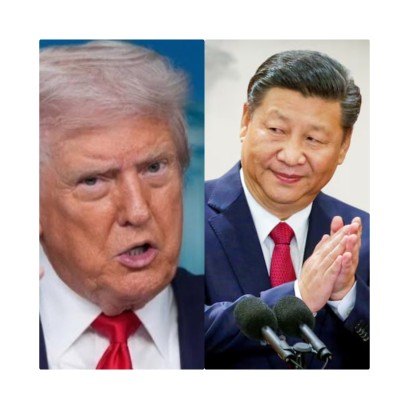
Why Uncle Sam’s trade war is backfiring—and leaving British jobs in the firing line
By SCM Finance Writer
WHEN Donald Trump marched back into the White House promising to “tax the life” out of Chinese imports, the world held its breath. We were told the Red Dragon would finally be tamed.
But have a look at the scoreboard today.
China hasn’t just survived; it’s thriving. A record $1.2 TRILLION surplus is a massive wake-up call for the West.
While Washington was busy building a wall of tariffs, Beijing was busy building bridges—to Africa, Asia, and Latin America.
They haven’t just dodged the bullets; they’ve rewritten the rules of the game.
The reality is as clear as a “Made in China” sticker. When America shut its front door, China simply opened 100 windows.
By flooding the “Global South” with cheap EVs, phones, and tech, they’ve made themselves indispensable to the rest of the planet.

And let’s be honest: while you talk about “de-coupling,” we’re still addicted to their prices.
You can put a 60% tax on a Chinese car, but if the Chinese government just subsidises the factory to make it even cheaper, who really wins? Not the Western worker.
”Here in Britain, we’re caught in a pincer movement. We can’t compete with China’s cut-price exports, and we can’t afford to get dragged into a trade war that makes our daily shop even more expensive.
”The US strategy was supposed to bring manufacturing home. Instead, it’s just pushed China to get smarter, leaner, and more aggressive”, experts are saying.
The way forward ? It’s time for the West to stop shouting at the Great Wall and start figuring out how to actually compete. If they keep relying on tariffs alone, they aren’t just losing the trade war—they’re paying for the privilege of coming second.
How China Won the “Tariff War” of 2025
Market Diversification: For the first time, China now exports more to the Global South than to the US and EU combined. Exports to Africa alone surged by 26% in 2025.
The “New Three” Strategy: China moved away from cheap toys and focused on “The New Three”: Electric Vehicles (EVs), Lithium Batteries, and Solar Products.
These are the “must-haves” for the green transition, making them hard for any country to block entirely.
Currency Tactics: Beijing allowed the Yuan to remain relatively weak, effectively making their goods even cheaper for foreign buyers, which cancelled out the impact of many US tariffs.
Logistical Dominance: China now controls 60% of global shipbuilding and has invested in ports across the world, ensuring their goods get to market even if the US Navy tries to flex its muscles.