


By SCM Staff
ABUJA — A damning evaluation by the International Monetary Fund (IMF) has exposed a massive fiscal chasm at the heart of Nigeria’s public finances, revealing that the administration of President Bola Tinubu oversaw an astonishing N8.83 trillion ($5.5 billion) in unbudgeted expenditures during the 2025 fiscal year.
The revelation, buried within the IMF’s latest Article IV consultation report, has triggered a fierce political backlash in Abuja and sent shockwaves through international financial markets. Critics argue the off-books spending represents a textbook case of “grand corruption” and state capture, threatening to derail the fragile stabilization of West Africa’s economic powerhouse.
According to the IMF data, the N8.83 trillion in expenditure was undertaken completely outside the framework of the federally approved N23.96 trillion 2025 budget. Because these funds bypassed the National Assembly entirely, they were shielded from both legislative oversight and standard administrative scrutiny—rendering the multi-billion-dollar outlays legally unaccounted for.
To understand the scale of the fiscal anomaly, analysts point to its sheer macroeconomic weight. The unbudgeted N8.83 trillion represents roughly 2% of Nigeria’s total Gross Domestic Product (GDP). More damningly, it constitutes over 35% of the nation’s entire 2025 capital expenditure budget, actually eclipsing the total volume of capital funding that was officially released to ministries and agencies last year.
The opportunity cost of these missing billions is starkly illuminated when contrasted against Nigeria’s crumbling social infrastructure. The off-books sum comfortably exceeds the country’s entire combined federal allocation for education (N3.52 trillion) and healthcare (N2.38 trillion).
In a country where over 100 million people live in multidimensional poverty and structural unemployment among young graduates hovers at crisis levels, the revelation has reignited visceral public anger. Economists argue that if properly utilized, a sum of this magnitude could have financed hundreds of cottage industries, stabilized the volatile electricity grid, and modernized a primary healthcare system currently suffering from a catastrophic “brain drain” of medical professionals to Europe and North America.
The Pattern of ‘Grand Corruption’
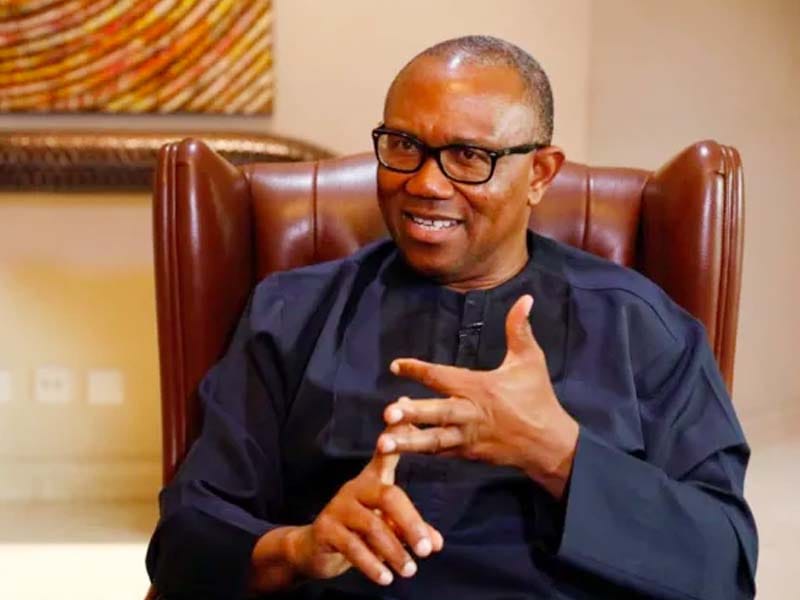
The burgeoning scandal has provided potent ammunition to the political opposition. Leading the charge is Peter Obi, the standard-bearer of the Labor Party and Tinubu’s primary rival in the contentious 2023 presidential election. In a blistering public statement, Obi characterized the IMF findings not as an administrative oversight, but as part of a deliberate pattern of systemic plunder.
”This is a pattern of grand corruption that has become ingrained in this administration,” Obi stated, renewing his recent calls for President Tinubu’s resignation. “The sort of corruption that operates in total disregard of elementary rules of public finance management poses a grave danger to national security and the stability of the Nigerian state. The collapse of elementary forms of due process under Tinubu reinforces the need for greater accountability. It is now time for Nigerian citizens to rise within the law and hold this administration to account.”
The presidency has historically pushed back against such allegations, attributing fiscal discrepancies to emergency defense spending, legacy debt servicing, and the messy unwinding of the country’s complex fuel subsidy regime. However, foreign investors and multilateral lenders are increasingly losing patience with Abuja’s opaque accounting practices.
Background: The Subsidy Trap and Fiscal Slippage
To understand how Nigeria arrived at this fiscal flashpoint, one must look at the structural choices made at the inception of the Tinubu presidency in May 2023. Upon taking office, Tinubu won praise from Wall Street and the IMF by abruptly abolishing a decades-old, multi-billion-dollar petrol subsidy and floating the artificially pegged Naira.
While these reforms were designed to free up fiscal space and plug revenue leakages, their execution triggered a severe cost-of-living crisis. The currency plummeted from roughly N460/$1 to over N1,600/$1, driving inflation above 30% and sparking widespread civilian protests.
Behind the scenes, the fiscal gains from ending the subsidy quickly eroded. Sources within the budget transition team suggest that despite the official abolition, the state-owned Nigerian National Petroleum Company (NNPC) continued to absorb massive, unbudgeted “under-recovery” costs to cap retail fuel prices and prevent total social unrest.
This off-balance-sheet maneuvering, combined with extra-budgetary interventions to stabilize the currency and fund opaque security operations in the volatile North, is believed to form the bulk of the unaccounted N8.83 trillion.
Institutional Decay and Market Fallout
For international observers, the danger extends far beyond the immediate political theater. The IMF’s revelation points to a deeper institutional decay: the comprehensive bypass of the Fiscal Responsibility Act and the erosion of the central bank’s guardrails. When billions of dollars flow through state coffers without legislative sign-off, institutional trust evaporates.
For an administration heavily reliant on external borrowing and foreign direct investment to bridge its infrastructure gap, the timing of the IMF report could not be worse. The revelation of an unbudgeted cash burn equal to 2% of GDP undermines Nigeria’s sovereign creditworthiness and will likely drive up the premium required for future Eurobond issuances.
As pressure mounts on the streets and within the halls of parliament, the Tinubu administration faces a choice. It must either provide a transparent, line-item reconciliation of the N8.83 trillion black hole or risk cementing the narrative that its economic reforms were not a path to modernization, but an enabler for unprecedented state capture.