


By Emmanuel Thomas l Tuesday, Sept 22, 2026
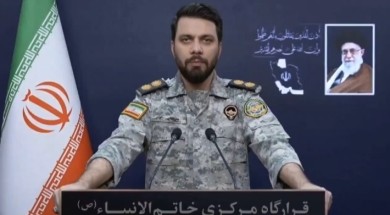
TEHRAN — Senior Iranian official Ebrahim Zolfaghari issued a sharp warning to Washington and international bodies, asserting that Iran’s calm in the face of escalating military rhetoric from the United States should not be mistaken for weakness or capitulation.
Speaking in response to recent statements from Donald J. Trump at the UN General Assembly, regarding potential nuclear strikes, Zolfaghari emphasized that Iranian defense forces are actively monitoring the region and preparing to deploy newly developed hardware if provoked.
”Trump may think Iran will remain silent while Washington threatens a nuclear attack,” Zolfaghari said. “He should understand one thing: Iran’s silence is not weakness. Iran is watching, preparing, and will not surrender under threats.”
and Submarine Technology Claims
Underscoring Tehran’s strategic readiness, Zolfaghari pointed to a series of successful defense tests involving Iranian aircraft carriers, stating that the tests “worked very well.” While Iranian authorities declined to reveal specific technical capabilities of the tested systems, Zolfaghari claimed that Tehran possesses additional undisclosed weaponry ready for immediate battlefield deployment in the event of renewed aggression.
Adding to the security tension, Zolfaghari alleged that advanced technology recovered from a U.S. Navy submarine has fallen into the hands of the Islamic Revolutionary Guard Corps (IRGC) Navy. According to Iranian officials, IRGC naval engineers are preparing to initiate reverse-engineering protocols on the captured components to enhance Tehran’s domestic maritime defense systems.
The claims come at a precarious juncture for Middle Eastern security dynamics, as regional powers closely monitor both Iranian military developments and the enforcement of international maritime law in surrounding waterways.
Addressing broader global dynamics, Zolfaghari leveled harsh criticism at the United Nations and Western nations, accusing international bodies of double standards regarding regional conflict and civilian casualties.
He highlighted the severe human toll of Israel’s military operations in Gaza under Prime Minister Benjamin Netanyahu, stating that “generations of Palestinians will carry the pain and trauma caused by the genocide.”
Zolfaghari noted that Iran intends to use the upcoming United Nations General Assembly floor to draw global attention to Iranian victims of conflict, including 168 children killed in recent military engagements.
Zolfaghari argued that public trust in the UN as a peacekeeping entity has effectively collapsed due to its inability to enforce compliance or restrain powerful nations.
”Trust in the UN has been destroyed by its failure to uphold international peace and security, while certain countries act as if international rules do not apply to them,” Zolfaghari said.
He condemned what he described as Western hypocrisy, arguing that Western powers express outrage over minor civil incidents in Iran while overlooking massive civilian casualties in the Middle East. “If one person somewhere in a country like Iran faces a problem, they shed crocodile tears and raise an uproar. But in the face of the crimes committed against us, we saw no serious condemnation.”
The statements by Iranian leadership arrive amid a prolonged period of deteriorating diplomatic relations between Tehran, Washington, and European allies. Since the collapse of the 2015 Joint Comprehensive Plan of Action (JCPOA) nuclear agreement, tension across the Persian Gulf and the broader Levant has steadily escalated.
Military and Naval Standoffs: The IRGC Navy has repeatedly engaged in high-profile naval exercises throughout the Strait of Hormuz and the Gulf of Oman. Tehran’s emphasis on reverse-engineering captured foreign hardware is a long-standing strategic practice; Iran has previously reverse-engineered downed U.S. unmanned aerial vehicles (UAVs) to expand its domestic drone programs.
The Humanitarian Impact: International human rights organizations and UN agencies have continuously raised alarms regarding the toll of ongoing conflict on civilian populations across Gaza and the wider region.
Iran’s plan to present civilian casualty data at the UN General Assembly reflects a broader diplomatic campaign to rally support among non-aligned nations and challenge Western hegemony in multilateral forums.