
Emmanuel Ukudolo I Tuesday, October 28, 2025
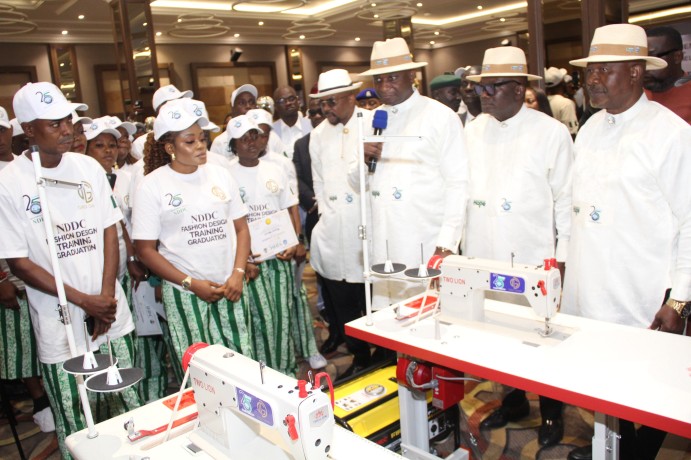
PORT HARCOURT, Nigeria — In a strategic shift from its traditional, short-term aid model, the Niger Delta Development Commission (NDDC) has graduated its first cohort of 100 youths from a rigorous, six-month intensive training program in fashion and design.
The initiative signals the agency’s commitment to sustainable empowerment, moving away from quick fixes toward long-term human capital development in Nigeria’s oil-rich but often economically fragile Niger Delta region.
Speaking at the graduation ceremony, NDDC Managing Director, Dr. Samuel Ogbuku, emphasized that the program represents the Commission’s pivot “from transaction to transformation.”
He contrasted the new approach with past practices, stating, “We don’t believe in quantity; we believe in quality. In the past, we trained thousands for a few days and gave out starter packs. This time, we camped participants for six months to ensure real transformation.”
“With the skills you have acquired, you have been empowered. Go out there, make your families proud, make Nigeria proud, and make the Niger Delta proud,” Dr. Ogbuku charged the graduates.
The beneficiaries, selected from the NDDC’s digitized database based on competence and interest, are not simply being sent off with a certificate.

NDDC Executive Director of Projects, Dr. Victor Antai, noted that the graduates are also being equipped with industrial sewing machines, generators, and logistics support to help them immediately launch their own businesses.
The program aligns with the Commission’s commitment to human capital development and reducing social vices.
Looking Beyond Oil
The Commission’s leadership stressed that the long-duration training is part of a broader, quality-focused strategy. Trainees reportedly started with no prior experience but are now skilled in operating industrial machines and possess the knowledge to establish a thriving fashion business, according to training consultant Mr. Greg Daniel.
Miss Grace Nwaechefom, one of the beneficiaries, described the initiative as a “life-changing opportunity,” expressing gratitude for being empowered to become self-reliant.
Following the success of the fashion initiative, Dr. Ogbuku revealed the next focus for youth empowerment would be in Compressed Natural Gas (CNG). This move is designed to prepare the region’s youth for employment opportunities arising from Nigeria’s energy transition.
NDDC officials emphasized the economic significance of their choice of skill set. Executive Director of Finance and Administration, Alabo Boma Iyaye, highlighted the fashion industry as a growing global market, urging the new entrepreneurs to remain committed to excellence.
“You have not been given fish to eat, but you have been taught how to fish,” remarked the Executive Director of Corporate Services, Hon. Ifedayo Abegunde, encapsulating the philosophy behind the Commission’s renewed focus on sustainable, long-term skill acquisition.
Would you like to explore how this new NDDC initiative compares to similar youth empowerment programs in other developing regions?