


By SCM International Desk I Tuesday, Sept 22, 2026
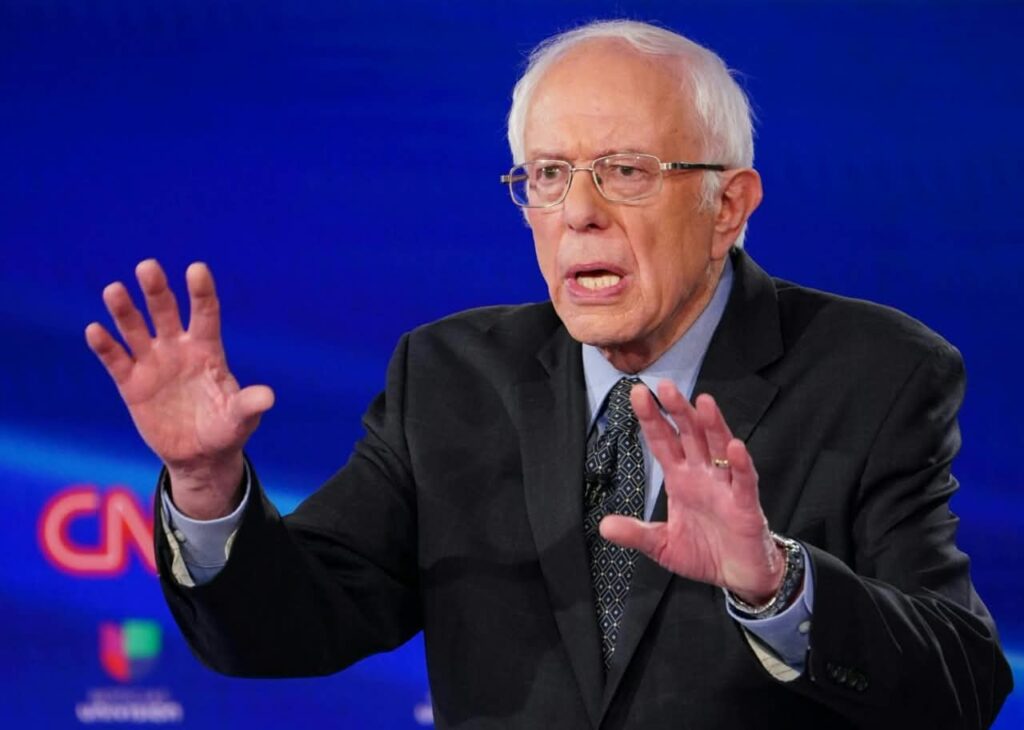
NEW YORK — Senator Bernie Sanders launched a scathing attack on President Donald J. Trump on Tuesday following the president’s address at the United Nations General Assembly, characterizing Mr. Trump’s threats toward Iran as a violation of international law and a dark departure from American values.
The confrontation highlights a deepening rift in Washington over the administration’s military operations in the Middle East, as lawmakers scramble to assert congressional authority over an expanding conflict that has drawn widespread domestic and international debate.
’That Is Barbarism’:
Speaking shortly after President Trump suggested at the U.N. headquarters that the United States could completely destroy the Islamic Republic, Mr. Sanders, the independent senator from Vermont, issued an uncompromising rebuff.
”No, Mr. President. We should not ‘annihilate’ the people of Iran,” Mr. Sanders said in a statement released by his office. “That is a war crime. That is barbarism. And it is something the United States must never be associated with.”
Mr. Sanders further challenged the legal foundation of the administration’s ongoing campaign against Iranian targets, asserting that military strikes conducted without explicit authorization from Capitol Hill breach both domestic law and the U.S. Constitution.
”Let’s be clear: Trump’s war in Iran is illegal and unconstitutional,” Mr. Sanders added. “Congress must end it NOW.”
The senator’s pushback came in direct response to Mr. Trump’s address to global leaders, during which the president framed the confrontation with Tehran as a choice between a negotiated settlement or complete devastation.
”Will a deal be made with Iran that lets them rebuild… Or do I annihilate the Islamic Republic, and do it quickly?” Mr. Trump asked the assembly, framing his choices in stark terms: “Do I drive them into hell with no chance of survival and no hope of future greatness or generations?”
The president’s speech prompted a walkout by members of the Iranian delegation. Though Mr. Trump asserted that an agreement could be reached following the upcoming U.S. midterm elections, his rhetoric sparked immediate condemnation from anti-war advocates, humanitarian organizations, and progressive lawmakers who warned that threatening the destruction of an entire nation violates international conventions prohibiting civilian terror and collective punishment.
The diplomatic clash represents the latest escalation in months of tension and combat operations between U.S. forces and Iran.
Following military strikes aimed at crippling Iran’s nuclear sites and regional defense infrastructure, the administration has maintained a strategy of severe economic pressure and direct strikes against military assets, air defenses, and maritime threats in the Persian Gulf.
While the White House maintains that these operations are necessary to neutralize nuclear threats and protect commercial shipping lanes in the Strait of Hormuz, critics argue the intervention lacks a coherent strategy, carries a heavy human toll, and risks driving regional instability to unprecedented levels.
At home, the war has ignited a debate over presidential war powers. Under Article I of the U.S. Constitution, the power to declare war resides strictly with Congress.
While past administrations have relied on existing Authorizations for Use of Military Force (AUMFs) or claimed executive authority under Article II to conduct targeted strikes, lawmakers from both parties have increasingly questioned the constitutional grounds of extended operations against Iran.
Mr. Sanders and a growing coalition in the Senate have signaled plans to force a vote on a War Powers Resolution aimed at halting federal funding for unauthorized military actions in the region and compelling a withdrawal of forces.
As midterm elections approach, the debate over the U.S. role in Iran is set to become a central issue for voters weighing national security against the economic and human costs of extended foreign entanglements.