
Admin I Wednesday, February 05.26
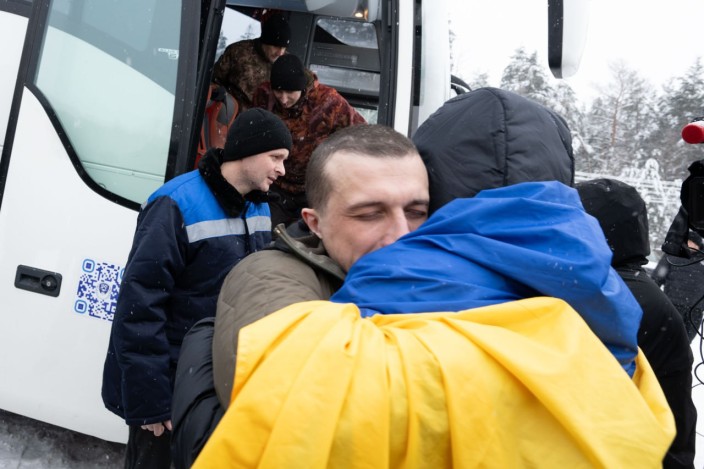
ABU DHABI — In a significant sign of diplomatic movement amid the ongoing conflict, Russia and Ukraine completed a major prisoner exchange on Thursday, with 157 personnel from each side returning home.
The swap, totaling 314 individuals, marks the first such agreement in five months and comes as the result of high-level trilateral negotiations mediated by the United States and the United Arab Emirates.
The Russian Ministry of Defense confirmed the return of its 157 servicemen, noting that the group included three civilians from the Kursk region.
These civilians were reportedly taken during Ukrainian incursions into Russian border territory last year. On the Ukrainian side, President Volodymyr Zelenskyy confirmed that the 157 returnees included soldiers from the Armed Forces, National Guard, and State Border Guard Service, some of whom had been in captivity since the early months of 2022.
A Breakthrough in the Desert
The exchange was finalized during a second day of intensive talks in Abu Dhabi. U.S.
Special Envoy Steve Witkoff, leading the American mediation team alongside officials from the U.A.E., described the negotiations as “detailed and productive.”
”While significant work remains, steps like this demonstrate that sustained diplomatic engagement is delivering tangible results,” Witkoff stated in a briefing following the announcement.
The involvement of the United States marks a renewed emphasis on direct mediation by Washington.
Sources close to the talks suggest that the presence of U.S. and Emirati officials provided the necessary “neutral ground” to break a months-long stalemate in prisoner negotiations, which Kyiv had previously claimed were being intentionally stalled by Moscow.
A notable detail of this specific swap was the inclusion of Russian civilians.
The Russian Ministry of Defense highlighted the return of three residents from the Kursk Oblast, describing them as having been “kidnapped” during previous Ukrainian military operations in the region.
Their return, alongside military personnel, underscores the complex humanitarian landscape of the war as it enters its fourth year, with civilian populations increasingly caught in the crossfire of border incursions.
Since the full-scale invasion began, prisoner exchanges have served as one of the few functioning diplomatic channels between Moscow and Kyiv. However, the frequency of these swaps had slowed to a near-halt in late 2025.
September 2024: One of the last major “all-for-all” pushes saw several hundred exchanged, but negotiations soured over the winter.
February 2025: A smaller UAE-mediated swap of 300 took place, but momentum stalled shortly thereafter.
Present Day: This 314-person exchange is being viewed by some analysts as a potential “confidence-building measure” ahead of broader peace discussions, though both sides remain far apart on territorial concessions.
While the return of these 314 individuals offers a rare moment of relief, Russian negotiator Kirill Dmitriev cautioned that while things are moving in a “positive direction,” the path to a permanent ceasefire remains fraught with “significant obstacles.”