


By Emmanuel Thomas l Tuesday, July 28, 2026
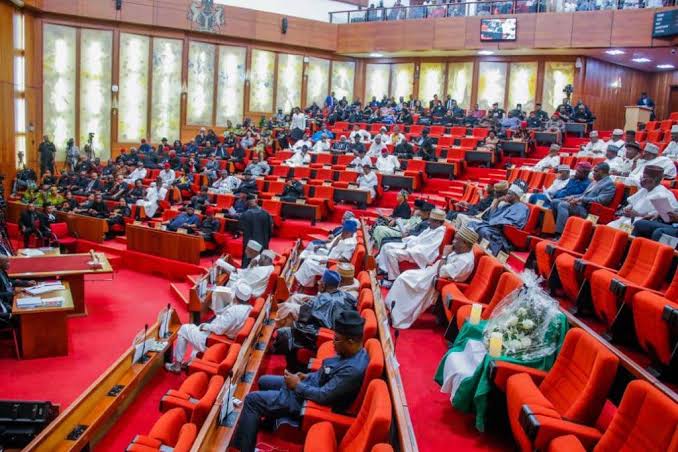
ABUJA, Nigeria — The Nigerian Senate moved to quell mounting public concern over a proposed amendment to the country’s road safety legislation, clarifying that the bill before the National Assembly does not attempt to prohibit street preaching or restrict religious activities in public places.
The upper legislative chamber addressed a wave of public debate and social media criticism triggered by reports alleging that the new amendment sought to outlaw public religious expression. Senate officials characterized those reports as false, misleading, and a misinterpretation of routine legislative maintenance.
In a formal statement issued by the Directorate of Media and Public Affairs in the Office of the Leader of the Senate, Senator Opeyemi Bamidele, lawmakers explained that the provision penalizing preaching and hawking inside commercial vehicles is far from a new creation. Instead, the restriction has been an active part of the Federal Road Safety Commission (FRSC) Establishment Act for nearly two decades.
A Longstanding Provision
According to the Senate’s official clarification, the legal framework governing commercial transit activities dates back to Section 10(4) of the FRSC Act of 2007, as well as Regulation 220 of the National Road Traffic Regulations enacted in 2012. Both statutes explicitly classify preaching and selling goods inside moving commercial vehicles as traffic offenses.
Under the 2007 principal legislation, the prohibition was cataloged as Item 36 in the law’s Second Schedule. The current legislative effort merely updates the structure of the document, renumbering the existing provision as Item 49 without making any substantive changes to its legal scope or enforcement mechanisms.
”The offences have been part of the Act before the current amendment,” the Senate statement noted. “It is not a new provision introduced by the amendment bill. Entrenched as Item 36 in the Second Schedule of the Act, preaching and hawking in a commercial vehicle are not new provisions in our legal system.”
Lawmakers emphasized that the rationale behind retaining the rule is grounded entirely in public safety rather than religious regulation. Loud preaching and active vending inside crowded buses and commercial vans create severe visual and auditory distractions, endangering drivers, passengers, and surrounding motorists alike.
Senate officials stressed that the statutory text bears no relation to constitutionally protected freedoms of worship or expression.
”The Bill, therefore, does not outlaw preaching on the streets as some interests have claimed in different fora,” the statement read. “It is about the safety of commuters and other road users and not intended to undermine any religious activity in the public space.”
Setting the Record Straight on Sponsorship
The Senate also addressed widespread rumors regarding the authorship and tracking of the bill. Reports circulating across digital platforms had attributed the legislation directly to Senate Leader Opeyemi Bamidele, prompting targeted criticism.
The Directorate of Media and Public Affairs dismissed those claims, clarifying that the amendment did not originate with Senator Bamidele. Instead, the legislation was drafted and passed in the House of Representatives before being transmitted to the Senate for concurrence—a standard constitutional requirement for federal legislation in Nigeria.
”The Bill is not an initiative of the Leader of the Senate, Senator Opeyemi Bamidele,” the statement reiterated. “Rather, it is a concurrence bill first amended by the House of Representatives. As required by the 1999 Constitution, the Bill requires the concurrence of the Senate before it can become effective.”
Public Engagement and Next Steps
Addressing the heightened sensitivity surrounding religious expression in Nigeria, the upper chamber appealed to the public, civic groups, and religious organizations to avoid drawing premature conclusions while the bill remains in committee review.
National Assembly representatives reaffirmed that the legislative process remains open and transparent. Concerned citizens and interest groups were encouraged to submit formal memoranda, observations, and recommendations through public hearing channels before the final draft is put to a vote.
The Senate concluded its statement by reassuring the public that the National Assembly remains committed to open lawmaking, promising that all legitimate feedback will be thoroughly considered before the FRSC Amendment Act is finalized.