


By SCM Foreign Writer I June 30, 2026
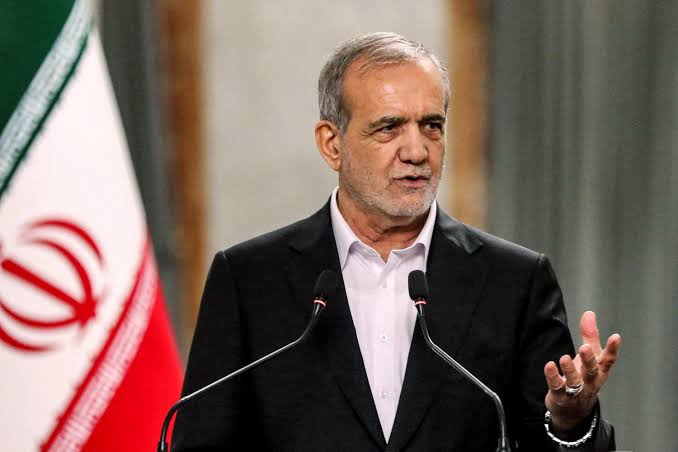
TEHRAN — Iranian President Masoud Pezeshkian defended the newly minted, fragile diplomatic framework with the United States on Tuesday, striking a calculated balance between a willingness to comply with international terms and a sharp warning against western aggression.
Speaking to a domestic audience amid intense internal debate over the interim agreement, Mr. Pezeshkian signaled that Tehran remains prepared to hold up its end of the bargain—but only if Washington does the same.
”If the American side adheres to the agreement, we will also fulfill our commitments,” Mr. Pezeshkian said, throwing the ball firmly back into Washington’s court as technical teams from both nations continue high-stakes talks.
The statement comes at a highly volatile moment. Just weeks ago, the United States and Iran signed a 14-point memorandum of understanding (MoU) aimed at halting a devastating cycle of direct military hostilities, reopening the critical shipping lanes of the Strait of Hormuz, and initiating a strict 60-day window to hammer out a broader, permanent resolution regarding Iran’s nuclear program and crippling economic sanctions.
Yet, even as negotiators try to capitalize on this diplomatic opening, the deal remains on a razor’s edge. In recent days, American and Iranian officials have publicly clashed over whether Tehran has agreed to immediate United Nations inspections of its heavily damaged nuclear sites—some of which were reduced to rubble during intense U.S. airstrikes last year.
Addressing the implicit threat of renewed military action or a collapse of the current ceasefire, Mr. Pezeshkian took aim at what Tehran views as coercive American rhetoric.
”Our approach to unreasonable saber-rattling and baseless threats is to rely on rationality and human dignity in decision-making,” Mr. Pezeshkian asserted. The remarks appeared aimed at reassuring both an anxious Iranian public eager for economic relief and hard-line clerics in Qom who view any concessions to Washington with deep suspicion.
To understand the immense gravity of the current 60-day diplomatic experiment, one must look to the devastating conflict that preceded it. The relationship between Washington and Tehran deteriorated into open warfare following a series of escalating regional flashpoints.
During the height of the hostilities, U.S. and allied forces launched sweeping air campaigns that severely impacted Iran’s infrastructure, including its heavily fortified enrichment facilities.
Despite the destruction of several physical installations, Western intelligence estimates indicate that Iran managed to preserve a significant portion of its nuclear material, including an estimated 400 kilograms of uranium enriched to 60 percent purity—dangerously close to weapons-grade.
The conflict also triggered a severe global economic shock when Iran blocked the Strait of Hormuz, a maritime chokepoint responsible for the transit of a fifth of the world’s petroleum supply. The resulting bottleneck threatened a global energy crisis, ultimately forcing both capitals—via Pakistani and Qatari mediation—to seek an off-ramp.
The interim MoU acts as a temporary freeze rather than a final peace. Under its current terms, Iran has agreed to facilitate the passage of commercial vessels through the Strait of Hormuz and has reportedly shown an openness to suspending its high-level uranium enrichment for up to five years.
In exchange, the U.S. has allowed Iran tentative access to roughly $20 billion in hard currency, including unfrozen assets and resumed oil revenues, to provide immediate economic breathing room.
However, the architecture of the deal is inherently fragile. Hard-liners in Tehran argue that the government has conceded too much under duress, while critics in Washington argue that the Biden administration’s framework offers too much upfront financial relief without securing ironclad verification on the ground.
With the clock ticking down on the 60-day negotiating period, Mr. Pezeshkian’s latest statements underscore the profound mistrust that still defines the relationship.
While his words offer a pathway toward compliance, they also serve notice: any perceived deviation by the United States could instantly shatter the quietest period the region has seen in months, returning both nations to the brink of open war.