


BY OUR DIPLOMATIC EDITOR
A STUNNING breakthrough that could finally bring an end to decades of bloody conflict in the Middle East is now “closer than ever,” Iran’s foreign minister has dramatically claimed.
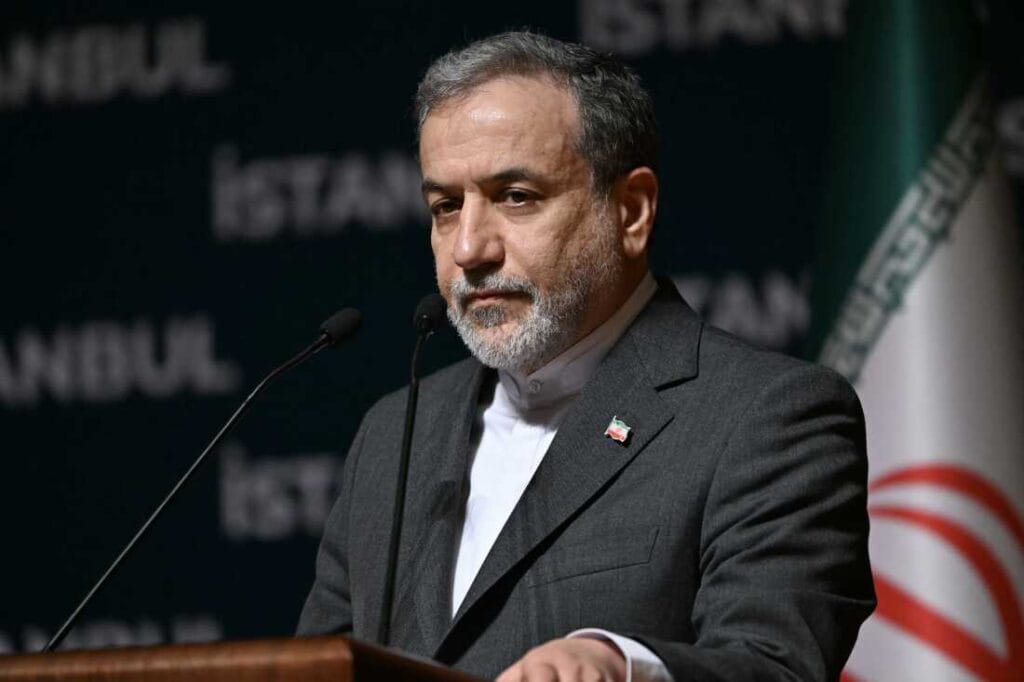
In a jaw-dropping revelation that has sent shockwaves through western capitals, Abbas Araghchi announced that a historic, tripartite agreement involving Iran, the United States, and Israel is teetering on the edge of completion.
The disclosure suggests that intense, back-channel diplomacy has been taking place behind closed doors, despite months of escalating military operations, fierce rhetoric, and fears of a total regional war.
Speaking to reporters in Tehran, Mr Araghchi hinted that the world is on the cusp of an unprecedented diplomatic alignment. However, the top diplomat kept his cards close to his chest regarding the exact mechanics of the truce, urging the global press corps not to jeopardize the fragile talks with unverified rumors.
”The agreement is closer than ever,” Mr Araghchi declared, strike a remarkably optimistic tone for a region so often defined by stalemate.
“We urge journalists, political analysts, and commentators to avoid premature speculation. The full details of this framework will be officially revealed to the public the very moment they are finalized.”
White House and Israeli officials have so far maintained a disciplined silence on the Iranian claims, neither confirming nor denying that a grand bargain is imminent.
To understand the sheer magnitude of Mr Araghchi’s announcement, one has to look at the deeply entrenched animosities that have shaped the modern Middle East. For decades, direct diplomatic agreements between Washington, Jerusalem, and Tehran have been virtually non-existent, replaced instead by a volatile “shadow war.”
1. The Tehran-Jerusalem Proxy War
Since the 1979 Islamic Revolution, Iran’s leadership has explicitly refused to recognize Israel’s right to exist. Instead, Tehran built up a formidable network of regional militant groups—collectively known as the “Axis of Resistance”—including Hezbollah in Lebanon, Hamas in Gaza, and the Houthis in Yemen.
Israel has long viewed Iran’s nuclear ambitions and its regional proxies as an existential threat, leading to frequent military flashpoints.
2. The US-Iran Standoff
Relations between Washington and Tehran have been frozen in a state of high friction for years.
The situation deteriorated sharply in 2018 when the US unilaterally walked away from the JCPOA (the Iran Nuclear Deal), re-imposing crushing economic sanctions on Iran. Subsequent years have seen a tense game of brinkmanship in the Persian Gulf, alongside competing cyber-attacks and regional maneuvers.
Diplomatic insiders suggest that the sheer exhaustion of prolonged conflict may have finally forced all three adversaries to the negotiating table.
If Mr Araghchi’s claims hold water, any final treaty would likely require massive, legally binding concessions from all sides. Analysts speculate that a viable framework would need to address three core pillars:
Security Guarantees: A verifiable drawdown of Iranian-backed proxy operations along Israel’s northern and southern borders.
Sanctions Relief: Decisive economic incentives for Tehran, allowing Iran to re-engage with global oil markets.
Nuclear Guardrails: Strict, enforceable limits on Iranian uranium enrichment to satisfy both Washington and Jerusalem.
While skepticism remains sky-high among seasoned diplomats in London and Brussels, the Iranian Foreign Minister’s public optimism indicates that the secret talks have progressed far beyond mere posturing.
For a world watching the Middle East with bated breath, the coming days could deliver either the diplomatic triumph of the century—or a heartbreaking return to the status quo.