By SCM Staff Writer I Thursday, October 09, 2025
AMMAN, Jordan — Health Ministers from the Organization of Islamic Cooperation (OIC) concluded their Eighth Session in Amman this week, issuing a broad-ranging declaration that commits member states to bolstering health systems, leveraging digital technology, and aggressively fighting both infectious and non-communicable diseases (NCDs).
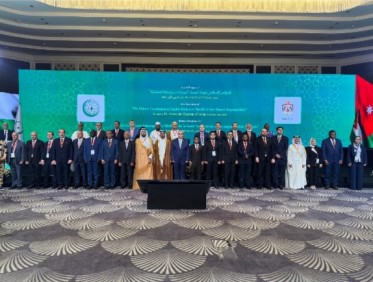
Held under the theme, “Health is Our Shared Responsibility,” the conference gathered ministers and heads of delegation from October 7 to 9, 2025 (15-17 Rabiʿ Al-Thani 1447 AH) in the Hashemite Kingdom of Jordan.
The Amman Declaration acknowledges that the COVID-19 pandemic exposed “critical vulnerabilities” in global health systems and underscores the growing threats from NCDs, climate change, and the dual promise and challenge of digital health and artificial intelligence (AI). A core focus of the declaration is to enhance health resilience.
Ministers reaffirmed the imperative of resilient, people-centered primary health care, robust supply chains, and integrated health workforce planning to ensure equitable access to essential services for the over 1.9 billion people across OIC member states.
Prioritizing NCDs and Global Health Threats
In a significant push against chronic diseases, the Ministers committed to redouble efforts to strive to reduce premature mortality from NCDs by one-third by 2030. This initiative will be paired with an expansion of mental health services and suicide prevention strategies, recognizing the prolonged psychological toll of the pandemic.
Furthermore, the declaration reaffirms the commitment to global health security by sustaining the fight against traditional infectious diseases—including polio, malaria, tuberculosis, and HIV/AIDS—and strengthening immunization programs, especially routine childhood vaccines.
On the policy and technology front, the OIC bloc committed to strengthening health research capacity, adopting data-driven policies, and establishing mechanisms for sharing information and best practices.
They also vowed to harness digital health, telemedicine, and AI-driven solutions for surveillance and service delivery while simultaneously ensuring ethical governance, privacy, and equitable access.
Focus on Conflict Zones and Humanitarian Crises
The Ministers dedicated a significant portion of the declaration to addressing the health impact of conflict and displacement, explicitly calling for an end to conflicts affecting OIC Member States and pledging sustained support to affected communities.
Of particular note was a strong statement on the crisis in Palestine, specifically Gaza.
”We express our deep concern over the catastrophic humanitarian and health crisis in Palestine particularly in Gaza, that has led to malnutrition and hunger of the population,” the declaration stated. The ministers went on to condemn the destruction and collapse of the health system and the “killing of health workers and targeting of health facilities perpetrated by the occupying Israeli forces.”
The OIC delegates urged the expedited, safe, and unhindered delivery of humanitarian and medical assistance, including the establishment of protected corridors, and called for the full protection of civilians, health workers, and facilities in accordance with international law.
The Ministers also specifically addressed the needs of refugees and displaced persons, committing to ensure their right to access primary and emergency health care services—including vaccination, mental health, reproductive health, and nutrition—based on principles of justice and human dignity.
The conference concluded with a call to action for all OIC Member States, Institutions, and International Partners to actively transfer their commitments into concrete actions to protect and promote the health and well-being of the Islamic world and contribute to global health security