


By Emmanuel Thomas l Wednesday, Sept 23, 2026
PORT HARCOURT — In a major push toward structural reform and regional integration, the Niger Delta Development Commission (NDDC) has officially kicked off its 2026 Partners for Sustainable Development (PSD) Conference with a high-level Pre-Conference Stakeholders Meeting in Port Harcourt, Rivers State.
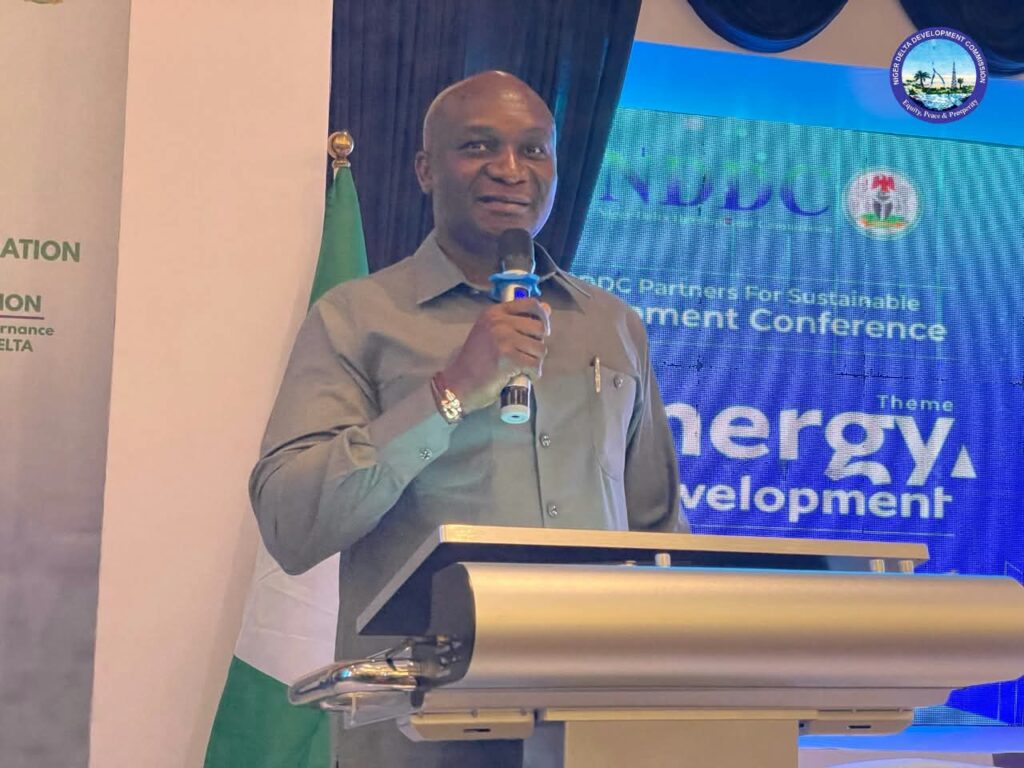
The gathering, themed “Synergy For Transformation,” brought together key actors, government officials, and community leaders at J’s Signature Hotel to forge a collaborative path forward for the oil-rich but ecologically vulnerable Niger Delta region.
Addressing delegates at the event, the Managing Director and Chief Executive Officer of the NDDC, Chief Samuel Ogbuku, PhD, called on all regional stakeholders to actively participate in the ongoing deliberations and contribute innovative ideas aimed at upgrading the Commission’s operational efficiency and service delivery.
Chief Ogbuku emphasized that the developmental milestones achieved across the region over the years are the results of shared commitment and collective effort. He disclosed that a cornerstone of the 2026 PSD Conference is the introduction of a landmark “Stakeholding Document,” designed to serve as a comprehensive Governance Framework for the NDDC.
According to the NDDC boss, the new governance framework will undergo rigorous review by stakeholders to generate actionable recommendations, ensuring the Commission remains responsive, accountable, and better equipped to meet the evolving needs of the Niger Delta people.
Underlining the necessity for institutional alignment, the Director of Community and Rural Development at the NDDC, Engr. Theophilus Allagoa, pointed out that the pre-conference discussions are specifically targetted at tackling the long-standing challenge of overlapping mandates among various government agencies operating in the region.
Engr. Allagoa noted that uncoordinated interventions have historically led to project duplication and wasteful public expenditure. He urged all partner organizations, federal ministries, and state governments to strengthen cross-agency collaboration and work toward establishing a unified policy framework and a singular development master plan for the region.
Established in 2000 by the Federal Government of Nigeria, the Niger Delta Development Commission (NDDC) was created with a mandate to facilitate the rapid, even, and sustainable development of the Niger Delta into a region that is economically prosperous, socially stable, ecologically regenerative, and politically peaceful.
Over the decades, however, developmental efforts in the nine oil-producing states—Abia, Akwa Ibom, Bayelsa, Cross River, Delta, Edo, Imo, Ondo, and Rivers—have frequently suffered from systemic bottlenecks. Chief among these challenges has been the lack of synergy between the NDDC, state governments, international oil companies (IOCs), non-governmental organizations, and federal ministries like the Ministry of Niger Delta Affairs. This fragmentation has repeatedly resulted in abandoned infrastructure, conflicting community projects, and diluted funding impact.
The Partners for Sustainable Development (PSD) Forum was created as an institutional mechanism to solve these coordination gaps. Designed as a participatory platform, the PSD brings together all interventionist agencies, civil society groups, traditional institutions, and private sector partners to harmonize budgeting, project planning, and execution across the region.
The launch of the 2026 PSD Conference under Chief Samuel Ogbuku’s administration marks a decisive transition from routine interventions to structured governance reforms.
By introducing a formalized Governance Framework and pushing for an integrated development plan, the NDDC aims to eliminate waste, restore public trust, and ensure that federal allocations and donor funds yield measurable socio-economic benefits for the communities of the Niger Delta.