


By SCM Political Bureau
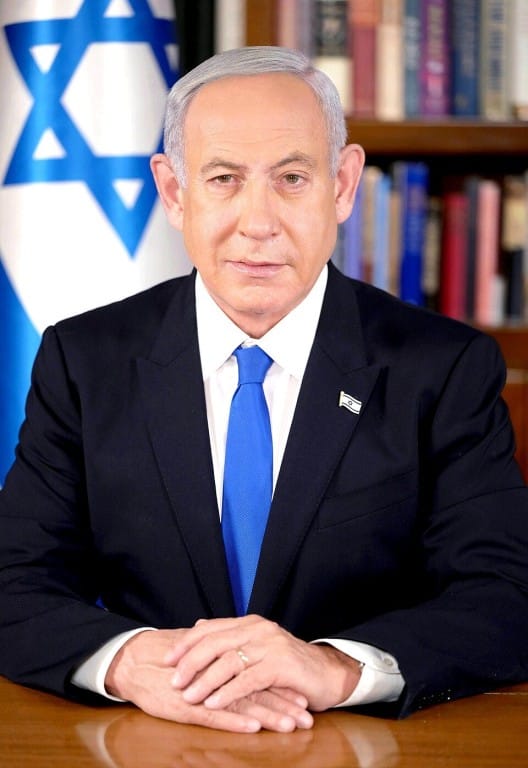
JERUSALEM / WASHINGTON — ISRAELI Prime Minister Benjamin Netanyahu has boldly declared that the total collapse of the Iranian regime is “inevitable,” exposing a massive potential rift with US President Donald Trump just as Washington positions itself for fresh talks with Tehran.
The dramatic clash in rhetoric has sent shockwaves through the global diplomatic community, leaving intelligence insiders asking a single, terrifying question: Are the world’s two most powerful allies even on the same page?
Speaking at a high-stakes, emotional farewell ceremony for outgoing Mossad chief David Barnea in Tel Aviv, Netanyahu didn’t mince his words. Standing alongside the elite spymasters who have waged a decades-long shadow war against Iran’s nuclear ambitions, the Israeli PM praised Barnea’s ruthless operations before turning his sights on the future.
”The fall of the Iranian regime is not a matter of ‘if,’ but ‘when,'” Netanyahu told the packed room of intelligence officials. “It is inevitable. The cracks are deep, the tyranny is unsustainable, and the free world must stand firm until it crumbles.”
Netanyahu’s fiery rhetoric was classic “Bibi”—a uncompromising stance meant to signal that Israel will accept nothing less than total regime change or the complete dismantling of Iran’s hostile infrastructure.
But just 24 hours earlier, across the Atlantic, Donald Trump flipped the script entirely.
During a high-profile press briefing discussing potential diplomatic breakthroughs, the US President did something that stunned Middle East analysts. Instead of his usual roaring broadsides against the “rogue regime,” Trump carefully and formally referred to the nation as “the Islamic Republic.”
For a leader known for his “Maximum Pressure” campaign, the sudden use of Iran’s official, self-designated title was highly calculated. Trump explicitly confirmed that talks are back on the table, hinting at a landmark deal that could reset relations.
”We are talking to the Islamic Republic,” Trump stated coolly. “We want them to do well, but they cannot have a nuclear weapon. Let’s see if we can make a deal.”
To regular observers, it sounds like pragmatic business. But to Jerusalem, it sounds like a softening stance from their primary protector. By validating the regime with its official religious title, Trump gave Tehran a level of international legitimacy that Israel has spent years trying to strip away.
Deep Background: A History of Tension
This isn’t the first time Netanyahu and Trump have danced on a geopolitical tightrope regarding Iran.
The Shadow War: For over a decade, Israel’s Mossad has executed daring, top-secret operations deep inside Iranian territory—assassinating nuclear scientists, sabotaging uranium enrichment facilities, and stealing top-secret nuclear archives.
During Trump’s first term, the two leaders were in absolute lockstep. Trump tore up the 2015 Iran Nuclear Deal (JCPOA)—a move Netanyahu had spent years lobbying for—and ordered the targeted assassination of Iranian mastermind General Qasem Soleimani.
However, Trump’s core philosophy has always been transaction-based. He values the “art of the deal” over permanent, ideological conflicts. Netanyahu, conversely, views the Iranian threat as an existential battle for Israel’s very survival.
While Netanyahu is actively cheering for the collapse of the Ayatollah’s rule, Trump appears perfectly content to sit down at the negotiating table with them—provided they agree to his terms.
Intelligence insiders warn that this mixed messaging could embolden Tehran. If Iran believes the US is desperate for a diplomatic win, they may try to drive a wedge between Washington and Jerusalem.
For now, Israel is publicly keeping a brave face, insisting the alliance remains “unshakeable.” But behind closed doors in Tel Aviv, the sudden shift from Trump has triggered urgent strategies.
Netanyahu wants the regime gone; Trump wants to talk. If these two titans can’t align their scripts, the consequences for Middle Eastern security could be catastrophic.