
By SCM REPORTER
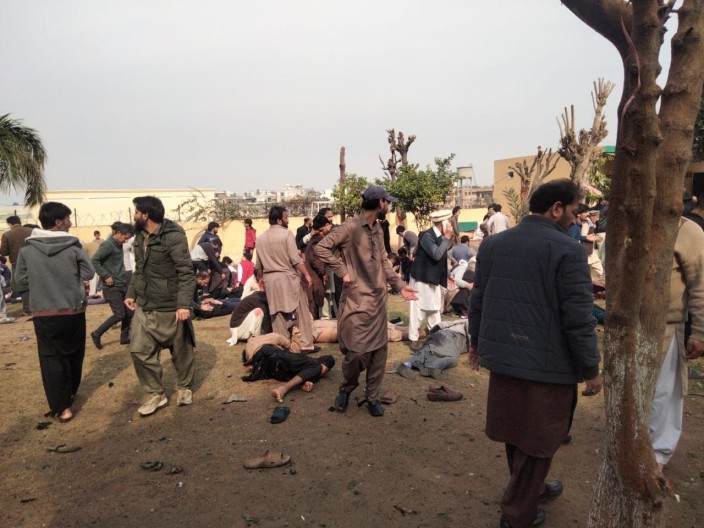
A DEVASTATING suicide bomb attack has left at least 31 people dead and over 150 injured after a “beast” detonated a device at a packed Shia mosque in Islamabad.
The horror unfolded during Friday prayers at the Khadijatul Kubra mosque in the Tarlai area, on the outskirts of Islamabad.
Witnesses described a “scene from hell” as the blast ripped through the building, bringing the roof crashing down on hundreds of worshippers.
Police sources say the killer was spotted at the mosque gates by brave security guards.
When they tried to stop him, the fanatic triggered his deadly vest, sending a wave of shrapnel and fire through the crowded entrance.
Local hero Ahmed Ali, who was inside the mosque, said: “It was a deafening roar. One minute we were praying, the next, the walls were gone.
There were screams everywhere and the floor was covered in blood. We were pulling children out from under the bricks.”
Blood-soaked survivors were rushed to the Pakistan Institute of Medical Sciences (PIMS) as an emergency was declared across the city. Doctors say the death toll is expected to rise, with many “fighting for their lives” in intensive care.
No group has yet claimed responsibility for the carnage, but security experts point the finger at the Pakistani Taliban (TTP) or ISIS-K, who have a history of targeting the country’s Shia minority.
The attack comes at a time of high tension. Just last week, Balochistan was rocked by a string of coordinated strikes that left 50 dead. Today’s bombing is the deadliest to hit the capital in months,
shattering a period of relative calm in the city.
Prime Minister Shehbaz Sharif condemned the “cowardly” attack, vowing that those behind the “crime against humanity” would be hunted down.
BACKGROUND: A NATION UNDER SIEGE
Pakistan is currently battling a “perfect storm” of militant violence.
Since the Taliban returned to power in neighboring Afghanistan in 2021, the TTP—their ideological cousins—has ripped up ceasefire agreements and launched a bloody campaign against the Pakistani state.
Sectarian Hate: Shia Muslims, who make up about 20% of the population, are frequently targeted by Sunni extremist groups who view them as heretics.
The “Fitna” Factor: Pakistani officials often refer to the TTP as Fitna al-Khwaraji, accusing them of being foreign-funded “troublemakers” intent on destabilizing the nuclear-armed nation.
Recent Scars: In 2022, a similar suicide bombing at a Shia mosque in Peshawar killed 63 people. Last year, a blast at a mosque inside a high-security police compound in Peshawar killed over 80 people.