
By Our Diplomatic Correspondent
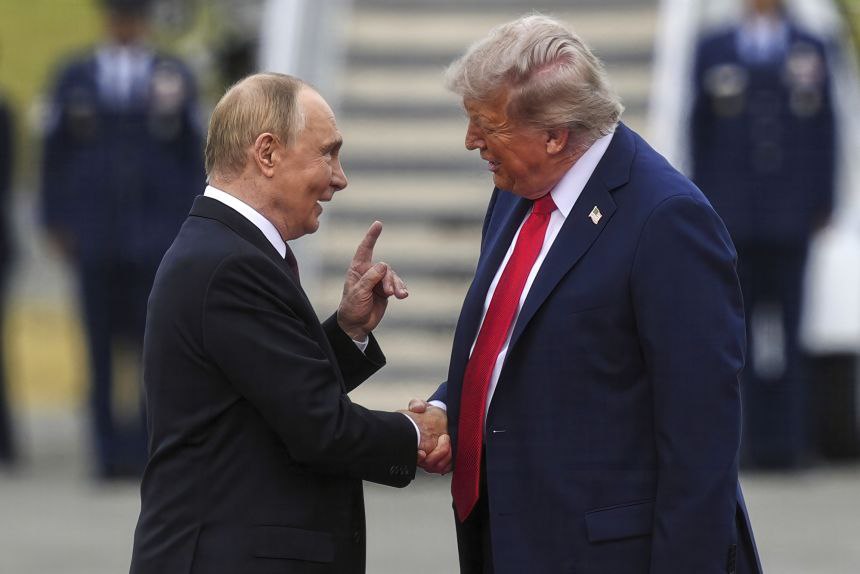
MOSCOW has handed a high-stakes “road map” to Washington, demanding the removal of barriers to a full-scale restoration of relations between the two superpowers.
In a blunt message to the White House, the Russian Ministry of Foreign Affairs (MFA) confirmed it has submitted concrete proposals to jump-start diplomacy.
The Kremlin is now challenging the U.S. to abandon what it calls the “dead-end path” of the previous administration.
The Russian MFA stated it trusts that Washington will no longer link bilateral cooperation to “abstract political issues”—a clear swipe at the Biden administration’s strategy of tying diplomatic progress to the conflict in Ukraine and human rights disputes.
”We have sent proposals to the US for removing barriers to a full-fledged improvement in relations,” a Ministry spokesperson confirmed.
The statement emphasized a hope that the U.S. would pivot toward “equal and mutually respectful” dialogue.
Key demands in the Russian proposal are understood to include:
The return of confiscated diplomatic property: Addressing the long-standing “irritant” of Russian compounds seized by the U.S. in New York and Maryland.

Resumption of direct flights: Reconnecting the two nations after years of restricted airspace and travel bans.
Economic Cooperation: Highlighting potential joint ventures in hydrocarbons, critical minerals, and space exploration.
The timing of the move is critical. Since the start of 2026, there has been a noticeable shift in rhetoric following the return of Donald Trump to the White House.
While the Biden era saw relations plummet to their lowest point since the Cold War—defined by heavy sanctions and the suspension of the New START nuclear treaty—the current landscape shows signs of a cautious “reset.”
Last month, Deputy Foreign Minister Sergei Ryabkov noted that both sides are “returning to normality” through closed-door contacts in Moscow and Washington. However, significant hurdles remain.
The New START treaty is set to expire this week (February 5), and the U.S. recently imposed fresh sanctions on Russian oil companies, which Moscow described as an “unexpected incident” in an otherwise warming climate.
Russian Foreign Minister Sergey Lavrov has signaled that if the U.S. accepts these new proposals, “winning horizons” will open up for American interests in the Arctic and Artificial Intelligence.
The ball is now firmly in Washington’s court: either maintain the icy status quo or take the “winning” path offered by the Kremlin.