


By SCM Foreign News Desk
MOSCOW — Russia has launched a second batch of operational low-Earth orbit communications satellites as part of a national effort to build a domestic high-speed satellite internet constellation to compete with SpaceX’s Starlink network.
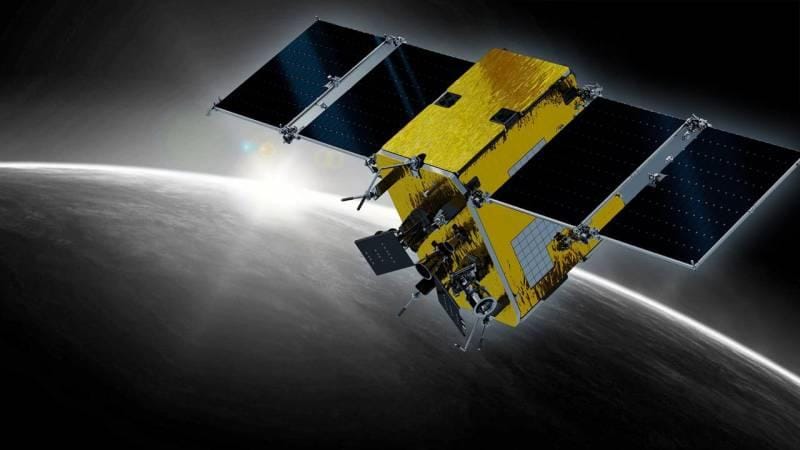
The spacecraft, developed by Russian aerospace firm Bureau 1440, successfully separated from their launch vehicle and established contact with ground control, the company confirmed. Following orbital maneuvering and system commissioning, the satellites will join their target orbits to expand Russia’s nascent broadband network, known as the Rassvet (Daybreak) project.
The deployment marks a critical step forward in Moscow’s long-term plan to achieve technological self-reliance in satellite communications—a sector increasingly viewed as essential for both economic resilience and military capability.
Bureau 1440, a commercial satellite developer operating under the technology group ICS Holding, began testing prototype satellites in 2023. Following successful demonstrations of inter-satellite laser links and 5G non-terrestrial network (NTN) standards, the company launched its first operational batch of 16 production spacecraft in early 2026.
With this latest launch, experts estimate Russia has roughly 40 satellites in orbit under the project. Bureau 1440 aims to commence commercial broadband services in 2027 once the constellation reaches an initial phase of approximately 288 satellites, which developers say will provide continuous coverage across Russia and global coverage shortly thereafter. Plans call for scaling the system to more than 700 satellites by 2030.
According to technical specifications published by the company, the Rassvet satellites operate at altitudes near 800 kilometers, delivering download speeds up to 1 Gigabit per second per terminal with latencies under 70 milliseconds—performance metrics intended to mirror modern terrestrial fiber networks.
Sanctions and the Push for Orbital Independence
Russia’s push for a low-Earth orbit (LEO) internet array follows extensive Western sanctions imposed on its technology sector, which severed Russian access to major foreign telecommunications hardware and commercial satellite providers.
For years, low-Earth orbit constellations have transformed global connectivity. Unlike traditional geostationary satellites that orbit 36,000 kilometers above the Equator—suffering from noticeable lag—LEO satellites orbit just hundreds of kilometers above Earth, allowing for rapid real-time data transmission suitable for video streaming, autonomous systems, and modern defense operations.
The strategic importance of low-orbit broadband was underscored dramatically in the conflict in Ukraine, where SpaceX’s Starlink network became the primary backbone for battlefield communication, military command-and-control, and real-time drone targeting for Ukrainian forces. Moscow’s inability to deploy a comparable system highlighted a major gap in its technological defense posture.
Strategic Implications and Remaining Hurdles
While the latest launch signals steady manufacturing progress, military analysts note that Russia remains years away from possessing a constellation capable of providing battlefield-grade tactical support at scale.
”To begin using the Rassvet constellation for military purposes in any meaningful operational way, they need to launch at least several hundred satellites,” said Serhiy Beskrestnov, a defense technology adviser, noting that the current scale of 40 satellites provides only intermittent coverage windows rather than real-time continuity.
By comparison, SpaceX currently operates more than 10,000 active Starlink satellites, while competing projects like Amazon’s Project Kuiper and Eutelsat OneWeb are expanding their footprints rapidly.
Russia also faces significant industrial bottlenecks. Scaling production to launch dozens of satellites annually will require a sustained supply of radiation-hardened microelectronics and automated manufacturing lines—components heavily restricted under Western trade controls.
Furthermore, Russia’s launch cadence, heavily reliant on its Soyuz launch vehicles, will need to accelerate dramatically to hit its 2030 target.
Nevertheless, Kremlin officials view Bureau 1440 as a vital component of the country’s future digital infrastructure, seeking to ensure that remote Arctic regions, industrial sites, and national defense agencies retain sovereign connectivity independent of foreign infrastructure.