


By SCM International Desk I Saturday, Oct. 03, 2026
SANAA / RIYADH — Regional tensions in the Middle East reached a critical flashpoint after the Yemeni Armed Forces launched a high-precision military operation targeting state oil giant Saudi Aramco’s facility in the capital city of Riyadh.
The attack, executed using a swarm of ballistic missiles and long-range unmanned aerial vehicles (drones), resulted in direct hits that triggered significant fires across the targeted energy infrastructure, according to an official communique issued by the Sana’a-based military command.
Retaliation Against Coalition Airstrikes
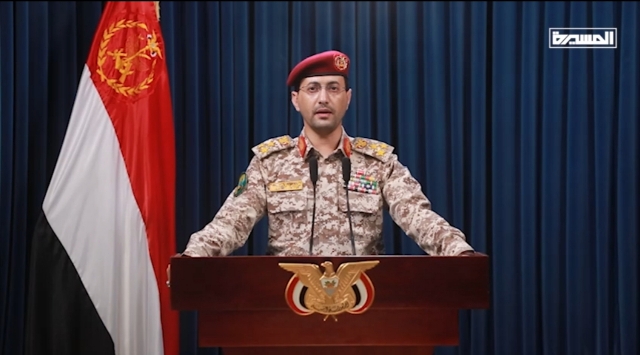
In a official statement released on October 3, 2026 (corresponding to 22 Rabi’ al-Thani 1448 AH), spokesperson for the Yemeni Armed Forces confirmed that the strike was conducted in direct response to an intensified aerial campaign carried out by Saudi-led coalition forces.
Yemeni military officials reported that coalition forces conducted over 60 airstrikes and missile bombardment across Sana’a and surrounding provinces within a single 24-hour window. According to Sana’a authorities, these recent bombardments brought the aggregate number of strikes to 1,410 since the latest cycle of hostilities flared up.
”The operation achieved its objective successfully, with precise and direct hits that set fires at the targeted sites,” the statement read. “The continued bloodshed in Yemen makes it necessary for the Armed Forces, and all free people of our nation, to take escalated and deterrent steps — making clear that the cost of disregarding Yemeni blood will be high.”
Eyewitnesses in Riyadh reported seeing thick plumes of dark smoke rising from the direction of the industrial facilities. Emergency response crews were dispatched to contain the fires, while Saudi defense authorities monitored incoming aerial vectors across the central provinces.
Strategic Policy: “Siege for Siege”
The strike on Saudi Arabia’s primary energy asset signals a decisive turn in the operational strategy of the Yemeni Armed Forces. Military command reaffirmed its intent to target key economic and troop assembly points within Saudi borders as long as air strikes and naval blockades remain in effect.
”We will continue to enforce the equation of siege for siege, escalation for escalation, and to target Saudi mobilizations — until the aggression stops and the siege on our country ends,” the communique stated.
Energy analysts caution that continued targeting of core processing plants around Riyadh and major supply arteries could induce volatility in global oil markets, given Saudi Aramco’s critical role in international energy supply chains.
Implications for Regional Stability
The cross-border engagement highlights the failure of recent diplomatic efforts to maintain a prolonged ceasefire between the warring factions in the Arabian Peninsula. Observers warn that persistent strikes on urban centers and industrial zones raise the risk of a wider regional conflict that could endanger broader commercial activity in nearby shipping corridors.
As military operations intensify on both sides, the Yemeni command concluded its message with a reaffirmation of national sovereignty: “Long live Yemen — free, proud, and independent. Victory to Yemen and to all free people of the nation.”
International observers and regional powers are calling for immediate restraint to avoid further destruction of critical infrastructure and loss of civilian life across the region.