By SCM Staff Writer I Tuesday, October 07, 2025
IKEJA, Lagos – The Lagos State Government, in collaboration with the Federal Ministry of Health and key development partners, has commenced a five-day Maternal and Neonatal Mortality Reduction Innovation Initiative (MAMII) Activation Workshop to create a coordinated strategy to drastically reduce preventable deaths among mothers and infants.
The workshop, which opened on Monday at the Protea Hotel, Alausa, brings together policymakers, healthcare providers, and partners to co-create sustainable solutions for safer motherhood and childhood across the state.
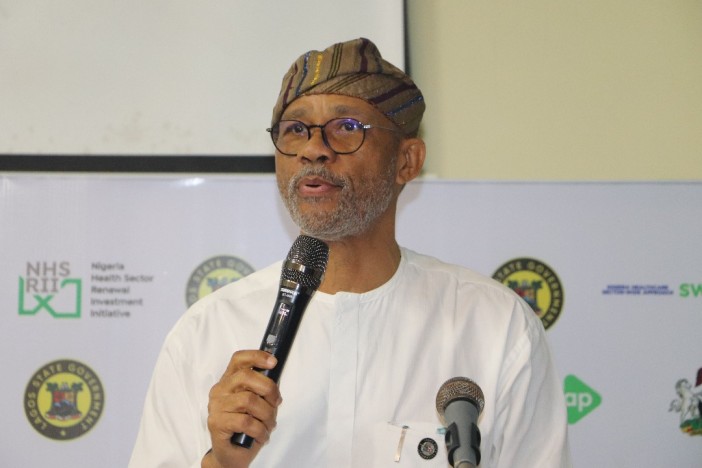
Declaring the workshop open, the Lagos State Commissioner for Health, Prof. Akin Abayomi, expressed deep concern over the persistent burden of maternal and infant mortality, stressing the government’s commitment to understanding and tackling the peculiar factors driving the issue in the state.
Prof. Abayomi acknowledged that despite Lagos’s perception as a well-resourced state, its dense population and rapid migration pose unique challenges. “The moment you cross into Lagos, you become the responsibility of the government—and if you have a health issue, you become my responsibility,” he stated.
He revealed that the government is intensively interrogating its health data to determine the true magnitude of the problem, adding that Lagos must strive for equitable access to quality healthcare. “We are working to ensure Lagos becomes a state with both eyes open, not a one-eyed giant among the blind,” he said.
The Commissioner highlighted health financing as a major focus, noting that Governor Babajide Sanwo-Olu has issued an executive order domesticating the National Health Insurance Authority Act, making health insurance mandatory for all residents to prevent catastrophic health expenditures.
He also disclosed plans to upgrade 47 of the state’s 327 Primary Healthcare Centres (PHCs) this year and address ward-level inequalities in PHC distribution. Furthermore, the state is tackling human resource shortages through the proposed University of Medicine and Health Sciences, which aims to produce up to 3,000 health professionals annually within five years.
A Ranking We Are Not Proud Of
Speaking at the event, the Special Adviser to the Governor on Health, Dr. (Mrs.) Kemi Ogunyemi, described maternal and child mortality as a critical public health issue, stating, “Lagos currently ranks third in maternal and infant deaths nationally, but this is not a ranking we are proud of.”
Dr. Ogunyemi noted that the state’s constant influx of over 3,000 new residents daily strains existing healthcare infrastructure. She stressed the need for improved partner coordination, stronger data systems, and better nutrition interventions, citing malnutrition as a silent contributor to child mortality.
She added that the state is leveraging its six health districts to decentralize management and accountability for maternal and child mortality, emphasizing the role of collaboration with the private sector under the T.H.E.M.E.S+ Agenda.
Dr. Dayo Adeyanju, the National MAMII Lead, explained that the initiative is part of Nigeria’s National Health Sector Renewal Investment Initiative (NHSRII), which targets a 30% reduction in maternal mortality and a 60% increase in facility utilization in high-burden areas by 2030.
He said MAMII focuses on addressing the first and second delays in maternal care and improving the quality of care through structured resource allocation, performance management, and multi-sector collaboration.
The workshop is expected to help the state identify and eliminate the five key delays contributing to maternal deaths—ranging from delayed decision-making to inadequate facility care—and secure stakeholder commitments for sustainable implementation.
The Technical Officer for Newborn, Child, and Adolescent Health at the World Health Organization (WHO), Dr. Joy Ufere, reaffirmed WHO’s commitment, commending the state’s leadership. She urged participants to design practical, measurable solutions, expressing hope that “the outcomes from Lagos will serve as a model for other states.”