


By SCM International Desk I Friday, Sept 25, 2026
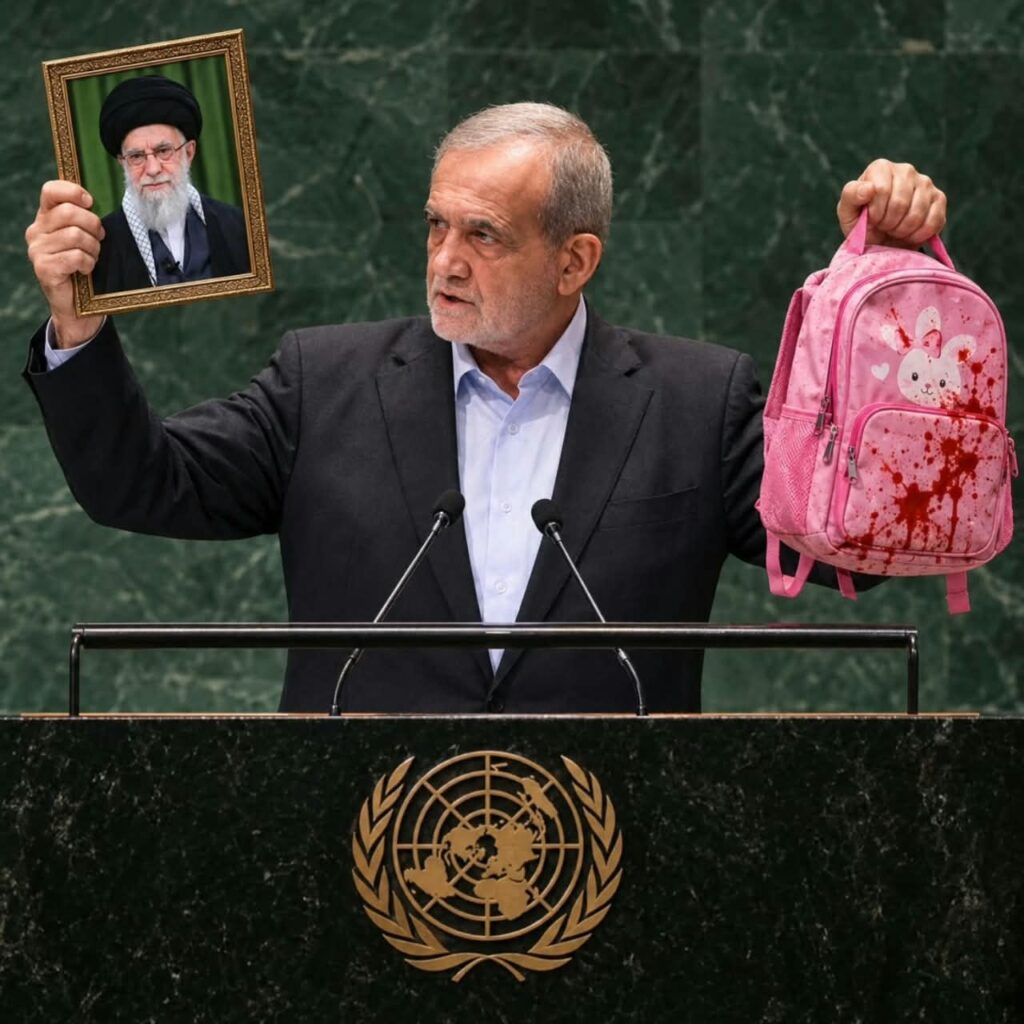
UNITED NATIONS — In a striking admission that underscores the worsening economic isolation facing Tehran, Iranian President Masoud Pezeshkian revealed that his country is unable to access its own financial assets held in China, its largest oil customer and key diplomatic ally.
Speaking candidly during a series of media appearances surrounding the UN General Assembly, Pezeshkian dismissed claims that Beijing is directly bankrolling Iran’s regional foreign policy or military operations, pointing instead to severe restrictions that leave Tehran unable to repatriate its export revenue.
“One of the problems that we face is that our money in China is blocked,” Pezeshkian stated. “We can’t even get our own money out of a country to which we have supplied goods, let alone use those funds to pay someone else.”
The president’s comments offer a rare public look at the friction in the commercial relationship between Tehran and Beijing. They also reveal the reach of U.S. sanctions, which have frightened Chinese financial institutions away from processing Iranian transactions.
Limits of the ‘Look East’ Strategy
For years, Iranian officials have promoted a “Look East” foreign policy, aiming to counter Western economic pressure by deepening trade and security ties with China and Russia. In 2021, Tehran and Beijing signed a 25-year strategic agreement promised to unlock hundreds of billions of dollars in Chinese investment in exchange for discounted Iranian oil.
However, Pezeshkian’s statements highlight a growing imbalance in that partnership.
While China continues to import Iranian crude oil—often routed through shadow fleets and dynamic ship-to-ship transfers to circumvent Western oversight—Beijing’s major commercial banks remain deeply exposed to the global financial system and reluctant to run afoul of secondary U.S. sanctions.
As a result, proceeds from Iranian exports frequently end up trapped in Chinese accounts. They can typically only be used for non-sanctioned, humanitarian imports or Chinese-manufactured products, rather than converted into hard currency for transfer back to Tehran.
The revelation comes as Iran faces mounting internal economic pressure, driven by high inflation, a weakening currency, and tightening commercial constraints.
Western intelligence officials and financial analysts have argued that while China remains Iran’s vital economic lifeline, Beijing treats the relationship pragmatically. Chinese policymakers balance their interest in cheap energy against their far larger commercial stake in trade with the United States and the European Union.
By publicly acknowledging the friction, Pezeshkian appears to be managing domestic expectations while sending a deliberate signal to Western observers: Tehran’s economic partnership with Beijing is constrained by institutional bottlenecks, leaving the Islamic Republic with fewer tools to weather long-term financial isolation.