
Admin I Wednesday, March 18.26
TEHERAN has ignited a terrifying new phase of Middle East conflict, launching a devastating wave of missile strikes against the world’s most critical energy hubs and Israel’s main airport.
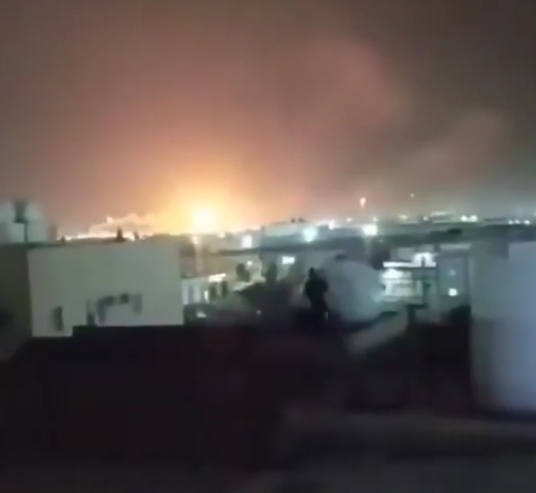
In a series of brazen attacks late Wednesday, Iran’s Islamic Revolutionary Guard Corps (IRGC) confirmed they had successfully struck Saudi Aramco facilities in Riyadh and the massive Ras Laffan Industrial City in Qatar.
The strikes didn’t stop at energy targets. In Tel Aviv, an Iranian missile reportedly tore through a US-operated aerial refueling aircraft at Ben Gurion Airport, turning the tarmac into a scene of carnage and threatening to cripple Israeli and American air operations in the region.
Qatar in the Crosshairs
State-owned giant QatarEnergy issued a chilling statement tonight confirming that Ras Laffan—the heart of the world’s Liquefied Natural Gas (LNG) supply—had been battered by multiple hits.
”Emergency response teams were deployed immediately to contain the resulting fires, as extensive damage has been caused,” the company said. While they confirmed all staff are accounted for with no casualties reported yet, the “extensive damage” to the facility has sent shockwaves through global energy markets.
Riyadh Under Fire
Simultaneously, the IRGC claimed credit for a “direct hit” on Aramco installations in the Saudi capital. It follows a week of escalating rhetoric from Teheran, which has vowed to punish “allies of the Zionist regime.”
Witnesses in Riyadh reported hearing massive explosions as Saudi air defenses scrambled to intercept the incoming salvos.
Background: The Spiral to Chaos
The Middle East has been teetering on the edge of a total regional war since late February 2026. This latest escalation appears to be a direct retaliation for recent Israeli and US strikes on Iranian infrastructure.
The Energy Threat: Ras Laffan is not just a factory; it is the pulse of the global economy. It supplies nearly 20% of the world’s LNG. Any long-term shutdown could lead to record-breaking fuel prices in the UK and Europe.
Ben Gurion Breach: The strike on a refueling tanker at Ben Gurion is a significant blow to military logistics. These aircraft—often described as “flying petrol stations”—are essential for keeping fighter jets in the air during long-range combat missions.
IRGC Tactics: Teheran has shifted from using proxy militias to launching direct, state-on-state missile barrages, signalling they no longer fear a direct confrontation with the West.
As fires continue to burn in Ras Laffan and Riyadh, the world now waits for the inevitable response from the “Lion’s Den” of the US-Israeli alliance.
Would you like me to draft a follow-up piece focusing on the potential impact of these strikes on UK petrol and energy prices?
Emmanuel Ukudolo
Editor
starconnectmedia.com
08034007356
[email protected]
[email protected]
[email protected]