


Admin I Wednesday, June 17. 2026
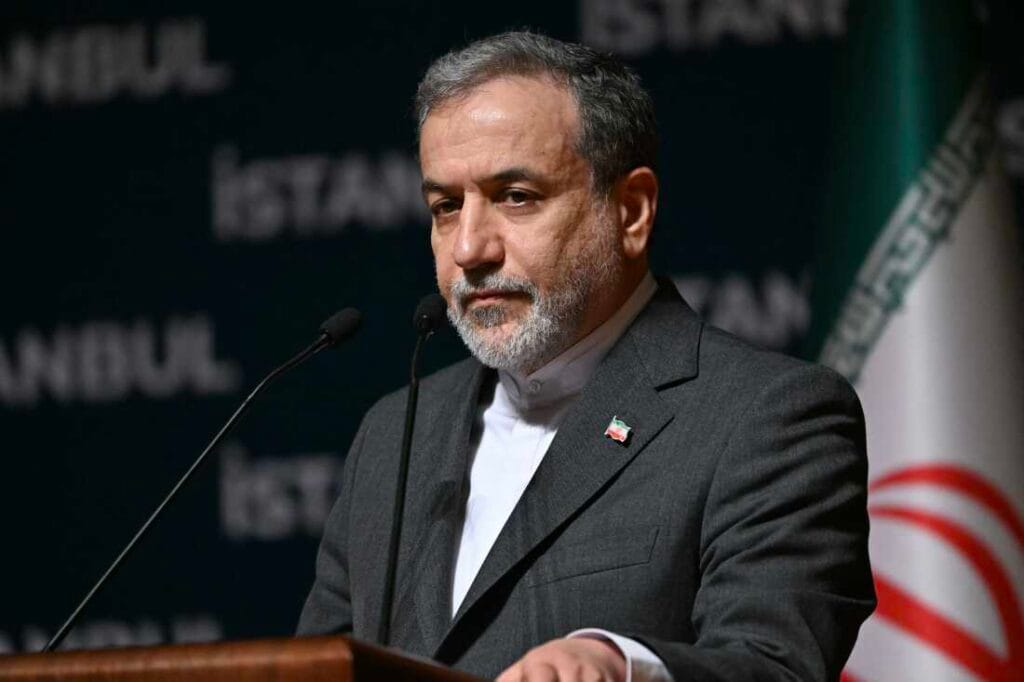
TEHRAN — Iranian Foreign Minister Abbas Araqchi declared that the survival of a freshly brokered memorandum of understanding between Washington and Tehran depends entirely on a complete withdrawal of Israeli forces from occupied territories in southern Lebanon, highlighting the fragile nature of the regional truce.
Speaking to a gathering of foreign diplomats in Tehran, Mr. Araqchi staked out a hard line on the architecture of the agreement, which aims to officially conclude months of open conflict across the Middle East.
He framed the understanding not as a bilateral pact, but as a matrix binding two opposing axes.
”From our perspective, there are two sides in this MoU,” Mr. Araqchi said, according to statements published by regional networks. “On one side there is the United States and Israel, and on the other side there is Iran and Hezbollah.”
The Foreign Minister emphasized that Iran views regional battlefields as fundamentally linked, asserting that tranquility cannot be parceled out on a country-by-country basis. “An end to the war in Lebanon is an inseparable part of the complete end of the war in the region,” he said, warning that any subsequent Israeli cross-border strike or persistent troop presence inside Lebanon would be treated as a direct breach of the text.
The remarks lay bare the steep hurdles facing the framework. While Washington and Tehran have engaged in intensive, back-channel diplomacy mediated by Pakistan to halt the wider 2026 Iran-U.S. conflict, Israel has signaled a distinct set of priorities.
Prime Minister Benjamin Netanyahu of Israel noted that while the agreement reflects Washington’s strategic trajectory, Israel intends to maintain a security buffer zone in southern Lebanon for as long as it deems necessary to protect its northern communities.
Mr. Araqchi’s comments drew an immediate line in the sand against any such buffer zone. “Without the withdrawal of Israeli forces from the lands it occupied during this war, it won’t be considered a complete end to the war,” he stated.
The current memorandum of understanding arrives on the heels of a broader, multi-front conflict that erupted in early 2026, dragging the United States and Iran into a brief but highly destructive direct confrontation alongside parallel campaigns in Gaza and Lebanon.
Following an initial ceasefire structure established in April, Washington and Tehran utilized interlocutors in Islamabad to hammer out a phased de-escalation roadmap. This framework reportedly links a permanent cessation of hostilities to tangible reciprocal measures, including the relief of shipping blockades in the Strait of Hormuz, the relaxation of certain U.S. energy sanctions, and the eventual revival of stalled nuclear non-proliferation talks.
However, the primary friction point remains the disconnect between the U.S.-Iran diplomatic track and the realities on the ground in Lebanon. In separate, U.S.-led trilateral talks between Washington, Israel, and the Lebanese government, a framework was proposed to establish “pilot zones” where the Lebanese Armed Forces would take exclusive control, pushing Hezbollah operatives north of the Litani River.
By explicitly grouping Iran and Hezbollah together on one side of the ledger, Mr. Araqchi is seeking to blunt American and Israeli efforts to isolate Hezbollah diplomatically.
The Iranian position mirrors statements from Hezbollah’s leadership, which has consistently maintained that it will not accept a permanent return to pre-war border dynamics if Israeli defense forces remain positioned inside sovereign Lebanese territory.
With the memorandum scheduled to officially take effect at the end of the week, the clashing interpretations over who controls the southern border zone threaten to disrupt the fragile diplomatic process before the next phase of comprehensive negotiations can begin.