


By SCM Foreign Desk
TEHRAN — In a major operational step toward unwinding a monthslong maritime standoff that threatened global energy markets, Iran announced late Thursday that it will completely waive transit fees for commercial vessels passing through the strategic Strait of Hormuz for the next 60 days.
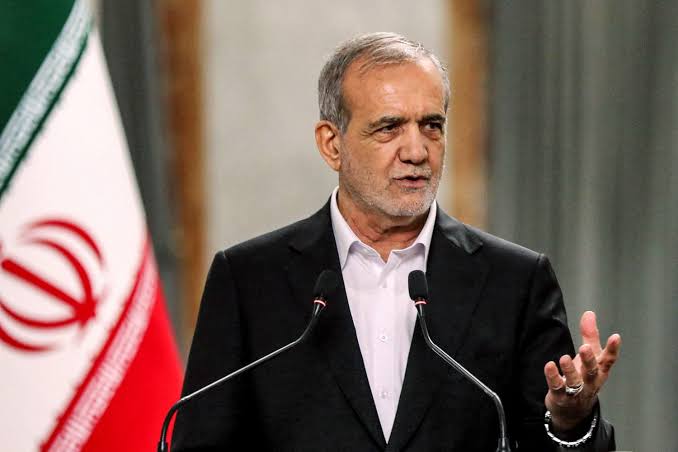
The move, directed by Iran’s Supreme National Security Council (SNSC) and reported by the state-run Islamic Republic News Agency (IRNA), marks the first tangible implementation phase of the newly minted “Islamabad Memorandum of Understanding (MoU)” signed electronically this week by U.S. President Donald Trump and Iranian President Masoud Pezeshkian.
Under the decree, the Iranian government will fully absorb all operational costs normally associated with monitoring and regulating passage through the chokepoint, through which roughly one-fifth of the world’s petroleum transits.
The 60-day fee holiday coincides with a reciprocal move by Washington: hours earlier, U.S. Central Command confirmed it had officially lifted its naval blockade of Iranian ports and coastal areas.
Yet, while the economic relief is intended to beckon jittery international fleets back to the volatile waterway, the announcement came heavily laced with bureaucratic mandates and explicit security warnings. Shipping executives and international observers remain intensely cautious, warning that a return to normal shipping remains weeks away.
Controlled Corridor: The New Rules of Passage
According to the SNSC statement, the Persian Gulf Waterway Authority—alternatively translated as the Persian Gulf Shipping Administration—has been ordered to eliminate bureaucratic red tape and fast-track all incoming commercial transit requests. However, the waiver does not grant open access.
”Given the special conditions and the existence of some safety dangers on the passage route, and due to the need to ensure safe traffic and prevent maritime accidents, ships must pass on the route and at the time announced to them,” the council stated.
The state-mandated routing reflects the highly precarious environment inside the narrow strait. Over the past several months of the U.S.-Iran conflict, the waterway was effectively shuttered to routine commercial traffic. Tehran had previously attempted to exert total control over the strait, demanding exorbitant $2 million passage fees payable in Bitcoin and planting naval mines along primary routes.
Under the new 60-day provisional rules, vessels cannot navigate the strait at will. They are legally required to submit formal applications through an official portal to receive strictly binding schedules and designated lanes.
The SNSC emphasized that these rigid protocols are designed to prevent maritime collisions as traffic volume is “gradually” allowed to increase. Furthermore, the council acknowledged that active mine-clearance operations—mandated under Paragraph 5 of the Islamabad MoU—are still underway to neutralize the lethal explosives left behind by months of hostilities.
The breakthrough in Islamabad caps off one of the most perilous maritime crises in modern history, which began in late February when simmering U.S.-Iran tensions erupted into an open trade war and naval blockade.
Prior to the conflict, approximately 135 commercial ships transited the Strait of Hormuz every single day. That flow slowed to a trickle after reciprocal military strikes, asymmetric mine warfare, and drone attacks left the narrow body of water too dangerous for commercial insurance underwriters to cover.
According to shipping data analytics from Kpler, at least 550 vessels—including more than 200 crude oil and refined petroleum tankers—have sat stranded inside the Persian Gulf for months, unable to safely exit.
The financial toll has been severe. The effective closure of the strait sent global energy markets into wild fluctuations, triggering a 1.1 million barrel-per-day drop in global oil demand, according to the International Energy Agency’s June report. Supply chains for critical bulk goods, including global fertilizer shipments, plummeted by 11 percent year-over-year.
While some state-backed fleets, such as China’s Cosco and select Greek tanker operators, occasionally braved the passage during the height of the standoff, the world’s largest shipping lines broadly suspended operations.
Despite the optimistic tone from political leaders, global shipping trade bodies are reacting to the 60-day fee waiver with profound wariness.
The immediate priority for international organizations like the International Maritime Organization (IMO) and the World Shipping Council is the coordinated, safe evacuation of the hundreds of seafarers and ships stuck behind the blockade line.
”Despite the signing of the ceasefire agreement, we believe the security situation for the shipping industry remains volatile,” said Jakob Larsen, Chief Safety and Security Officer for BIMCO, the world’s largest direct membership organization for shipowners. Larsen warned of massive bottlenecking, noting that “the MoU raises several questions and does not offer sufficient information regarding key aspects such as safe routes, reporting procedures, and procedures for naval protection.”
Furthermore, shipping executives fear that the 60-day fee waiver is a Trojan horse. The text of the Islamabad accord stipulates that during this two-month window, Iran will negotiate with the Sultanate of Oman and other neighboring littoral states to establish a permanent “future administration and maritime services” framework for the strait.
Industry insiders worry this language paves the way for Iran to legally introduce permanent transit fees or mandatory environmental tariffs once the 60 days expire—permanently altering the historic legal status of the Strait of Hormuz as an international waterway guaranteed free of tolls under international maritime law.
U.S. officials have attempted to quiet these anxieties. Vice President JD Vance stated on Thursday that international waterways “should be free of tolls,” maintaining that upcoming talks with Oman are meant to build a “proper security framework,” not a revenue-generating toll booth.
For now, the world’s largest tanker operators are adopting a “wait-and-see” approach. Jotaro Tamura, Chief Executive of Mitsui O.S.K. Lines, indicated that his company would hold its ships back for weeks until the diplomatic rhetoric translates into verified, physical safety on the water.
While a few isolated vessels have begun testing the waters, the consensus among mariners remains clear: the toll is zero, but the risk remains substantial.