


By SCM Correspondent
TEHRAN — Iran’s central military command announced early Thursday the absolute closure of the Strait of Hormuz to all maritime traffic, including commercial vessels and oil tankers, explicitly warning that any ship attempting to navigate the vital waterway will be targeted.
The extraordinary decree by the Khatam al-Anbiya Central Headquarters—the high command overseeing all of Iran’s conventional military and Islamic Revolutionary Guard Corps (IRGC) operations—marks a dangerous escalation in the rapidly deteriorating conflict between Washington and Tehran.
It comes directly on the heels of a massive wave of U.S. airstrikes hitting military infrastructure in Iran’s southern coast.
”Due to the attacks from the criminal American enemy, from this moment, due to insecurity in the region, the Strait of Hormuz is declared closed for the passage of any type of vessel,” the military command said in a statement broadcast on Iranian state television.
The directive warned that “any passage will be targeted,” dismissing Western assertions that commercial routes through the Gulf could be maintained under current conditions.
Pentagon officials responded swiftly, calling the declaration an illegal provocation that threatens global economic stability. In Washington, national security officials met in an emergency session, while the U.S. Fifth Fleet, based in nearby Bahrain, stated it was prepared to maintain the freedom of navigation through international waters by force if necessary.
The immediate fallout cascaded into global energy markets, where Brent crude oil futures spiked more than 8 percent within minutes of the announcement.
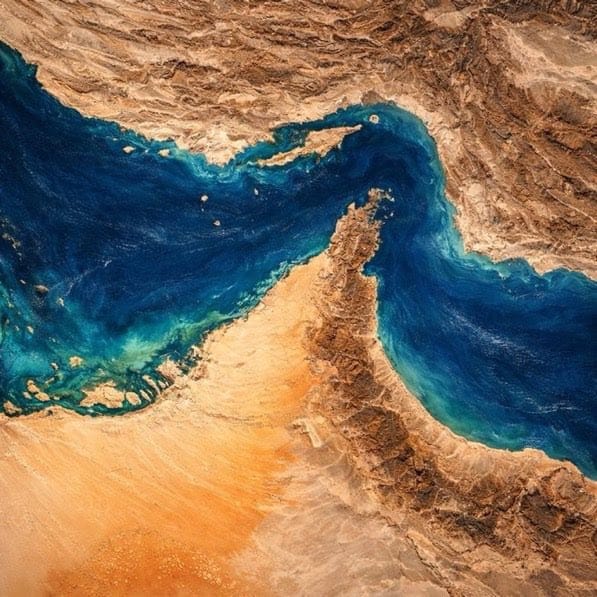
The Strait of Hormuz is widely regarded as the world’s most critical maritime chokepoint. A narrow stretch of water separating Iran from Oman, it connects the oil fields of the Persian Gulf to the open ocean.
Approximately one-fifth of the world’s liquid petroleum and a significant portion of global liquefied natural gas (LNG) pass through its shipping lanes daily. Shipping data analysts warned that a total blockade could instantly strand millions of barrels of crude bound for Europe and Asia, triggering fuel shortages and crippling supply chains.
The closure shatters months of precarious, highly restricted “strict management” over the strait that Iran had imposed earlier this spring, following a wave of joint U.S. and Israeli operations in February.
While limited traffic had still been managed through alternative schemes and heavily coordinated U.S. military patrols, Thursday’s announcement represents an explicit, total embargo backed by the threat of immediate lethal force.
The current crisis represents the culmination of a tense week of direct military friction. On Monday, an Iranian military drone shot down a U.S. Army AH-64 Apache gunship patrolling near the coast of Oman.
Though the crew was successfully rescued by an uncrewed drone, President Donald Trump vowed a severe, “proportional” response, accusing Tehran negotiators of dragging out peace talks in bad faith.
By Wednesday, the Pentagon executed that response. U.S. forces initiated a second consecutive day of intensive precision airstrikes targeting radar facilities, fast-attack missile boat bays, and air defense batteries across Iran’s southern Hormozgan province.
Defense Secretary Pete Hegseth told reporters on Wednesday evening that the U.S. would be “hitting Iran hard” to disable offensive capabilities and reinforce the American diplomatic position.
Instead of deterring Tehran, the American heavy bombardment appears to have driven the Iranian regime to pull its ultimate geopolitical lever.
Military analysts suggest that Iran’s high command views the total closure of the strait not just as a defensive maneuver, but as a coercive diplomatic instrument. By putting the global economy on the line, Tehran is betting it can pressure Washington to halt its air campaign and force concessions on international blockades and sanctions that have strangled the Iranian economy.
With both sides dug in—Washington refusing to back down from its air campaign and Tehran dug into its blockade—the region stands at its closest point to a full-scale regional war in decades.
Maritime insurers have already begun suspending coverage for any vessels heading toward the Gulf, effectively halting shipping even before the first Iranian missile is fired.