


Admin I Friday, Sept 18, 2026
LAGOS, Nigeria — As Nigeria’s financial sector approaches the Central Bank of Nigeria’s (CBN) 2027 deadline for mandatory data and infrastructure localization, industry leaders are weighing the operational realities against national sovereignty goals.
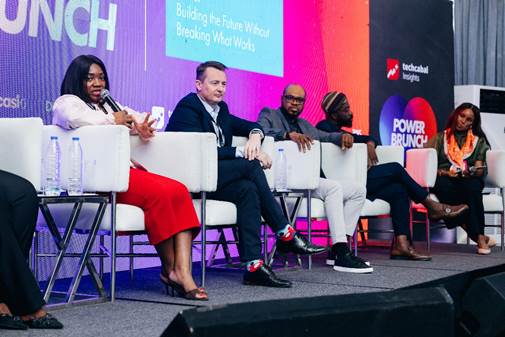
Speaking at TechCabal’s exclusive Power Brunch, Babafemi Ogungbamila, Executive Vice President of Operations & Technology at Interswitch, joined key experts to evaluate whether the nation’s digital infrastructure is prepared to support the migration.
Key Insights from Interswitch on Data Localization
Architecture Over Compliance: Localization requires fundamentally redesigning system architectures rather than applying simple technical fixes.
Redundancy Protects Users: Multi-location systems across payments and fintech platforms are designed to prevent single points of failure.
Risk Concentration Danger: Restricting critical financial data entirely to one region can increase system-wide vulnerability without adequate local power and connectivity investments.
Infrastructure Target: The 2027 deadline should serve as a catalyst for building world-class local infrastructure rather than a basic regulatory checklist.
Balancing Sovereignty and System Resilience
A central concern of the shift is distinguishing between data that must remain in-country for sovereign control and systems that require cross-border redundancy for risk management.
“Localization isn’t a single switch you flip — it’s an architecture decision,” said Ogungbamila. “The real work is distinguishing what must reside within Nigeria as a matter of sovereignty from what exists elsewhere as deliberate redundancy, because that redundancy is often the very thing protecting users when something fails.”
Building Infrastructure for Real-World Conditions
Addressing whether current local digital infrastructure can support full localization without introducing new failure modes, Ogungbamila stressed that resilience must be built into the process from day one.
“Resilience shouldn’t be treated as a box we tick before localization begins — it’s what localization has to build toward,” Ogungbamila added. “The deadline shouldn’t be read purely as a compliance line. It’s a call to build Nigeria’s infrastructure to a standard that makes localization genuinely safe, and not just symbolic.”
As pan-African payments scale, Interswitch is collaborating with regulators, industry peers, and infrastructure providers to develop a implementation path that reinforces the overall stability of Nigeria’s fintech ecosystem.