


By SCM Staff Writer
BRUSSELS — In its ongoing effort to choke off the economic lifelines fueling Moscow’s war machine, the European Union has turned its crosshairs toward an unexpected battlefield: the seafood aisle.
European Commission President Ursula von der Leyen unveiled the bloc’s 21st sanctions package against Russia. While the sweeping proposal targets familiar economic pain points—such as clamping down on Russia’s maritime “shadow fleet,” placing new restrictions on cryptocurrency platforms, and cutting off 31 additional Russian banks from transaction networks—it also crosses a major threshold by targeting one of the last remaining unsanctioned arenas of trade: the fisheries sector.
Specifically, Brussels is proposing substantial restrictions on various Russian fish products alongside a complete, total ban on staples like cod. For European consumers and hospitality industries already weary of inflation, the geopolitical move carries a blunt economic reality: prepare to pay up.
For over two years, Western nations have methodically uncoupled their economies from Russian oil, gas, and timber. Yet, seafood consistently slipped through the regulatory net. The reluctance to target this sector stems from a stark reality of the global supply chain: Russia provides roughly 45 percent of the global supply of whitefish.
Whitefish—a broad category that encompasses cod, pollock, and haddock—is the unsung hero of the global food service industry. Mild, versatile, and historically abundant, it is a favorite for budget-conscious restaurants, fast-food chains, and institutional catering operations looking to produce inexpensive dishes.
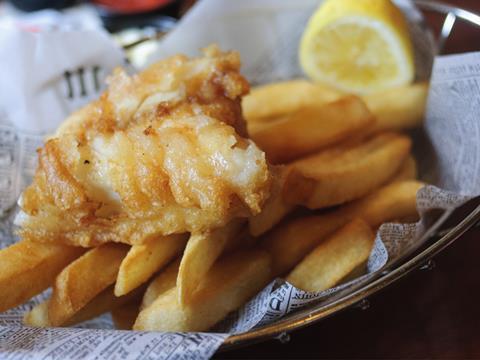
From British fish-and-chip shops to continental corporate cafeterias, Russian-caught whitefish has long kept prices low.
”We are addressing one of the last major unsanctioned sectors,” von der Leyen stated during her press briefing in Brussels, emphasizing the need to lock in Europe’s diversification away from Russian imports.
The proposed package also extends these exact trade restrictions to Belarus, closing a geographical loophole to prevent the landlocked Russian ally from acting as a backdoor laundering route for illicit seafood.
To understand why it took 21 rounds of sanctions to finally restrict Russian cod, one must examine the complex geopolitical tightrope Brussels has walked since February 2022.
Early waves of sanctions naturally targeted high-value revenue streams like crude oil, luxury goods, and oligarch assets. Seafood was intentionally spared, shielded by intense lobbying from European processing hubs—most notably in Germany, Poland, and the Netherlands—and c oncerns over food security.
Because fish is a critical protein source and processing plants employ thousands of EU citizens, early regulators feared a sudden ban would cause domestic food prices to skyrocket while devastating coastal processing economies.
However, as the war drags on and Moscow leverages alternative energy markets in Asia to sustain its budget, the EU’s diplomatic arm, led by top diplomat Kaja Kallas, is pivoting from targeting individuals to applying systemic pressure on structural revenue sources.
European officials argue that the Kremlin directly benefits from state-backed fishing conglomerates, meaning every plate of inexpensive cod sold in Europe indirectly helps finance military hardware.
The strategy is not without precedent. In late 2023, the United States tightened its own restrictions on Russian seafood by expanding its ban to include Russian fish processed in third countries like China. By proposing a direct ban, the EU is aiming to close global gaps, though it forces member states to confront immediate supply shortages.
With the EU proposing to take nearly half of the world’s whitefish supply off its table, the seafood market is bracing for severe disruptions. Alternative suppliers, such as Norway, Iceland, and domestic European fleets, are already operating at or near maximum sustainable yields dictated by strict environmental quotas.
They simply cannot scale up production overnight to meet the deficit.
Market analysts warn that the law of supply and demand will trigger immediate price hikes across both wholesale and retail sectors.
Restaurants will face a difficult choice: absorb the soaring costs of alternative whitefish, pass the expense directly onto consumers, or remove popular budget-friendly items from their menus entirely.
The proposal will now head to EU member states for intense deliberation. While some hawkish nations are pushing for an immediate blackout of Russian goods, countries with large seafood processing dependencies are expected to bargain for grace periods or transitional quotas.
The European Commission hopes to see the first elements of the package voted through formally at a meeting of EU Foreign Ministers in Luxembourg, with full adoption looming by mid-summer.
For the European public, the coming months will test the limits of consumer solidarity. While the sanctions aim to weaken the foundations of Russia’s military logistics, the immediate feedback loop will be felt not on a distant battlefield, but at the checkout counter of the local grocery store.
For a deeper look into how European officials are structuring this diplomatic strategy, you can watch this EU Commission Sanctions Press Statement directly from Brussels.
This briefing outlines the specific trade and fisheries restrictions being introduced to the international market.