Admin I Friday, Sept 26, 2025
PORT HARCOURT-, Nigeria — Nigeria’s Minister of Environment, Mallam Balarabe Abbas Lawal, has praised the Niger Delta Development Commission (NDDC) for its substantial efforts in building crucial infrastructure across the oil-rich Niger Delta region.
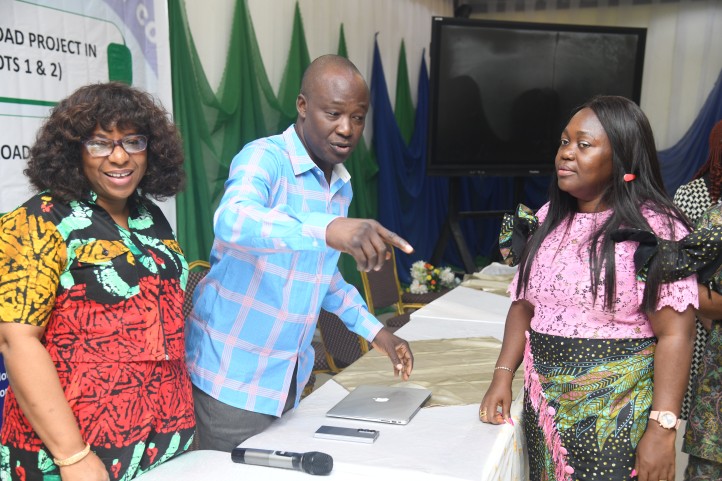
The commendation came during a recent stakeholders’ engagement forum focused on Environmental Impact Assessment (EIA) for proposed road projects in Rivers State.
The Minister lauded the NDDC’s dedication to sustainable development and its work to close long-standing infrastructure deficits within the communities. Represented by Environmental and Chemical Engineer Engr. Manji Justine, the Minister specifically highlighted the NDDC’s adherence to the Environmental Impact Assessment Act by subjecting the proposed works to a rigorous EIA process before construction begins.
“We are not here to stop the project but to ensure it aligns with environmental laws to protect the future and guarantee sustainability,” the Minister’s representative stated.
He confirmed that the Ministry, alongside the state government and affected communities, would institute monitoring protocols, including baseline data collection and post-construction assessments, once project approval is granted.
The forum, a collaboration between the Federal Ministry of Environment, the Rivers State Ministry of Environment, and the NDDC, centered on three vital road projects:
The construction of a 4 km Bonny Internal Road in Degema and Bonny Local Government Areas; The construction of the Luebe-Agbani -Lueku Road in Khana Local Government Area (LGA) and The construction of the 6 km Egelebia Road, Phase 2, in George-Ama, Okrika LGA.
The Minister underscored the necessity of incorporating effective drainage systems to mitigate perennial flooding and stressed the importance of covered drainage in residential areas to prevent waste dumping and blockages.
He asserted that “Every identified impact in the EIA process must have a mitigation strategy.”
NDDC’s Director II, Environmental Protection and Control, Engr. Aniefiok Iniokut, stated that the forum provided an essential platform for open discussion between the Commission, the Ministry, and the communities. “It’s only through such engagements that we can understand the full social and environmental implications of these projects,” he said, noting the overwhelming community support and clear understanding of the benefits.
Local leaders expressed profound gratitude for the NDDC’s initiatives. Chief Godknows Tam-George, Head of the Dokube Royal House in Okrika, spoke passionately about the impact: “For years, Egedeme lacked basic infrastructure. Within a short period under the current NDDC leadership, we’ve received a 2km road, a 6km road, and a water project. These are life-changing developments.”
Similarly, Chief Samson Barilugbene Obrien, the Paramount Ruler of Baa-Lueku, praised the Luebe-Agbani -Lueku Road, which he said will significantly enhance economic opportunities.
“This road will bridge the gap between our community and others. It will open up access for trade, ease transportation, and serve as a vital link to Akwa Ibom via Aba,” he remarked.
The NDDC assured all stakeholders that the projects, having confirmed no community objections, would be completed successfully, with positive impacts clearly outweighing any negatives.