


At Least 42 dead, Over 102 confirmed cases
By SCM HEALTH REPORTER
BUNIA, Democratic Republic of the Congo — A rapidly evolving Ebola outbreak has spread across three eastern provinces in the Democratic Republic of the Congo, prompting a high-level emergency mission by top Congolese officials and the head of the World Health Organization to the city of Bunia.
At least 42 patients have died of Ebola in Congo DRC alone, with over 100 confirmed cases.
The outbreak, fueled by the relatively rare Bundibugyo strain of the virus, has already claimed lives and infected patients across several health zones in Ituri, North Kivu, and South Kivu provinces.
The geographic spread presents a fresh crisis for a region already historically battered by public health emergencies and localized conflict.
Unlike the more common Zaire strain of Ebola—which was successfully combated in recent years using highly effective, newly developed vaccines—the Bundibugyo strain currently lacks a licensed vaccine or specific therapeutic treatment.
”While the Bundibugyo strain presents additional challenges… proven public health measures remain effective in slowing transmission,” the Congolese government and the W.H.O. said in a joint statement issued Sunday, following a site visit by W.H.O. Director-General Dr. Tedros Adhanom Ghebreyesus and Congo’s Health Minister, Dr. Samuel Roger Kamba.
Health authorities announced they are working to rapidly launch randomized controlled trials to test candidate vaccines and experimental treatments directly in the affected zones.
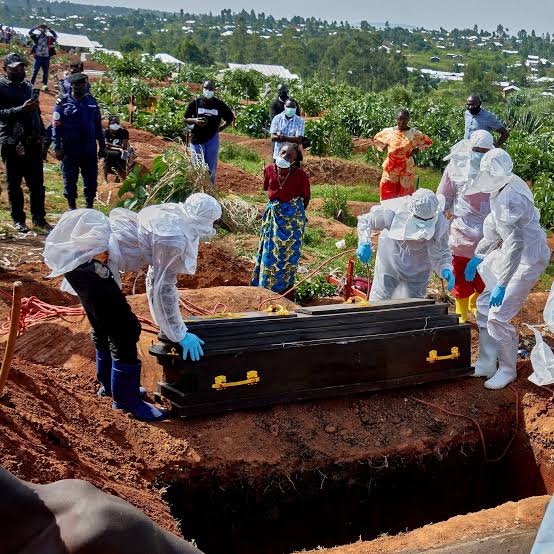
For now, the response relies heavily on traditional, grueling frontline epidemiology: early isolation of patients, intensive contact tracing, robust infection control within under-resourced local clinics, and organizing safe, dignified burials to prevent post-mortem transmission.
The success of the containment strategy hinges entirely on community trust, an hurdle that has plagued past Ebola responses in the region. Decades of instability have left a legacy of deep skepticism toward outside medical intervention.
In response, national and provincial authorities say they are intensifying face-to-face dialogue with local leaders, women’s groups, and religious figures to co-develop containment strategies that are culturally appropriate.
International health officials are emphasizing that Congo is uniquely positioned to handle the threat.
The nation’s health workers possess unparalleled experience, having successfully navigated and contained multiple major Ebola crises over the last decade.
However, officials warned that global cooperation is vital, urging neighboring countries to keep trade borders open. In past outbreaks, knee-jerk border closures have crippled local economies and severely obstructed the flow of desperately needed medical supplies and specialized personnel.
”Investments made today in laboratories, health workers, surveillance systems, and essential services will leave a legacy,” the joint statement read, framing the current crisis as a critical opportunity to build long-term resilience into the DRC’s healthcare infrastructure.