
Emmanuel Thomas l Tuesday, July 08, 2025
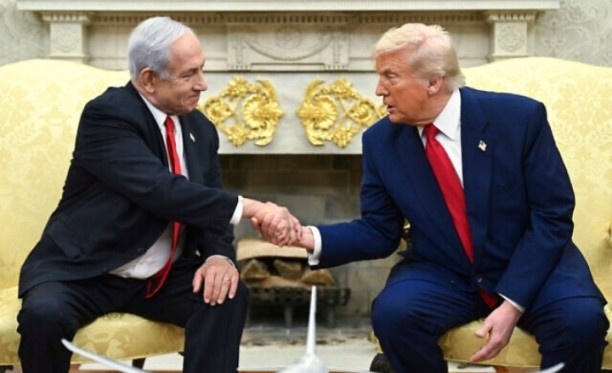
WASHINGTON – The announcement by Israeli Prime Minister Benjamin Netanyahu that he has formally nominated President Donald Trump for the Nobel Peace Prize has ignited a firestorm of criticism, drawing sharp condemnation from across the international community.
But Netanyahu is undeterred right there in Washington today, he presented his letter formally nominating President Trump for the most honourable prize globally.
This move is particularly galling given that Netanyahu is currently under an arrest warrant from the International Criminal Court (ICC) for alleged war crimes.
The juxtaposition of a leader facing such grave accusations attempting to bestow one of the world’s most prestigious peace awards raises serious questions about the integrity of the nomination process and the state of global diplomacy.
On November 21, 2024, the ICC issued an arrest warrant for Benjamin Netanyahu, alongside his former Minister of Defense Yoav Gallant, on charges of war crimes and crimes against humanity, including starvation as a method of warfare and intentionally directing attacks against the civilian population.

This unprecedented move marks the first time the ICC has issued an arrest warrant against the leader of a Western-backed democratic country.
The allegations stem from the ongoing conflict in Gaza and the severe humanitarian crisis unfolding right as I write.
Against this backdrop of severe legal and ethical scrutiny, Netanyahu’s nomination of President Trump for the Nobel Peace Prize appears less as a genuine recognition of peacemaking efforts and more as a cynical political maneuver.
While Trump’s supporters point to initiatives like the Abraham Accords as evidence of his diplomatic prowess, critics argue that these agreements, while significant, do not overshadow the broader context of his administration’s foreign policy.
Furthermore, the timing of Netanyahu’s nomination, made shortly after the ICC warrant against him, lends itself to interpretations of a strategic alignment between two leaders facing significant international pressure.
The Nobel Peace Prize, intended to honor those who have “done the most or the best work for fraternity between nations, the abolition or reduction of standing armies and for the holding and promotion of peace congresses,” stands as a beacon of hope and a testament to profound contributions to global harmony.
When a leader accused of committing egregious violations of international law nominates another leader, it inevitably cheapens the award’s prestige and undermines the very principles it represents.
Critics contend that such a nomination, coming from an individual wanted by the ICC, risks politicizing and devaluing the Nobel Peace Prize. It creates an uncomfortable precedent where accusations of war crimes do not preclude one from participating in the nomination of an award dedicated to peace.
This raises a critical dilemma for the Nobel Committee: how to navigate a nomination that is so deeply entangled with ongoing international legal processes and accusations of severe human rights abuses.
The international community, particularly those committed to upholding international law and human rights, views this nomination with profound concern. It highlights the urgent need for consistent application of international justice and for global institutions to resist attempts to normalize actions that undermine peace and security.
The credibility of the Nobel Peace Prize hinges on its ability to remain above political machinations and to truly reflect the ideals of peace and human dignity.
Netanyahu’s nomination of Trump, while perhaps intended to curry political favor or divert attention from his own legal woes, ultimately serves to cast a shadow over the esteemed award and underscore the complex and often troubling realities of international relations.