


By SCM Correspondent
BENGHAZI, Libya — Ten international humanitarian volunteers detained by authorities in eastern Libya have entered their fourth consecutive day of a “dry” hunger strike, refusing both food and water to protest what organizers call their prolonged illegal detention and a complete denial of legal counsel.
The striking detainees are part of an 11-member delegation from the Global Sumud Land Convoy, a civilian-led international coalition that had been attempting to travel overland across North Africa to deliver medical supplies and ambulances to the besieged Gaza Strip.
According to statements released by the convoy’s organizers, the health of the striking volunteers has reached a critical threshold, with several reports of fainting spells. Because independent medical teams and international consuls have been barred from entering the facility, the captured medical doctors within the delegation have been forced to monitor their collapsing colleagues.
”Their lives are at risk,” the Global Sumud Flotilla organization said in an urgent public dispatch. “They’ve received no external medical care and are being held in ‘black sites’—isolated, non-civilian prison complexes.”
The crisis began on May 24 near the city of Sirte, when the 10-member negotiation team attempted to meet directly with eastern Libyan authorities to secure safe passage for their aid caravan. Instead of a dialogue, organizers say the delegates were forced into unmarked vans and cut off from the outside world.
On June 2, a Benghazi court extended their detention for 10 additional days under the guise of visa and entry permit violations, a charge the organization fiercely disputes, maintaining that all volunteers entered the country legally with valid paperwork.
Activists and family members are launching a coordinated global campaign, applying direct pressure on the foreign ministries of the nations represented among the detainees—which include citizens from Argentina, Portugal, Italy, Tunisia, and the United States—to demand their immediate and unconditional release.
To provide a complete and deeply reported New York Times piece, the following background context should be integrated to explain why this situation is happening:
1. The Geopolitical Divide in Libya
The detentions highlight the complex, fragmented political reality of Libya.
The volunteers were arrested near Sirte, the dividing line between Libya’s competing governments. Eastern Libya is strictly controlled by the Libyan National Army (LNA) led by Field Marshal Khalifa Haftar.
This administration operates independently of the internationally recognized Government of National Unity (GNU) based in Tripoli (the west). Navigating borders, security clearances, and aid distribution in LNA territory requires dealing with non-standard judicial procedures and heavily militarized internal security forces.
2. The Scope of the Global Sumud Mission
The Global Sumud Land Convoy consists of roughly 230 international participants from over 20 countries—including doctors, lawyers, engineers, and humanitarians.
The caravan was moving toward Egypt’s Rafah crossing with 10 aid trucks, 20 mobile homes, and 7 ambulances loaded with life-saving supplies.
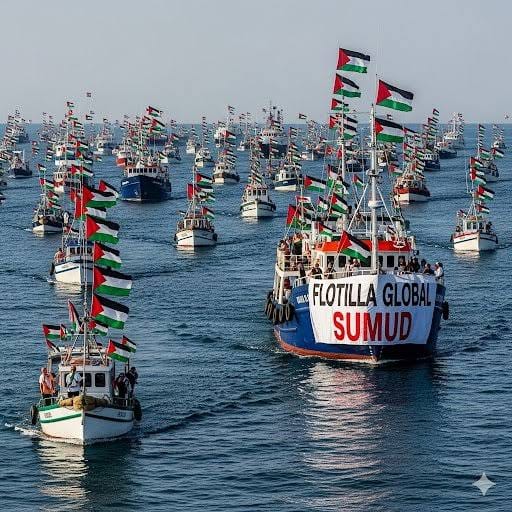
The land action was designed to run simultaneously with a maritime effort (the Global Sumud Flotilla), which recently made headlines after its vessels were intercepted by naval forces in the Mediterranean.
3. The Weaponization of Bureaucracy
Before launching the overland journey from Mauritania, convoy organizers spent months communicating with more than 20 transit governments.
However, upon entering Libya, eastern authorities abruptly demanded that the convoy hand over all humanitarian cargo to the local Libyan Red Crescent Society and dictated that only Libyan nationals would be allowed to escort the vehicles forward.
The 10-member delegation was arrested while attempting to negotiate a compromise to ensure the specialized medical teams could stay with their equipment.
4. What is a “Dry” Hunger Strike?
Medically, a dry hunger strike (refusing both food and liquids) is an extreme and rapidly fatal form of protest.
While a standard hunger strike can be sustained for weeks, human organs begin to fail from severe dehydration within 3 to 7 days. This timeline creates immense, immediate pressure on international diplomats to intervene before the situtation results in fatalities.