


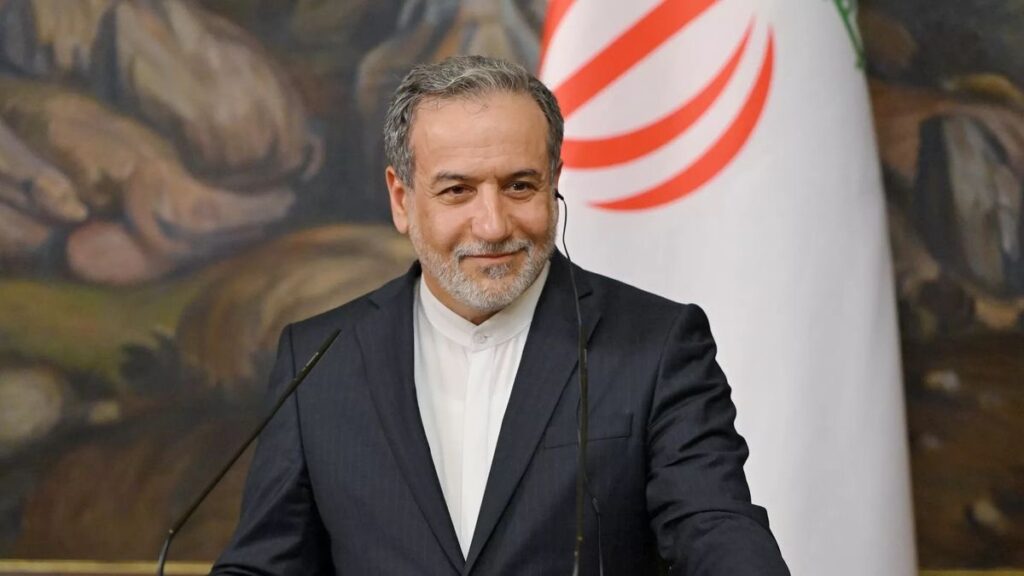
By SCM Foreign Desk I July 24, 2026
WASHINGTON — Iranian Foreign Minister Abbas Araghchi offered a stern defense of his country’s regional posture, declaring that the Islamic Republic will not bow to American pressure or back down from its strategic objectives in the Strait of Hormuz.
In a sharply worded address aimed directly at Washington, Mr. Araghchi framed Tehran’s stance in the Persian Gulf as a matter of national sovereignty and principled resistance against Western coercive power.
“Iran has shown that it will not submit to America’s bullying, and we will by no means respond to the language of force, pressure, and threats,” Mr. Araghchi said. “We neither fear threats nor bow to pressure, and we will not tolerate the language of threats.”
His remarks come during a period of acute strain between Washington and Tehran, marked by intense diplomatic maneuvering, rhetorical escalation, and lingering instability surrounding one of the world’s most critical energy transit bottlenecks.
Escalating Rhetoric Over Gulf Navigation
Mr. Araghchi’s statement follows a series of sharp warnings from American officials threatening retaliatory actions against Iranian infrastructure should commercial shipping in the Strait of Hormuz face disruption.
Iranian officials, including Parliament Speaker Mohammad Bagher Ghalibaf, have countered with warnings of their own, adopting an “eye for an eye” defense posture regarding regional energy trade.
Addressing these warnings, Mr. Araghchi reaffirmed that safeguarding maritime transit under Iranian authority remains an uncompromising priority.
“We have a principled policy and we continue to pursue it,” Mr. Araghchi added. “Protecting the people of Iran and safeguarding Iran’s interests in the Strait of Hormuz are among our principles, and we are pursuing them. As long as the legitimate objectives and demands of the Iranian people are not fulfilled, it is natural that we will continue on our path.”
A Broader Pattern of Deterrence
The strategic weight of the Strait of Hormuz has long served as Iran’s primary counterweight against Western economic sanctions and military superiority. Analysts note that Tehran views control over the narrow waterway—through which approximately a fifth of the world’s petroleum passes—as its most effective leverage in regional disputes.
In recent months, Iranian officials have signaled that any external attempt to impose new security arrangements or alter the balance of power in the Gulf would encounter severe friction. Simultaneously, negotiations regarding a final diplomatic agreement between the United States and Iran have remained stymied, with Tehran insisting that talks cannot proceed effectively while Washington maintains coercive sanctions and military threats.
“The messaging out of Tehran is meant to establish a clear boundary,” said a senior Middle East analyst based in Washington. “By explicitly linking maritime security in Hormuz to their broader strategic demands, Iranian leadership is signaling that deterrence remains intact despite external military pressure.”
For now, Mr. Araghchi’s rhetoric reflects a government in Tehran determined to project strength at home and abroad, leaving little room for immediate compromise as both nations navigate a precarious standoff in the Persian Gulf.
For a broader perspective on the escalating diplomatic rhetoric and maritime crisis, watch this Iran-US Gulf Tension Coverage.