
Admin I Wednesday, June 25, 2025
LAGOS, Nigeria – Money laundering is the process of disguising the origin of illegally obtained funds to make them appear legitimate.
It typically involves three distinct stages:
1. Placement: This is the initial stage where the “dirty money” (illicit funds) is introduced into the legitimate financial system. This is often done in small, seemingly innocent amounts to avoid drawing attention.
Common methods include:
Structuring (or smurfing): Breaking large sums of cash into smaller, less suspicious amounts and depositing them into various accounts over time.
Commingling: Mixing illegal funds with legitimate business revenue, especially in cash-intensive businesses like restaurants or car washes.
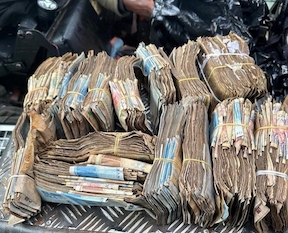
Bulk cash smuggling: Physically moving cash across borders to deposit in countries with weaker anti-money laundering (AML) regulations.
Purchasing monetary instruments: Buying items like money orders, cashier’s checks, or prepaid cards with illicit cash.
2. Layering: The goal of this stage is to separate the illicit funds from their source through a complex series of financial transactions. This makes it extremely difficult to trace the money back to its criminal origin.
Techniques used in layering include:

Multiple transfers: Moving money between various bank accounts, often in different jurisdictions and through different types of financial institutions.
Using shell companies and trusts: Creating fake companies or legal entities to hold assets and conduct transactions, obscuring the true ownership of the funds.
Investing in complex financial products: Purchasing and selling stocks, bonds, or other investments to create a convoluted money trail.
Real estate transactions: Buying and selling properties, sometimes at inflated or deflated prices, to move money around.
Gambling: Using casinos to convert illicit cash into chips, play for a short time, and then cash out, receiving a “clean” check.
3. Integration: In the final stage, the laundered money is reintroduced into the legitimate economy, appearing to come from a legal source.
The funds now look “clean” and can be used without suspicion.
Examples of integration methods include:
Purchasing luxury assets: Buying high-value goods like real estate, vehicles, artwork, or jewelry that can be resold.
Investing in legitimate businesses: Injecting the laundered funds into a legitimate business as capital or loans.
Loans to criminals: Repaying loans or debts with the “cleaned” money, or even issuing new loans from shell companies to the criminals.
False invoices and payroll: Creating fictitious invoices for services or paying “ghost employees” to move the money.
It is important to note that these stages often overlap and are not always sequential. Criminals employ increasingly sophisticated methods to make detection difficult.