


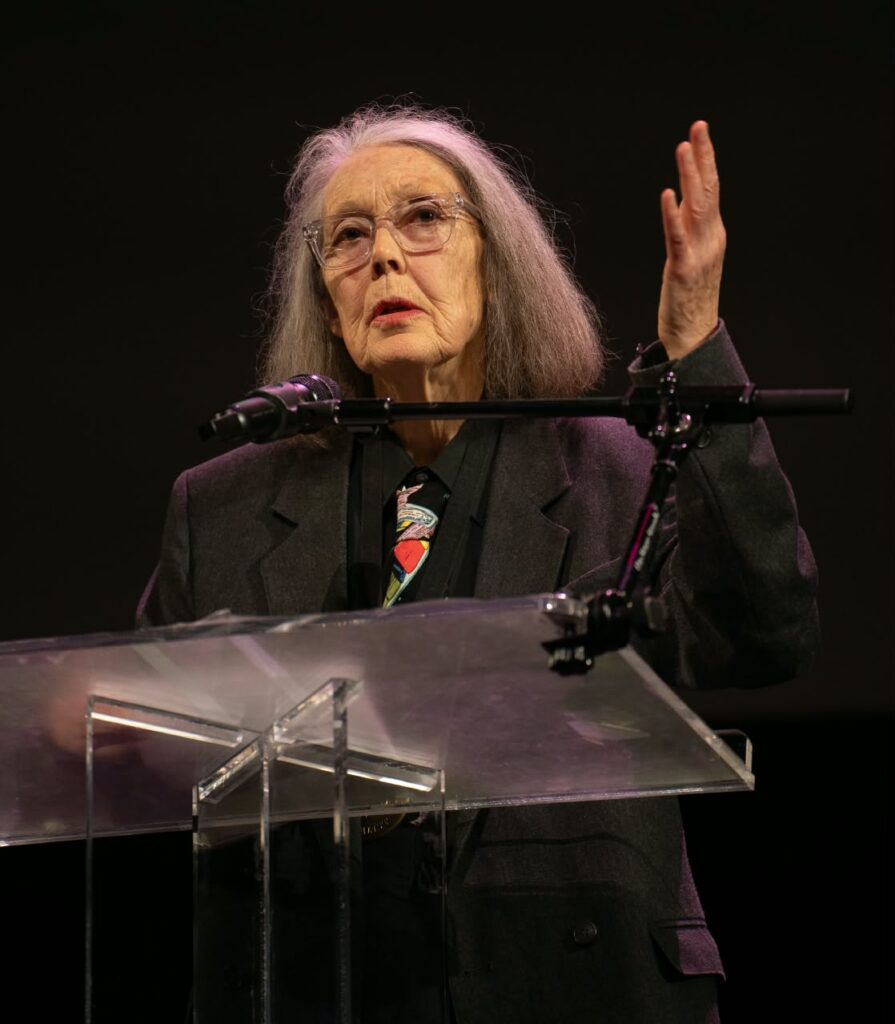
By Emmanuel Ukudolo I Thursday, October 08, 2026
STOCKHOLM — Canadian poet, essayist, and scholar Anne Carson was awarded the Nobel Prize in Literature on Thursday. The Swedish Academy honored her for a body of work that fuses classical antiquity with daring experimental forms, permanently shifting the landscape of contemporary letters.
In its official citation, the Academy commended Carson “for her bold and inventive oeuvre that, in playful dialogue with the classical tradition, has created new forms for contemporary literature.” She will receive 12 million Swedish kronor (about $1.2 million) alongside the honor.
Carson, 76, who has taught classics at universities across North America—including McGill University, the University of Michigan, and New York University—has long occupied a unique position in world literature. Rather than treating ancient Greek texts as static historical artifacts, Carson treats them as urgent, living conversations.
Her breakthrough 1998 verse novel, Autobiography of Red, reimagined a surviving fragment by the ancient Greek poet Stesichoros into a modern coming-of-age story about a winged red monster named Geryon. The work established Carson’s singular voice: precise yet emotional, deeply erudite yet unpretentious.
Her literary production spans poetry collections, theatrical translations, critical essays, and hybrid artistic objects. In Nox (2010), an elegy for her deceased brother, Carson published the work as an accordion-fold box containing collages, photographs, and meticulous translations of Catullus, challenging traditional concepts of what a book can be.
By bridging classical philology with modern poetic expression, Carson has influenced a generation of writers seeking to dismantle strict boundaries between genres.