
Emmanuel Ukudolo I Sunday, July 13, 2025
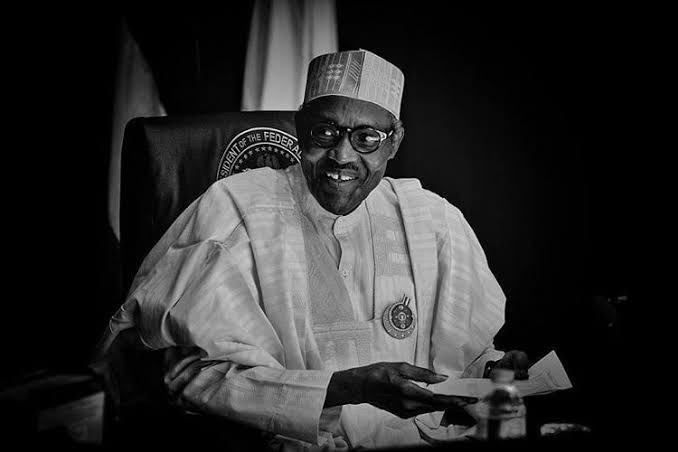
LAGOS, Nigeria – The immediate past president of Nigeria, Mr. Muhammadu Buhari is dead. He was 82.
In a statement on X, his former aide, Garba Shehu said the former president died after a brief ailment in London.
“The family of the former president has announced the passing on of the former president, Muhammadu Buhari, this afternoon in a clinic in London.
“May Allah accept him in Aljannatul Firdaus, Amin”, Gaba Shehu said in terse statement.
Muhammadu Buhari (born December 17, 1942, in Daura, Katsina State, Nigeria) was a former Head of State from 1984 to 1985 and later as a democratically elected President from 2015 to 2023.
His career has been defined by a commitment to public service, marked by periods of military rule and a persistent pursuit of the presidency through democratic means.
Buhari’s journey began with his enrollment in the Nigerian Army in 1961, at the Nigerian Military Training College, Kaduna. He underwent officer cadet training at Mons Officer Cadet School in Aldershot, England (1962-1963), and was commissioned as a Second Lieutenant in January 1963.
His military education continued with further training in Nigeria, Great Britain, India, and the United States, including the Defence Services Staff College in Wellington, India (1973), and the United States Army War College (1979-1980).
Throughout his distinguished military career, Buhari held several key command and staff positions. He served as Military Secretary, Member of the Supreme Military Council, Military Governor of the North Eastern State (now Borno), Federal Commissioner of Petroleum Resources, and Chairman of the Nigerian National Petroleum Corporation (NNPC).
He was also General Officer Commanding the 4th Infantry Division and later the 3rd Armoured Division.
First Stint as Head of State (1983-1985):
In December 1983, a military coup d’état overthrew the civilian government of President Shehu Shagari, and Muhammadu Buhari was chosen unanimously by the coup leaders to become the new Head of State and Commander-in-Chief of the Nigerian Armed Forces.
His regime was characterized by a strong stance against corruption and indiscipline, implementing measures like the “War Against Indiscipline” to enforce public morality and accountability. While initially welcomed by many, his government’s repressive measures and continued economic challenges eventually led to discontent, culminating in another military coup in August 1985, which saw him removed from power.

Following his removal from power, Buhari remained a significant figure in Nigerian public life. With the return to civilian rule in 1999, he transitioned into democratic politics, contesting the presidential elections multiple times. He ran in 2003, 2007, and 2011 under different political parties, consistently advocating for good governance, anti-corruption, and security. Though he lost these elections, his persistence and consistent message resonated with a significant portion of the electorate.
In 2014, Muhammadu Buhari was nominated as the presidential candidate for the newly formed All Progressives Congress (APC). In the 2015 general election, he achieved a historic victory, defeating incumbent President Goodluck Jonathan.
This marked the first time in Nigeria’s history that an incumbent president was defeated in an election. He was re-elected for a second term in 2019.
During his two terms as president (May 29, 2015 – May 29, 2023), Buhari’s administration focused on three key areas: security, fighting corruption, and economic diversification.
Security
His government made efforts to combat the Boko Haram insurgency in the Northeast, with the military reclaiming significant territories. However, new security challenges emerged, including banditry in the North-West, herder-farmer clashes, and secessionist agitations in the South-East.
Anti-Corruption:
Buhari’s administration launched a robust anti-corruption drive, pursuing high-profile cases and implementing policies like the Treasury Single Account (TSA) to improve financial transparency. But his regime has been dubbed as the most corrupt in the history of Nigeria as billions of Naira were stolen under his watch. His reign and bad economic policies, borrowing in excess of what is permitted through ‘Ways and Means’ led to devaluation of the Naira and high level of inflation
Economy:
The administration sought to diversify Nigeria’s oil-dependent economy, with initiatives like the Anchor Borrowers Programme to boost agricultural production. Infrastructure development, particularly in rail and roads, was also a focus.
Despite these efforts, Nigeria faced economic challenges including recessions and fluctuating oil prices.
Challenges and Controversies:
Buhari’s presidency was not without its share of challenges and controversies. These included the ongoing security crises, particularly the persistence of Boko Haram and the rise of new forms of insecurity; economic difficulties, including periods of recession and high inflation; and criticisms regarding human rights and the rule of law. The #EndSARS protests in 2020 highlighted public dissatisfaction with police brutality and poor governance issues.
Post-Presidency:
Since handing over power to President Bola Ahmed Tinubu on May 29, 2023, Muhammadu Buhari has largely maintained a private life, continuing to be a respected elder statesman in Nigeria.
His legacy remains a subject of ongoing debate, reflecting the complexities of his two periods of leadership and the significant challenges he faced in governing Nigeria.