


By SCM Staff Writer
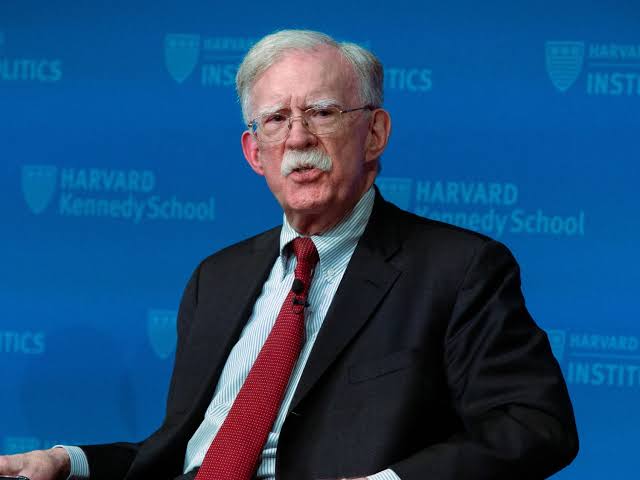
WASHINGTON — John Bolton, the former national security adviser who transformed from a cornerstone of the Trump administration into one of the former president’s most vocal critics, has agreed to plead guilty to a federal felony charge of mishandling classified documents, according to people familiar with the matter.
Under the terms of a newly disclosed plea agreement, Mr. Bolton will plead guilty to a single count of unauthorized retention of sensitive national security information. As part of the deal, he has agreed to pay a steep financial penalty of $2.25 million.
The agreement, which is subject to a federal judge’s approval, marks a sharp turnaround for Mr. Bolton, a veteran foreign policy hawk who has spent decades in the upper echelons of Washington’s national security establishment.
He is scheduled to formally enter the plea at a re-arraignment hearing on June 26 at the federal courthouse in Greenbelt, Maryland.
The charge carries a maximum statutory penalty of up to five years in prison, though federal sentencing guidelines could allow for a range starting at probation.
Those close to the case note that while Mr. Bolton intends to accept full responsibility for the retention charge, the deal drops more severe counts regarding the active transmission of national defense information.
A grand jury originally indicted Mr. Bolton on 18 federal counts, stemming from accusations that he kept extensive, “diary-like” transcriptions of his daily activities from his time in the White House.
Prosecutors alleged that he stored highly sensitive documents—some containing intelligence classified up to the Top Secret/SCI level—at his home in Maryland and a private office in Washington, and shared them via personal, unencrypted email accounts and messaging apps with two relatives, later identified as his wife and daughter.
Former President Donald J. Trump, whose relationship with Mr. Bolton soured catastrophically after Mr. Bolton was ousted from the White House in 2019, quickly seized on the legal developments.
Following the initial indictment, Mr. Trump publicly lashed out at his former adviser, labeling Mr. Bolton a “bad guy” and maintaining that he should have faced prosecution years earlier.
The Justice Department declined to comment on the pending plea deal. Representatives for Mr. Bolton did not immediately return requests for comment, though associates indicated the former ambassador sought to resolve the costly legal battle rather than risk a protracted federal trial.
To contextualize this development for a New York Times audience, the narrative relies on several critical pieces of background information:
The Origins of the Investigation: The legal scrutiny surrounding Mr. Bolton actually began in 2020, ahead of the publication of his highly critical White House memoir,
The Room Where It Happened. The first Trump administration sued to block the book, claiming it contained classified secrets. While that initial civil and criminal inquiry was closed, the matter took a dramatic turn when Mr. Bolton’s personal email account was hacked by a foreign cyber actor linked to Iran.
A subsequent FBI investigation into the breach ultimately uncovered the stash of typed, diary-style classified entries on his personal devices, leading to a federal raid on his home and his subsequent indictment.
The Career Prosecutor Distinction: When the 18-count indictment was handed down, Mr. Bolton and his allies argued that he was the victim of a politically motivated vendetta orchestrated by Mr. Trump’s allies.
However, federal law enforcement officials emphasized that the case was built and handled by veteran, career national security prosecutors within the Justice Department, separating it from other highly politicized legal battles.
A Shift in Legal Strategy: Mr. Bolton initially pleaded not guilty, forcefully rejecting claims that he acted criminally.
By agreeing to plead guilty to a single count of retention while avoiding the 10-year maximum penalties attached to the transmission counts, Mr. Bolton’s legal team secured a pathway to potentially avoid prison time entirely, choosing instead to absorb a massive multi-million dollar financial penalty.