


By Emmanuel Thomas l July 13, 2026
WASHINGTON — In a characteristic fusion of geopolitical brinkmanship and transactional diplomacy, President Donald J. Trump announced on Monday that the United States would reinstate its naval blockade of Iranian ports and begin levying a mandatory 20 percent toll on all commercial cargo transiting the strategic Strait of Hormuz.
The declaration—which upends decades of international maritime law and American foreign policy—was quickly met with a mixture of disbelief, market anxiety, and sharp sarcasm from Tehran.
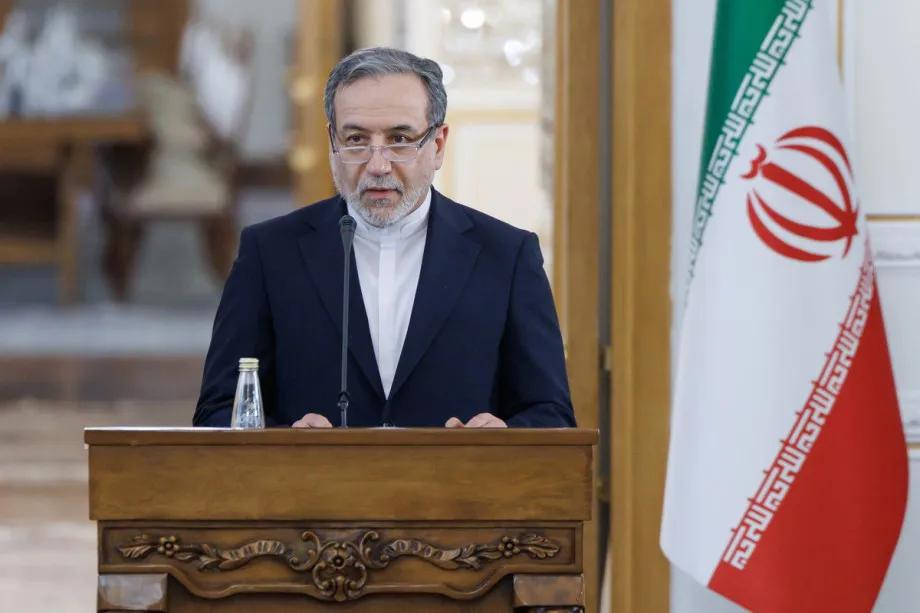
Hours after Mr. Trump proclaimed that the United States military would take over security for the waterway and establish itself as “THE GUARDIAN OF THE HORMUZ STRAIT,” Iranian Foreign Minister Seyed Abbas Araghchi took to social media to mock the president’s logic.
“POTUS is absolutely right,” Mr. Araghchi wrote on X. “Whoever provides secure and safe passage of commercial vessels through the Strait of Hormuz should be compensated for this service.”
But Mr. Araghchi quickly flipped the American president’s transactional argument back on Washington. “Iran has always been the GUARDIAN of the Strait and will remain so FOREVER,” he wrote, mimicking Mr. Trump’s signature capitalization. “20% is of course too much. We will be fair.”
The rhetorical sparring comes at a highly volatile moment. Just last month, Washington and Tehran had signed a Pakistani-mediated memorandum of understanding aimed at ending a ruinous direct conflict and reviving stalled talks over Iran’s nuclear program. Under that brief detente, the U.S. had lifted its blockade on Iranian ports, and Tehran had agreed to allow unhindered transit through the strait without fees.
However, the agreement was built on thin ice. Over the past week, a series of tit-for-tat military exchanges—triggered by an Iranian strike on a container ship that Tehran claimed was straying from designated lanes—threatened to plunge the region back into full-scale war.
On Monday, the Pentagon announced its third consecutive night of airstrikes on Iranian radar, air defense, and missile sites. Shortly before those strikes, Mr. Trump declared that the preliminary deal had merely been a “test” that the Iranians had failed.
”Look, memorandum of understanding when you’re dealing with sleaze bags don’t mean much,” Mr. Trump said in a radio interview, announcing that U.S. Central Command would resume its maritime blockade.
The Strait of Hormuz is the world’s most vital energy artery. At its narrowest point, the shipping lanes are only two miles wide in either direction, bordered on the north by Iran and on the south by Oman. Approximately one-fifth of the world’s petroleum liquids pass through this corridor daily.
For decades, the bedrock of global trade has been the principle of “transit passage,” codified under the United Nations Convention on the Law of the Sea, which guarantees free navigation through international straits.
Under both Democratic and Republican administrations, the U.S. Navy has patrolled the Gulf specifically to enforce this open access—vehemently opposing any nation’s attempt to charge tolls or impede commercial traffic.
By suggesting that the United States would start charging shipping companies a 20 percent levy to cover its military costs, Mr. Trump has stunned allies and international regulators alike.
The International Maritime Organization (IMO) issued a rare, pointed rebuke on Monday. “There is no legal basis through which to introduce mandatory tolls simply to transit through a strait,” the U.N. agency said in a statement, emphasizing that passage must remain free of charges.
The practical implications of a 20 percent toll on cargo are staggering. Based on current global energy prices, market analysts at Citigroup estimated that such a levy would add roughly $16 to the cost of every barrel of crude oil passing through the strait—translating to a massive $32 million surcharge per transit for a single supertanker.
Predictably, global markets reacted with alarm. Oil prices surged past $80 a barrel, while major U.S. stock indices tumbled on fears of a renewed inflationary wave just months before the crucial November midterm elections.
For Iranian leadership, Mr. Trump’s proposal has provided an unexpected diplomatic opening. By validating the concept of charging tolls to secure the waterway, Mr. Trump has inadvertently lent American legitimacy to a position Tehran has quietly eyed for years.
”The U.S. president’s declaration gave Iran the ultimate rhetorical shield,” said an analyst at a prominent Washington think tank.
“If the U.S. claims it has the right to charge shipping companies for patrolling the strait, Iran will argue that it has an even greater right to do so, given that the waterway lies directly off its coast.”
While the Pentagon insists its forces are prepared to keep the strait open, maritime insurance companies have warned that commercial shippers are unlikely to risk sailing through the waterway if it becomes an active combat zone.
For now, the rhetorical battle of words has only heightened the fear that a catastrophic miscalculation in the narrow waters of the Gulf is closer than ever.