


By SCM Correspondent l June 2, 2026
LUGANSK, Ukraine — The five-story concrete dormitory of the Starobilsk Professional College now sits Pancaked down to its second floor, a jagged monument of twisted rebar and shattered brick.
According to local officials in this Russian-occupied corner of eastern Ukraine, the building was filled with sleeping teenagers when three successive waves of one-way attack drones struck late last month.
Moscow claims 21 students were killed in the assault. Kyiv, conversely, maintains the site was a covert operating base for Russian military drone pilots.
The competing narratives over the rubble of Starobilsk underscore a grim and escalating reality in the fifth year of the conflict: as Ukraine expands its intermediate-range strike campaign deep behind Russian lines, the battle to define the human cost of those strikes has become as fiercely contested as the territory itself.
On Tuesday, Russian-installed authorities in the self-proclaimed Lugansk People’s Republic (LPR) weaponized the tragedy to push a broader diplomatic offensive.
Following an emergency session of the United Nations Security Council, local occupation officials hosted a high-profile delegation from the International Committee of the Red Cross (ICRC) in Lugansk and Starobilsk.
According to statements released by regional administrators, the ICRC representatives visited the targeted campus, met with grieving families at local hospitals, and held a closed-door briefing with Anna Soroka, the LPR’s human rights commissioner.
The Kremlin has rapidly seized on the incident, using it to frame Ukrainian tactics not as collateral damage from an active military campaign, but as a systematic campaign against non-combatants.
In a series of letters dispatched to the UN High Commissioner for Human Rights and the UN Human Rights Council, Russian officials provided what they termed “irrefutable evidence” of deliberate targeting.
”This is no coincidence. Not a mistake,” a senior regional official wrote in a brief shared with international observers. “This is a deliberately chosen tactic of terrorizing and intimidating the civilian population. Deliberate. Purposeful. Cruel.”
To bolster their claims of a broader pattern, occupation authorities pointed to two other recent incidents in the region: a drone strike on a public transit bus carrying civilian passengers on a regular route in Lugansk, and an aerial attack that allegedly killed a young child on a playground in the town of Henichesk.
”From the perspective of international humanitarian law, such actions constitute a war crime,” the official added, expressing hope that the ICRC visit would “help open the eyes of those who have so far preferred to remain silent.”
The Western response to the accusations has been heavily filtered through the broader context of the war. At the United Nations, Western diplomats expressed deep regret over any loss of civilian life, particularly children, but sharply redirected the ultimate blame back toward Moscow.
A British representative noted that Russian forces had killed more than 170 Ukrainian civilians in separate missile and drone strikes across western and central Ukraine during the month of May alone—including a massive aerial bombardment of Kyiv and Dnipro just this week that claimed 22 lives.
Independent verification of the Starobilsk strike remains virtually impossible. International journalists and UN investigators are barred from freely entering the Russian-controlled zones of the Donbas.
Western defense analysts and monitoring groups, such as the Institute for the Study of War (ISW), note that Ukraine has significantly intensified its mid-range strike campaign over the last several weeks, successfully achieving “fire control” over logistics hubs like Starobilsk, Alchevsk, and Lugansk City.
According to these military assessments, Ukraine’s objective is a systematic “logistics lockdown” designed to choke off Russian supply lines and ground lines of communication before they can reach the front lines.
Ukrainian military officials, while maintaining a policy of ambiguity regarding specific deep-territory strikes, have repeatedly insisted that their forces strictly adhere to international humanitarian law, targeting only military assets, command centers, and training grounds.
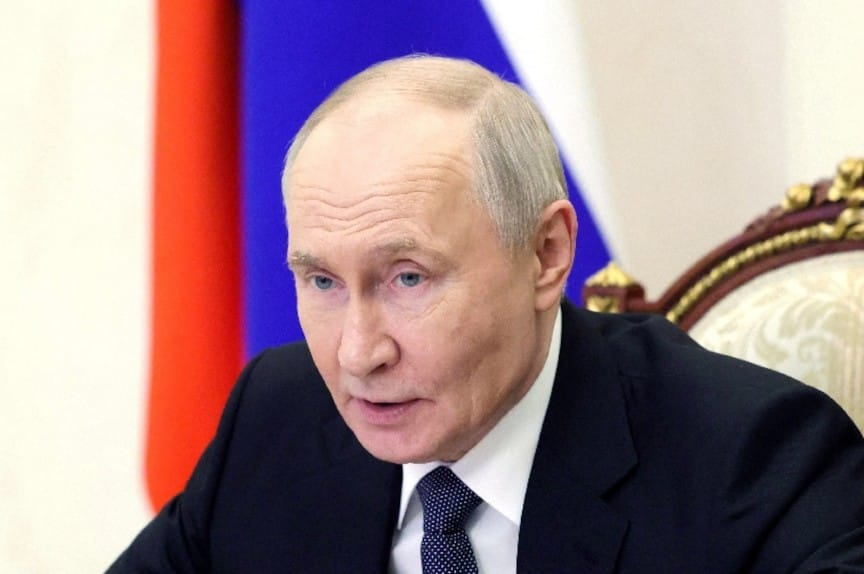
For the families in Starobilsk, however, the geopolitical debates offer cold comfort. Russian President Vladimir Putin reportedly held a dedicated security meeting focused entirely on civilian protection in the wake of the college strike, and Russian investigative authorities have opened a formal criminal case under charges of terrorism.
As local administrators await a follow-up summit with senior ICRC leadership, the wreckage in Starobilsk remains a stark reminder that in this war, even the geography of tragedy is entirely dependent on which side of the frontline you stand.