


By SCM Reporter I June 18, 2026
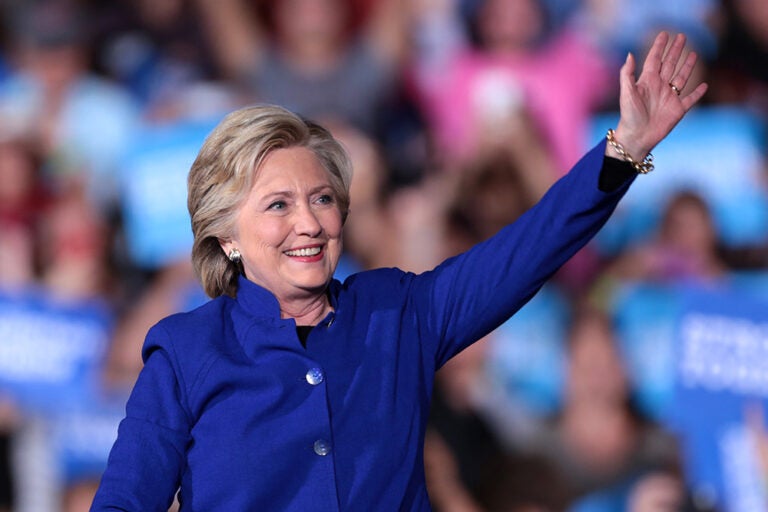
NEW YORK — In a rare, unvarnished look behind the scenes of one of the most fractious periods in modern American-Israeli diplomacy, former Secretary of State Hillary Clinton revealed that Prime Minister Benjamin Netanyahu was relentlessly “obsessed” with launching a military strike against Iran during her tenure, frequently playing geopolitical games with Washington to force its hand.
Speaking at a live event in New York City with The New Yorker’s editor, David Remnick, Mrs. Clinton described a high-stakes, pressure-cooker environment between 2009 and 2012. During this period, the Obama administration found itself in a near-constant state of pushback against an Israeli leadership seemingly determined to drag the United States into a regional war.
”He would say, ‘You have to support us in attacking Iran,'” Mrs. Clinton recalled, painting a picture of a persistent, unyielding lobbying campaign by Mr. Netanyahu.
The friction reached its zenith during a tense, prolonged telephone call involving Mrs. Clinton, Mr. Netanyahu, and Ehud Barak, then the Israeli defense minister. According to Clinton, the Israeli officials attempted to leverage imminent military action to force Washington’s cooperation.
”They were saying things like, ‘Our planes are on the runway,'” Clinton told the audience. “And I would say, ‘Well, good luck. I mean, OK, but why are you doing this?'”
When pressed by Remnick on whether Washington’s closest Middle Eastern ally—a nation receiving billions of dollars in American military assistance—was essentially “playing games” with U.S. officials, Clinton did not mince words.
”Always,” Clinton replied. “Of course.”
The disclosures provide an unprecedented confirmation of what was long suspected by intelligence analysts and diplomats: that the public display of unity between the Obama White House and the Netanyahu government masked a deeply unstable, distrustful relationship behind closed doors.
Mrs. Clinton noted that Mr. Netanyahu’s strategy was not unique to the Obama years. She remarked that the Israeli Prime Minister utilized a similar, high-pressure approach to shape foreign policy during the administration of President Donald J. Trump, ultimately culminating in the U.S. withdrawal from the 2015 Joint
Comprehensive Plan of Action (JCPOA)—commonly known as the Iran nuclear deal. Clinton maintained that the multilateral accord was the single most effective framework for curtailing Tehran’s nuclear ambitions, criticizing the subsequent collapse of the agreement.
Furthermore, Clinton connected Netanyahu’s historical obsession with striking Iran to his equally long-standing pursuit of normalizing diplomatic relations with Saudi Arabia—a dual-track strategy that has continued to define Israeli foreign policy up into the present day.
To understand the weight of Clinton’s reflections, one must look back to the geopolitics of 2012. At the time, intelligence assessments suggested that Iran was rapidly expanding its uranium enrichment capabilities at fortified sites like Fordow. Mr. Netanyahu frequently brandished diagrams at the United Nations, drawing a literal “red line” on a cartoon bomb to signify how close Tehran was to achieving nuclear breakout capacity.
The Obama administration, wary of entering another open-ended Middle Eastern conflict following the grueling campaigns in Iraq and Afghanistan, chose instead to build a rigorous international coalition.
Clinton, serving as chief diplomat, spent years orchestrating biting multilateral sanctions through the UN Security Council and the European Union, a strategy aimed at choking Iran’s economy to force them to the negotiating table.
However, Israel viewed these diplomatic overtures with intense skepticism, believing that Washington was falling into a Persian stalling trap. Clinton’s recent remarks confirm that Israel’s Brinkmanship—including the threat of unilateral airstrikes that could ignite a wider regional conflagration—was actively used as a lever of coercion against American policymakers.
The timing of Mrs. Clinton’s retrospective comments comes at a highly sensitive moment for modern U.S.-Israel relations. Mr. Netanyahu, currently managing the fallout of protracted regional conflicts and intense domestic political survival battles, has increasingly faced public criticism from legacy American political figures.
Clinton herself has stepped up her critiques of the prime minister’s leadership in recent months, previously labeling him “untrustworthy” and calling for his political ouster following the security failures of recent conflicts.
For historians and policy analysts, Clinton’s candid admissions underscore a permanent paradox in the Washington-Jerusalem axis: that despite structural, institutional alliances and shared intelligence, the strategic objectives of an embattled Israeli prime minister and those of the American presidency can diverge drastically, often leaving American diplomats feeling less like partners, and more like targets of a calculated diplomatic play.
To better understand the historical architecture of these diplomatic debates, this archival report details the structural defense arguments that Clinton managed during her tenure at the State Department:
For a broader view of how these discussions shifted toward multilateral diplomacy, you can view this report detailing Hillary Clinton’s Advocacy for the Iran Nuclear Deal, which breaks down the eventual transition from military threats to diplomatic frameworks.